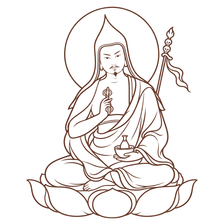
蒋扬钦哲确吉罗卓传 The Life of Jamyang Khyentse Chökyi Lodrö
by Orgyen Tobgyal Rinpoche
乌金督佳仁波切讲述
The second in the line of Jamyang Khyentse incarnations was Jamyang Khyentse Chökyi Lodrö, who was so great it is difficult for me even to utter his name, yet still I do so as a way to benefit others. His full name was Jamyang Khyentse Chökyi Lodrö Rimé Tenpe Gyaltsen Pal Zangpo.[1] His secret name, given by the third Dodrupchen Rinpoche Tenpe Nyima during a special empowerment of Rigdzin Düpa, was Pema Yeshe Dorje. Since this great master, the sovereign lord of the mandala, lived relatively recently, there are many people still alive today who can remember his life and bear witness to what I shall now recount.
蒋扬钦哲转世传承中的第二世,是蒋扬钦哲确吉罗卓。他是如此伟大,连他的名号我都难以称说;然而,为了利益他人,我仍要说出他的名号。他的全名是蒋扬钦哲确吉罗卓利美丹贝嘉参贝桑波(Jamyang Khyentse Chökyi Lodrö Rimé Tenpe Gyaltsen Pal Zangpo)。[1]他的秘密名是贝玛耶谢多杰,是第三世多智钦仁波切丹贝尼玛在一次特别的《持明总集》(Rigdzin Düpa)灌顶中赐予的。这位大师、坛城之主离我们并不遥远,因此,今天仍有许多在世的人记得他的生平,可以为我即将讲述的事迹作证。
The previous incarnation, Pema Ösal Do-Ngak Lingpa, passed into parinirvāṇa and absorbed his wisdom mind into the heart of the great paṇḍita Vimalamitra in the Five-Peaked Mountain range of Wu T’ai Shan in China. Then, in order to benefit the teachings and beings in the Land of Snows, he reappeared in five incarnations, as predicted in the terma prophecies. The vajradhara Jamgön Lodrö Tayé oversaw the recognition of these incarnations one by one. Each of the main heart-sons of Jamyang Khyentse Wangpo took charge of an incarnation. For example, the one Jamgön Kongtrul took charge of and installed in Palpung was called Beru Khyentse. One incarnation was enthroned at the main seat of Dzongsar, and another at Dzogchen monastery. One incarnation was recognized by Pönlop Loter Wangpo and called Galing Khyentse. All these incarnations emulated their predecessor in their unparalleled qualities of learning, experience, realization and enlightened activity. But of them all, the one who stands out like a jewel ornamenting the top of a great banner of victory was Jamyang Khyentse Chökyi Lodrö.
前一世贝玛沃色东阿林巴(Pema Ösal Do-Ngak Lingpa)示现般涅槃,将智慧心融入中国五台山大班智达无垢友的心中。随后,为了利益雪域的教法与众生,他依伏藏授记,再次化现为五位转世。金刚持蒋贡罗卓泰耶主持了这些转世的逐一认定。蒋扬钦哲旺波的主要心子各自负责照料一位转世。例如,蒋贡康楚负责照料并安置于八邦寺的那位,名为贝鲁钦哲。一位在宗萨主寺坐床,另一位在佐钦寺坐床。还有一位由本洛洛德旺波认定,称为嘎林钦哲。这些转世无不承继前世,在闻学、觉受、证悟与弘法事业上,具足无与伦比的功德。而其中犹如高大胜幢顶上宝珠一般卓然出众的,就是蒋扬钦哲确吉罗卓。
The nephew and supreme heart-disciple of Jamyang Khyentse Wangpo, Kathok Situ Chökyi Gyatso, did not have a reincarnation at his monastery of Kathok, and so with one pointed and fervent petitions, he requested the vajradhara Jamgön Kongtrul Lodrö Tayé to find a further incarnation for Kathok. Jamgön Kongtrul said that he had already recognized the body, speech, mind and qualities emanations, but if requested, he could recognize the activity emanation. Even so, he warned that it would be difficult for this emanation to benefit the main seat of the monastery. He explained that if he were to become a heruka practitioner, he would bring greater benefit. Kathok Situ then requested him to identify the child, and Jamgön Kongtrul saw that he would be born in the year of the snake, as the son of Rigdzin Tsewang Chokdrup, who in turn was the son of the great Serpa tertön.
蒋扬钦哲旺波的侄子、最杰出的心子噶陀司徒确吉嘉措,在自己的噶陀寺尚未迎来一位转世,因此,他一心热切祈请金刚持蒋贡康楚·罗卓泰耶,再为噶陀寻得一位转世。蒋贡康楚说,自己已经认定了身、语、意、功德四种化身,若有所请,也可以认定事业化身。不过,他提醒说,这一化身恐怕难以利益寺院本座;他解释,如果这位化身成为嘿噜嘎行者,所能带来的利益会更大。噶陀司徒于是请他指出这位孩子,蒋贡康楚便见到,他将生于蛇年,是持明策旺确珠(Rigdzin Tsewang Chokdrup)之子,而策旺确珠又是伟大的色巴伏藏师(Serpa tertön)之子。
The father’s family could be traced back to the great tertön Düdul Dorje and included many other authentic treasure revealers. His mother’s family was from Amdo, and she was a descendent of the great master Sergyi Chadral. He was born in the Water Snake year, and there were many wonderful signs and extraordinary portents, but his mother and father were both great renunciate practitioners themselves and did not get too excited about these things, so they kept no record of them, nor did they record any of the astrological information.
父系家族可以追溯到大伏藏师敦都多杰,家族中还出过许多真正的伏藏师。他母亲的家族来自安多,她是大师色吉恰扎(Sergyi Chadral)的后裔。他于水蛇年诞生,当时有许多殊胜瑞相和非凡征兆;但他的父母本身都是极有出离心的修行人,对这些现象并没有格外兴奋,因此既未作记录,也没有记下任何星占资料。
Just as he had been requested by Kathok Situ Chökyi Gyatso, Jamgön Kongtrul recognized the child as an incarnation of Jamyang Khyentse. Then, at the age of eight, he was invited to take his seat in Kathok monastery. On the day he arrived in Kathok, the entire surrounding region of Horpo and Kathok was completely covered with snow, so that everywhere was white, which was something very unusual for the region, and people took it to be a very positive sign for the future. On an auspicious day, Kathok Situ Rinpoche performed the hair-cutting ceremony in the main temple in the presence of the great Buddha statue, and gave him the name Jamyang Khyentse Chökyi Lodrö. Amongst the other tulkus and the people in the monastery at that time he was known simply as Tulku Lodrö.
依噶陀司徒确吉嘉措所请,蒋贡康楚认定这孩子为蒋扬钦哲的转世。八岁时,他被迎请至噶陀寺坐床。到达噶陀的那一天,周围霍波与噶陀一带全被积雪覆盖,处处洁白。这在当地非常罕见,人们便认为这是未来极为吉祥的征兆。在一个吉日,噶陀司徒仁波切于大殿内的大佛像前为他举行剃发仪式,赐名蒋扬钦哲确吉罗卓。当时,寺里的其他祖古与大众都只称他为祖古罗卓。
When he learned reading from his tutor, he could read without any difficulty, and he memorized several Sakya practice texts and the Reciting the Names of Mañjuśrī simply by reading them once. This was a sign that he was reawakening his memory from his former life. I sometimes tease some of the tulkus in our monastery and say, “My lama memorized Reciting the Names of Mañjuśrī as a child, even without studying it, and you tulkus have been reciting it for months and still can’t memorize it!”
他随经师学习阅读时,读起来毫不费力;几部萨迦派修法仪轨和《文殊真实名经》,他只读一遍便能背诵。这显示他前世的记忆正在重新苏醒。我有时会逗我们寺里的几位祖古,说:“我的上师小时候,连学都没怎么学,就背会了《文殊真实名经》;你们这些祖古念了好几个月,却还背不下来!”
One night he was in a retreat cave in the hill behind Kathok, sitting on a carpet beside his tutor and reciting prayers. While he was reciting The Dhāraṇī of the Vajra Subduer, he could clearly see Kathok Monastery down below, shining brightly in the light of the full moon, and at that moment he had a vision of the great monastic centre of Sakya, as clear as if he was actually there, and clearly remembered his life as Ratna Vajra. He remembered all the details of his life and all that he possessed as clearly as if it had been just the previous day.
一天晚上,他在噶陀后山的闭关洞里,坐在经师身旁的地毯上诵祷。当他诵念《金刚摧伏陀罗尼》时,清楚地看见下方的噶陀寺在满月光辉中明亮照耀。就在那一刻,他见到萨迦大寺院的景象,清晰得如同亲临其境,并且清楚忆起自己曾为惹那金刚(Ratna Vajra)时的一生。那一世生活中的一切细节,以及自己所有的物品,他都记得清清楚楚,仿佛就是昨天的事。
On one occasion Kathok Situ Rinpoche held a meeting with all the tulkus residing in Kathok monastery and asked them to do a special dream divination and look for any indications of who they had been in their previous incarnations. When they came back to report what they had found some tulkus said they must be the incarnation of this or that great lama who had appeared in their dreams. Some said they had dreamed of Vajrakīlaya or of Tārā, or some other deity. When they asked Tulku Lodrö—as he was known at the time—about his dreams, he said that he had not dreamt of anyone unusual, only an ordinary Tibetan man in the central Tibetan style of dress, a long white chuba with a blue overcoat, and turquoise earrings, and his hair tied back in a topknot. When he said this, Situ Rinpoche looked surprised, and said how incredible it was. “Amazing”, he said, “But could it really be?” All the other tulkus teased him, saying, “We are the incarnations of these great masters, but Tulku Lodrö was just this ordinary guy from Central Tibet.” But later on, he realized this was a sign that he had been King Tri Songdetsen.
有一次,噶陀司徒仁波切召集住在寺里的所有祖古,请他们作特别的梦兆观察,看看能否找到自己前世身份的征象。他们回来报告时,有些祖古说,自己一定是梦中出现的某某大上师的转世;有人说梦见了金刚橛,有人梦见了度母或其他本尊。当大家询问当时被称为祖古罗卓的他梦到了什么,他说,自己没有梦见什么非凡人物,只见到一个普通藏人,穿着卫藏地区的衣服:白色长藏袍(chuba),外罩蓝衣,戴绿松石耳环,头发向后束成顶髻。听到这里,司徒仁波切显得很惊讶,连声说不可思议。“真奇妙,”他说,“但真会是这样吗?”其他祖古都逗他:“我们是这些大上师的转世,祖古罗卓却只是卫藏的一个普通人。”但后来他明白,这正是自己曾为赤松德赞王的征象。
As a child, Jamyang Khyentse used to explore everywhere and was always looking to experience new things. Once, when his tutor had gone out for a while, he started rifling through the cupboards and when he found a big bottle of mercury, he drank the lot. When the tutor returned he saw drops of mercury on the floor, and then looking into the cupboard he saw that the bottle was empty. He told Tulku Lodrö to get up, but as he did so, drops of mercury trickled down his robes. The tutor said, “There was a bottle of mercury in my cupboard, where is it?” To which Jamyang Khyentse replied, “I drank it.” The tutor just stared at him. Later the tutor went to see Situ Rinpoche and said, “Tulku Lodrö really is exceptional. He drank an entire bottle of mercury and didn’t even get so much as a headache. I don’t think he can be an ordinary child.”
蒋扬钦哲小时候喜欢四处探寻,总想体验新鲜事物。有一回,经师外出片刻,他便开始翻找柜子,发现一大瓶水银后,就把整瓶都喝了。经师回来,看到地上有水银珠,再看柜子,瓶子已经空了。他叫祖古罗卓起身,祖古站起来时,水银珠便顺着袍子滴落。经师问:“我柜子里有一瓶水银,哪里去了?”蒋扬钦哲答:“我喝了。”经师只是瞪着他。后来,经师去见司徒仁波切,说:“祖古罗卓实在不寻常。他喝了一整瓶水银,竟然连头痛都没有。我想,他绝不是普通孩子。”
He was also fond of watching dances and entertainments, and so on occasions when he felt like watching some kind of show, Ekajaṭī, the Glorious Protectress of Secret Mantra, would appear to him and at his request she would split open her chest to reveal the entire three-realm universe.
他也喜欢观看舞蹈与娱乐表演。因此,有时他想看些表演,密咒吉祥护法母一髻佛母便会现前,依他的请求敞开胸膛,显现整个三界宇宙。
In another dream he had while he was young he went to the temple of Tramdruk, where a great mandala had been prepared in readiness for an empowerment. There he saw Guru Rinpoche seated upon a tall throne, with many people seated in rows ready to receive the empowerment. In the row in front of him, he saw a monk and a lady in Tibetan dress and several others, and next to him was a man in ordinary lay dress. Together, they all received empowerment from Guru Rinpoche. Later in his life he realized that the monks seated in front of him had been Vairocana and Namkhe Nyingpo and others from whom he—King Tri Songdetsen—had received empowerment. The lady had been Yeshe Tsogyal. Even though he was the king of Tibet at the time, it would not have been right for him to sit in front of his teachers.
他年幼时还做过一个梦,梦中来到昌珠寺,那里已备好一座大坛城,准备传授灌顶。他看见莲花生大师坐在高高的法座上,许多人排坐成行,等候灌顶。在他前一排,他看到一位僧人、一位穿藏装的女士,以及其他几个人;他的旁边,则是一位穿着普通在家人服饰的男子。他们一起接受莲花生大师的灌顶。后来他明白,坐在前面的僧人是毗卢遮那、南喀宁波等人,他自己——赤松德赞王——曾从他们接受灌顶。那位女士是益西措嘉。即使当时他是西藏国王,也不应坐在自己的上师前面。
At the age of thirteen, Jamyang Khyentse completed his studies and was sent by Kathok Situ to travel around Horkhok and Dzachukha to gather funds for the monastery. As it says in his verse autobiography, he also went to the kingdom of Ling:
十三岁时,蒋扬钦哲完成学业,噶陀司徒派他前往霍阔和扎曲卡一带,为寺院筹募资金。正如他的偈颂自传所说,他还去了岭国:
I met the Dharma king and queen of Ling,
And explained the Gang Gi Loma from memory.
With devotion they remembered their lama,
And both king and queen shed tears.
From that time on, they became my patrons,
With pure vows, generosity, devotion and kindness.
我谒岭国法王与王后,
凭记忆宣讲《文殊赞》(Gang Gi Loma)。
二人以虔敬忆念上师,
国王王后皆流下泪水。
自此他们成为我施主,
具净戒、布施、虔敬与慈心。
As this says, he gave an elaborate commentary on the Gang Gi Lodrö, the famous prayer to Mañjuśrī, to the king of Ling, who was a tertön, and his queen and other members of the royal family. They had been students of the previous Jamyang Khyentse and when he taught they were so moved by their memories that the king and queen actually shed tears, and saw him as Jamyang Khyentse Wangpo in person. From this time on, they became his patrons.
如偈颂所说,他为身为伏藏师的岭国国王、王后及其他王族成员,广讲著名的文殊祈祷文《文殊赞》(Gang gi Lodrö)。他们曾是前世蒋扬钦哲的弟子;听他讲法,往昔的回忆令国王与王后感动落泪,视他如同蒋扬钦哲旺波亲临。从此以后,他们便成为他的施主。
Then he went on to Dzachukha and Adzom Gar. Before he arrived there, Adzom Drukpa Natsok Rangdrol had three dreams in which he saw his root teacher, Jamyang Khyentse Wangpo. He understood this to be an indication that the tulku from Kathok whom he was expecting was the actual incarnation of his teacher Jamyang Khyentse Wangpo, and so he organized a special welcome with a tremendous procession. Adzom Drukpa wore a special red robe and tied his hair in a special way. All the students sang the Song of the Tsok Feast (tsok lu) while they waited, and Adzom Drukpa himself went a great distance ahead to welcome Jamyang Khyentse. At this time, Adzom Drukpa made a great offering of all that he had received in donations. Later in his life, Jamyang Khyentse looked back on this and said that it had been such a great offering that it would be almost impossible for anyone to match it.
接着,他前往扎曲卡和阿宗嘎。在他到达之前,阿宗竹巴那措让卓(Adzom Drukpa Natsok Rangdrol)曾三次梦见自己的根本上师蒋扬钦哲旺波。他明白,这是在预示那位自己正等候从噶陀前来的祖古,正是上师蒋扬钦哲旺波的真实转世,因此特意安排盛大的队伍迎接。阿宗竹巴身穿特制红袍,以特别方式束发。弟子们一边等候,一边唱《荟供歌》(tsok lu),阿宗竹巴本人更远行至前方迎接蒋扬钦哲。当时,他将自己所收的一切供养,悉数作了大供养。蒋扬钦哲后来回忆此事时说,那份供养如此丰厚,几乎无人能够比拟。
During the summer retreat at Kathok monastery when he gave teachings on the Aspiration Prayer of Sukhāvatī and other subjects, he inspired many thousands of scholars with the brilliance of his explanations.
在噶陀寺夏安居期间,他讲授《极乐愿文》等法义,以精妙的讲解令成千上万的学者深受启发。
For three years, while his tutor was ill, Jamyang Khyentse worked hard to fetch water, gather firewood, look after him and so on. He had no help from anyone else, but did it all on his own. Later on, he would say this had been a supreme method for gathering merit and purifying his obscurations. He used to say, “I purified a little of my negative karma by really serving my teacher.” His teacher was very strict, and used to beat him whether there was good reason or not. Later in his life whenever he shaved his head you could see all the scars from the beatings. It was at the end of his thirteenth year that the tutor passed away.
经师患病的三年间,蒋扬钦哲辛勤打水、拾柴、照料起居等。他没有任何人的帮助,所有事情都亲自承担。后来,他说这是一种积集资粮、净除业障的殊胜方法。他常说:“我真正服侍师长,才净除了一点恶业。”这位经师极为严厉,不论是否有充分理由,都常常打他。后来每逢剃头,仍能看见那些挨打留下的伤疤。经师是在他十三岁将尽时去世的。
It was around the same time that the ‘body incarnation’ of Jamyang Khyentse Wangpo, who was holding the main seat of Dzongsar, was in Dzogchen monastery to receive the empowerments and transmissions of the Precious Treasury of Termas (Rinchen Terdzö) from the Fifth Dzogchen Rinpoche, Thubten Chökyi Dorje, and passed away prematurely at the age of thirteen. When this happened, the lama who was in charge of Dzongsar monastery at the time, another nephew of Jamyang Khyentse Wangpo called Kalzang Dorje, sent a letter to Situ Rinpoche in which he wrote, “The tulku here at our seat of Dzongsar has passed away, and I myself am very sick and close to death. Please send the tulku you have in Kathok to take up the Khyentse seat here at Dzongsar. If you refuse, it could damage your samaya with Jamyang Khyentse the Great. This is my dying request.”
大约同一时期,安住宗萨本座的蒋扬钦哲旺波“身化身”,正在佐钦寺从第五世佐钦仁波切土登确吉多杰接受《大宝伏藏》(Rinchen Terdzö)的灌顶与传承,却于十三岁时过早离世。此事发生后,当时负责宗萨寺的上师、蒋扬钦哲旺波的另一位侄子格桑多杰,给司徒仁波切写信说:“我们宗萨本座的祖古已经去世,我自己也病得很重,命在旦夕。请将你们噶陀的祖古送来,继承宗萨的钦哲法座。如果拒绝,恐怕会损伤您与伟大蒋扬钦哲之间的三昧耶。这是我临终的请求。”
Situ Rinpoche read the letter again and again and thought that had the lama still been alive there would have been a chance to discuss the matter with him, but he knew that he had already passed away. So he knew that for him to ignore the request would be tantamount to disobeying his own teacher and he had no other option but to take Jamyang Khyentse Chökyi Lodrö to Dzongsar. He took him there himself. So it was that Jamyang Khyentse entered the monastery of Dzongsar Tashi Lhatse at the age of fifteen.
司徒仁波切一遍又一遍地读这封信,心想:如果这位上师还在世,尚可同他商量;但他知道对方已经去世。因此,他明白,置此请求于不顾,就等于违背自己的上师,已别无选择,只能带蒋扬钦哲确吉罗卓前往宗萨。他亲自将他送到那里。就这样,蒋扬钦哲于十五岁时进入宗萨扎西拉孜寺。
When Kathok Situ and Jamyang Khyentse arrived in Dzongsar, they went to the main quarters of the late Jamyang Khyentse. Kathok Situ said to the young Jamyang Khyentse, “You must stay here, but I do not dare to do so. I will go to my own room.” Before Situ Rinpoche returned to Kathok he performed an enthronement ceremony for Jamyang Khyentse, and even though there were only a few monks and lamas present, it was done very elaborately with a long speech on the five perfections and so on. On the first night, when he was wondering where he was supposed to sleep, he looked about the room and saw something made of wood that looked almost like a bed with an animal skin rug, and he thought to himself that this must be the place. So he slept there. Some years later when Kathok Situ came back and came into the residence, Jamyang Khyentse asked him to be seated and pointed to the wooden bed. Kathok Situ responded by saying, “How could I dare sit there?” And instead, he prostrated to it and touched his forehead against it again and again. Then he looked about the room and said to Jamyang Khyentse, “Where do you sleep?” Jamyang Khyentse pointed to the bed, and said “I sleep there.” At which point Kathok Situ looked disappointed and said, “Ah, it is true what they say: where a man sleeps, a dog also sleeps.” For a while he didn’t say anything, then he added, “In this bed slept the master of all the lineages of the Buddha’s teachings in Tibet. Do you think it is right for you to sleep here too?” Then Jamyang Khyentse Chökyi Lodrö said, “Maybe I should not sleep there from now on.” But Kathok Rinpoche said, “No, you carry on. It’s alright.”
噶陀司徒和蒋扬钦哲到达宗萨后,来到前世蒋扬钦哲的主要住处。噶陀司徒对年轻的蒋扬钦哲说:“你必须住在这里,可我不敢。我到自己的房间去。”司徒仁波切返回噶陀前,为蒋扬钦哲举行了坐床仪式。虽然在场的僧人与上师不多,仪式却十分隆重,还就五圆满等作了长篇致辞。第一晚,他不知自己该睡在哪里,环顾房间,看见一件近似床的木制家具,上面铺着兽皮毯,便想一定是这里,于是就在上面睡了。几年后,噶陀司徒再来,进入这间住所时,蒋扬钦哲指着那张木床,请他坐下。噶陀司徒说:“我哪里敢坐在那里?”随即向床顶礼,再三以额头触碰。接着,他环视房间,问蒋扬钦哲:“你睡在哪里?”蒋扬钦哲指着床说:“我睡在那里。”噶陀司徒露出失望的神情,说:“唉,俗话果然没错:人睡的地方,狗也会睡。”他沉默片刻,又说:“这张床上睡过的是西藏佛法一切传承之主。你觉得自己也睡在这里,合适吗?”蒋扬钦哲确吉罗卓于是说:“也许我以后不该再睡在那里了。”噶陀仁波切却说:“不用,你继续睡吧。没关系。”
Around this time, there was a slight conflict between followers of the incarnation discovered by Loter Wangpo and the supporters of the other incarnations. Before the conflict could develop, the king of Derge sent his own emissary, a minister called Jagö Tobden, who stated very clearly that Jamyang Khyentse Chökyi Lodrö was the one to stay in the main seat of Dzongsar, and the other incarnation was to stay in Galon monastery. This judgement settled the matter and prevented further disagreement.
大约这时,洛德旺波认定的转世之追随者,与其他转世的支持者之间,出现了小小的冲突。在冲突扩大之前,德格王派出自己的使者、大臣嘉果多登(Jagö Tobden)。他明确宣布,蒋扬钦哲确吉罗卓应当留在宗萨本座,另一位转世则应住在嘎隆寺。这一裁定平息了事情,避免了进一步争执。
When Jamyang Khyentse heard that Pönlop Rinpoche Loter Wangpo was about to give the empowerments of the Compendium of Tantras (Gyüde Kuntü) he travelled to receive them. Loter Wangpo had a vision of Jamyang Khyentse Wangpo, which he took to be a sign that this incarnation was unlike any of the others, and so he himself went to receive him. They prepared a very high seat with silk cushions and made elaborate offerings, according Jamyang Khyentse the very highest honour. Loter Wangpo himself gave all the transmissions from the Compendium of Tantras when they got to the section of the unsurpassed yoga tantras. In particular, when it came to the introduction to the nature of mind, it was done according to the Sakya tradition, with a week spent on the investigation and mind-training, culminating with the lama transmitting his realization to the student. At this time, the mind of the student became inseparably united with the master’s wisdom mind and he gained all the qualities of realization.
蒋扬钦哲听说本洛仁波切洛德旺波即将传授《续部总集》(Gyüde Kuntü)的灌顶,便前往求受。洛德旺波见到蒋扬钦哲旺波的清净显现,认为这是表明这位转世不同于其余诸位的征象,便亲自前往迎接。众人为他准备了很高的法座,铺上丝绸坐垫,陈设盛大供养,给予蒋扬钦哲最高的礼遇。传到无上瑜伽续部分时,洛德旺波亲自传授了《续部总集》中的所有相关传承。尤其是直指心性时,完全依照萨迦传统:先用一周作观察与修心,最后由上师将自己的证悟传予弟子。此时,弟子的心与上师的智慧心不可分离地融为一体,他获得了一切证悟功德。
In later years, when Jamyang Khyentse Chökyi Lodrö had studied with somewhere between fifty-five and sixty main teachers, he said that of them all, he considered Loter Wangpo to be his root master, referred to him as “The Vajradhara Loter Wangpo” and said his kindness was incomparable.
后来,蒋扬钦哲确吉罗卓已经依止过大约五十五至六十位主要师长,他说,在这些人中,他视洛德旺波为自己的根本上师,尊称他为“金刚持洛德旺波”,并说他的恩德无与伦比。
He received only the unsurpassed (Skt. niruttara) yoga tantra section from the Compendium of Tantras, because by this time his father, Yabje Tsewang Gyurme, had been waiting for him for almost a year back at Dzongsar, having travelled there specifically to grant him the most important empowerments and transmissions from the Nyingma school. So without receiving the other sections, he returned to his seat at Dzongsar.
他只领受了《续部总集》中的无上(梵文:niruttara)瑜伽续部分,因为此时他的父亲雅杰策旺久美(Yabje Tsewang Gyurme)已在宗萨等候他近一年,父亲此行正是专门为了传给他宁玛派最重要的灌顶和传承。因此,他没有继续领受其他部分,便返回了宗萨本座。
When he arrived, his father Yabje Rigdzin Chenpo gave him the transmissions of Sangye Lingpa’s Lama Gongdü, the Kagye, the Chokling Tersar, and all the major transmissions of the kama and terma one after another for a period of two years.
到达后,父亲雅杰仁增钦波(Yabje Rigdzin Chenpo)用了两年时间,接连传给他桑杰林巴的《上师密意总集》、《八大法行》、《秋林新伏藏》,以及教传和伏藏的一切主要传承。
At the age of fifteen, he began to teach a few monks of Dzongsar Monastery, giving them teachings on the Perfection of Wisdom (Skt. prajñāpāramitā). He also received many teachings and empowerments from Kathok Situ Rinpoche, who was one of his principal root teachers, and also received the monastic vows.
十五岁时,他开始为宗萨寺的几位僧人讲授般若波罗蜜多(梵文:prajñāpāramitā)。他也从主要根本上师之一的噶陀司徒仁波切领受了许多教法与灌顶,并受了出家戒。
When Shechen Gyaltsap Rinpoche came to Dzongsar Monastery, Jamyang Khyentse received the long-life empowerment of Könchok Chidü from him and requested him to stay in Dzongsar in order to grant more teachings and empowerments. Shechen Gyaltsap said that he could not stay because the water in the Dzongsar region was not so good for his health and he would have to return to Shechen monastery. But before he left, he said, “You are welcome to come and see me there, and since you are the incarnation of my master, I would be happy to give you teachings and empowerments, if that is your wish.”
雪谦嘉察仁波切来到宗萨寺时,蒋扬钦哲从他领受了《三宝总集》(Könchok Chidü)的长寿灌顶,并请他留在宗萨,继续传授更多教法和灌顶。雪谦嘉察说,宗萨一带的水不太适合自己的身体,所以不能留下,必须返回雪谦寺。但临行前,他说:“欢迎你到那里来看我。你是我上师的转世,只要你愿意,我很乐意为你传法灌顶。”
That summer, he went to Shechen monastery, arriving during the summer retreat. Gyaltsab Rinpoche was presiding over a ceremony in the main temple, but Jamyang Khyentse was in such a hurry to meet him that instead of sending a message and waiting to greet him formally, he went straight inside. As he entered, the assembly was reciting the prayer for the spread of the teachings by Chokgyur Lingpa known as Ten Directions and Four Times[2] and they had just reached the line: “May all the precious masters, the splendour of the teachings, reach everywhere like the sky.” They requested him to go up to the lama’s residence, and then Gyaltsab Rinpoche left the assembly and went up to join him. Gyaltsab Rinpoche told him how auspicious it was that he had arrived at that moment during the practice, and he kept repeating those two lines from the prayer as he prostrated to Jamyang Khyentse.
那年夏天,他前往雪谦寺,抵达时正值夏安居。嘉察仁波切正在大殿主持法会,但蒋扬钦哲急于见他,没有先通报、等候正式相见,而是直接走了进去。他进殿时,大众正在诵念秋吉林巴所作、以《十方四时》为名的佛法弘扬祈愿文,[2]刚好念到:“愿一切珍贵上师——教法之庄严——如虚空般遍至一切处。”众人请他先到楼上的上师住处,随后嘉察仁波切离开法会,上楼与他相见。嘉察仁波切告诉他,在修法的这一刻到达,是多么吉祥,并一面向蒋扬钦哲顶礼,一面反复念着愿文中的这两句。
Then they went up to the retreat area above Shechen and pitched a little cotton tent. Shechen Gyaltsab granted him the Compendium of Sādhanas (druptap kuntü), Nyingtik Yabshyi and Damngak Dzö and other empowerments. Dilgo Khyentse Rinpoche had also been invited to Shechen monastery at the time, and was enthroned by Shechen Gyaltsab in his quarters.
然后,他们来到雪谦寺上方的闭关区,搭起一顶小棉帐篷。雪谦嘉察为他传授了《成就法总集》(druptap kuntü)、《心髓四部》、《口诀藏》(Damngak Dzö)等灌顶。当时,顶果钦哲仁波切也被迎请到雪谦寺,雪谦嘉察在自己的住所为他举行了坐床仪式。
Shechen Gyaltsab and Kathok Situ both emphasized again and again that in order for the teachings to last into the future, both study and practice would need to be thoroughly established. They said that without study and practice, the teachings would become lifeless. In accordance with their advice, Jamyang Khyentse decided to establish a study centre (shedra) to benefit the teachings and help ensure the stability of the Dharma in future.
雪谦嘉察和噶陀司徒一再强调,要使教法延续到未来,就必须牢固建立闻思与实修。他们说,缺少闻思与实修,教法便会失去生命力。遵循他们的教导,蒋扬钦哲决定建立一所佛学院(shedra),以利益教法,并帮助佛法长久稳固地住世。
At around this time, the king of Derge, Tsewang Düdul, was being enthroned at Derge Gönchen, and the highest lamas in the region were all invited to participate in the ceremony. Jamyang Khyentse went there and the great khenpo Shenga Rinpoche was also there at the time. Khenpo Shenga had been teaching at the Palpung shedra but a slight problem had arisen and so he had gone to Derge. When he met Khenpo Shenga, Jamyang Khyentse said, “I am thinking of establishing a shedra at Dzongsar in Kham-jé and I will need a khenpo. Would you be able to come?” For a moment, Khenpo Shenga did not say anything in response. Then, after a while, he said, “Yes. That will be extremely beneficial. I will certainly come.” Later in life, Jamyang Khyentse Rinpoche looked back on this and said that nothing else in his life had been as auspicious.
大约这时,德格王策旺敦都在德格更庆寺举行登基大典,当地地位最高的上师都受邀出席。蒋扬钦哲前往,伟大的堪布贤嘎仁波切也在那里。堪布贤嘎此前在八邦寺佛学院任教,但因发生了一点问题,便来到德格。见到堪布贤嘎时,蒋扬钦哲说:“我打算在宗萨的康杰建一所佛学院,需要一位堪布。您能来吗?”堪布贤嘎一时没有回答。过了一会儿,他说:“能。这会带来极大的利益。我一定来。”蒋扬钦哲仁波切晚年回忆此事时说,自己一生之中,再没有比这更吉祥的事了。
After he returned to Dzongsar, on the fifteenth day of the lunar month, work began on the monks’ quarters and the temple in Kham-jé, by renovating the Three Buddha Families Temple (riksum lhakhang) that had been established there by Jamyang Khyentse Wangpo. During that time, the Khyentse Labrang was rather poor. They did not have much that could be traded besides a few bags of grain, packages of tea and salt. Of course, they had images and representations of enlightened body, speech and mind, but they were not goods to be traded. This meant that when they had begun the work of preparing the ground and so on, Jamyang Khyentse Rinpoche travelled to the Horkhok area in order to raise funds.
返回宗萨后,于藏历当月十五日,他们开始在康杰修建僧舍与殿堂,整修蒋扬钦哲旺波曾在那里建立的三部佛殿(riksum lhakhang)。当时,钦哲拉章相当贫困,除了几袋粮食、一些茶叶和盐,几乎没有什么可用来交易的东西。当然,他们有佛像及身、语、意的所依,但这些不能当作货物买卖。因此,当整地等工程开始后,蒋扬钦哲仁波切便前往霍阔一带筹募资金。
During his travels, he visited the home of the Lakar family, where a great tertön called Ati Tertön was staying and reciting prayers for the family. At the request of the Lakar family, Jamyang Khyentse stayed and performed practices for three days. He performed a ceremony for summoning the spirit of abundance (yanguk) and granted a long-life empowerment of Chimé Pakma Nyingtik. When he was giving the empowerment, Ati Tertön also came to receive it. At the time, he was not as well known as he would later become. When the long-life empowerment was finished and everyone was sitting in silence, Ati Tertön stood up and starting speaking spontaneously. “Today has been very auspicious,” he said, “We have been fortunate enough to receive the long-life empowerment of Chimé Pakma Nyingtik from Jamyang Khyentse Wangpo’s own incarnation.” At this point he touched the heads of the two young girls, Tsering Chödrön and Tsering Wangmo, who at that time were very young, and said, “Later on when Jamyang Khyentse becomes a great vajradhara, these two will be part of his assembly of ḍākinīs, and at that time even I might have the good fortune to be of some small service. It has all been very auspicious.” Jamyang Khyentse was completely taken aback by this. “What is this person saying?” he asked. “I have never heard anything like it!” But years later when he looked back on this, he said, “That tertön must have really known something.”
旅途中,他来到拉卡家族的家中,那里住着一位名叫阿底伏藏师(Ati Tertön)的大伏藏师,正在为这家人诵祷。应拉卡家族之请,蒋扬钦哲留下来修法三日。他举行了召福仪轨(yanguk),并传授《无死圣母心髓》的长寿灌顶。他传灌顶时,阿底伏藏师也前来领受。那时,阿底伏藏师还不像后来那么有名。长寿灌顶结束,大家静坐着,阿底伏藏师却站起来,自发地开口说:“今天实在吉祥。我们有幸从蒋扬钦哲旺波本人的转世,领受了《无死圣母心髓》的长寿灌顶。”说到这里,他摸着当时年纪还很小的两位女孩——次仁确珍和次仁旺姆——的头,说:“将来蒋扬钦哲成为伟大的金刚持时,这两位会成为他空行母眷属中的成员。到那时,甚至我也可能有幸尽一点微薄之力。一切都十分吉祥。”蒋扬钦哲听得十分惊讶。“这个人在说些什么?”他问,“我从来没听过这种话!”但多年后回顾此事,他说:“那位伏藏师一定确实知道些什么。”
Gradually the Dzongsar Kham-jé shedra was completed, and Shenga Rinpoche became the first in the line of khenpos.
宗萨康杰佛学院逐渐建成,贤嘎仁波切成为历任堪布中的第一位。
In many of the Sakya monasteries in Eastern Tibet there was a tradition of going to the main mother monasteries in Central Tibet. In the case of Dzongsar, this meant going to the Ngor monastery. So in keeping with this custom, when he was about twenty-four years old, Jamyang Khyentse Chökyi Lodrö went to Central Tibet and visited many of the holy places in the region together with a small group of attendants.
藏东许多萨迦寺院都有前往卫藏根本道场的传统。对宗萨而言,就是前往俄尔寺。依照这一习俗,蒋扬钦哲确吉罗卓约二十四岁时,带着一小群侍从前往卫藏,朝礼当地许多圣地。
When he arrived at the great Ngor monastery, as a follower of the Thartse line, he stayed in the residence of Thartse Shapdrung, and whilst there he received the teachings of the Lamdré Tsokshé.[3] Just like his predecessor Jamyang Khyentse Wangpo, who had been the most supreme of mantra practitioners—a vajradhara bhikṣu—he went to Orgyen Mindroling in order to receive full monastic ordination from Khenpo Ngawang Thupten Norbu.
到达俄尔大寺后,作为塔策一系的传人,他住在塔策夏仲的住所,并在那里领受《道果会众释》(Lamdré Tsokshé)。[3]他的前世蒋扬钦哲旺波,是最殊胜的密咒行者——金刚持比丘;与前世一样,他也前往邬金敏珠林,从堪布阿旺土登诺布领受比丘具足戒。
When he went to Lhasa he met the Thirteenth Dalai Lama Thubten Gyatso and the regent, and visited the three sacred pilgrimage places of Samye, the Jokhang and Tramdruk, all the while making vast offerings. He was twenty-four when he arrived in Central Tibet, twenty-five when he took the vows of a fully ordained monk, and so he must have been about twenty-six when he returned to Eastern Tibet.
到拉萨后,他会见了第十三世达赖喇嘛土登嘉措与摄政,朝礼桑耶、大昭寺、昌珠三处圣地,所到之处皆作广大供养。他二十四岁到卫藏,二十五岁受比丘具足戒,因此返回藏东时,应当是二十六岁左右。
On his way back, he passed through Chamdo, where the very great and accomplished master, the previous Chamdo Pakpa, invited him to Jampa Ling in order to give a series of empowerments. Even though Chamdo Pakpa was a very high ranking lama of the Gelukpa school he came to receive the empowerments. In his address, made before a vast assembly of people from the region, Chamdo Pakpa declared, “At this time there is no greater lama in the whole of Tibet than Jamyang Khyentse Chökyi Lodrö.” Some of the more stubbornly conservative geshes were completely moved to hear such a statement from the great Chamdo Pakpa, and wept in devotion. The representatives of the government in the area also requested Jamyang Khyentse to perform certain practices in order to remove obstacles there.
归途中,他经过昌都,极为伟大、有修证的前世昌都帕巴迎请他到强巴林寺,传授一系列灌顶。虽然昌都帕巴在格鲁派中地位很高,他仍前来领受这些灌顶。在向当地广大群众致辞时,昌都帕巴宣布:“当今全藏,再没有比蒋扬钦哲确吉罗卓更伟大的上师。”一些原本极为固执保守的格西,听到伟大的昌都帕巴这样说,深受感动,流下了虔敬的泪水。当地政府代表也请蒋扬钦哲修持一些法,以遣除那一带的障碍。
He also passed through the two seats of the incarnations of Chokgyur Dechen Lingpa, the monasteries of Neten and Kela. From the second Neten Chokling Ngedön Drubpe Dorje, a student of Jamyang Khyentse Wangpo, he received many empowerments, including the Dzogchen Dé Sum and the Tukdrup Barché Kunsel. While he was staying there, Neten Ngedön Drubpe Dorje offered to Jamyang Khyentse Chökyi Lodrö his very own attendant named Tsering Wangyal, who is still alive today in Kham at the age of 92 but was only thirteen years old at the time. The boy could not go with Jamyang Khyentse straight away because his mother did not want him to leave, but he went to Derge a few years later and served Jamyang Khyentse from that time on, so that he is now a very well known and respected person in Kham.
他还经过秋吉林巴两位转世的道场——内天寺与克拉寺。从蒋扬钦哲旺波的弟子、第二世内天秋林额顿竹贝多杰(Ngedön Drubpe Dorje)处,他领受了许多灌顶,包括《大圆满三部》和《上师心修·遣除一切障碍》。他住在那里时,内天额顿竹贝多杰将自己的侍从次仁旺嘉供养给蒋扬钦哲确吉罗卓。这位侍从如今仍在康区,已经九十二岁,当时却只有十三岁。由于母亲不愿让他离家,男孩没能马上随蒋扬钦哲同行,但几年后他去了德格,从此一直服侍蒋扬钦哲,如今在康区已是一位非常有名且受尊敬的人。
Then he went to Kela, the seat of the other incarnation of Chokgyur Lingpa, Kela Chokling Könchok Gyurme Tenpe Gyaltsen, from whom he received Lhatsün Namkha Jigme’s Rigdzin Sokdrup and Tukdrup Sampa Lhundrup and other transmissions.
接着,他前往克拉,那是秋吉林巴另一位转世——克拉秋林贡却久美丹贝嘉参(Kela Chokling Könchok Gyurme Tenpe Gyaltsen)——的道场。从他那里,蒋扬钦哲领受了拉尊南喀吉美的《持明命修》、《上师心修·愿望任运成就》及其他传承。
On the way back to Derge, he heard the news that Kathok Situ Rinpoche had passed into parinirvāṇa. When he heard this, Jamyang Khyentse prayed again and again and united his mind with the mind of his teacher. As a result of this, Situ Rinpoche actually appeared to him and over several days imparted all his final instructions and unfinished advice. For the next few years, he had many visions by day and dreams by night in which Situ Rinpoche appeared to him and imparted advice. This is written clearly in Jamyang Khyentse’s own autobiography. He says they could communicate whenever he wished, which was undoubtedly a sign that their two wisdom minds had merged inseparably.
返回德格途中,他听到噶陀司徒仁波切已经示现般涅槃的消息。闻讯后,蒋扬钦哲不断祈祷,将自己的心与上师之心相融。由此,司徒仁波切真实地向他显现,在数日内传给他最后的一切教授和未尽的教诫。此后几年,他白天多次见到清净显现,夜里也常在梦中见到司徒仁波切现身给予教导。这在蒋扬钦哲的自传中写得很清楚。他说,只要自己愿意,就能与上师沟通;这无疑表明,两人的智慧心已经不可分离地融为一体。
When he returned to Dzongsar, he sent a message notifying Shechen Gyaltsab Rinpoche of his safe arrival and telling him that the trip to Central Tibet had been a success. In return, Gyaltsab Rinpoche sent a letter saying, “Kathok Situ Rinpoche has passed away and I am very old and close to death myself. The Nyingma teachings are in danger of fading away, like a lamp whose oil has all been used up. You must now take responsibility for looking after these teachings with all your incomparable compassion.” In fact, in that year of 1926 no less than seven great masters passed away, including the Karmapa Khakyab Dorje, Kathok Situ Rinpoche, Shechen Gyatsab Rinpoche and Dodrupchen Jigme Tenpe Nyima.[4]
返回宗萨后,他派人向雪谦嘉察仁波切报平安,并告知卫藏之行圆满成功。嘉察仁波切回信说:“噶陀司徒仁波切已经圆寂,我也年老,即将离世。宁玛教法正如油尽的灯火,有衰微的危险。如今,你必须以无比慈悲担起护持这些教法的责任。”事实上,在1926年那一年,至少有七位大德圆寂,其中包括噶玛巴卡恰多杰、噶陀司徒仁波切、雪谦嘉察仁波切,以及多智钦吉美丹贝尼玛。[4]
When Shechen Gyaltsab Rinpoche passed away, Jamyang Khyentse was invited to Shechen to perform the rituals of gong dzok (the fulfilment of intentions) and erect a reliquary stūpa. He spent the first night of his journey in a place called Pawok, where he had a clear vision of the wisdom body of Gyaltsab Rinpoche, who gave him the entire transmission of empowerments and instructions from the Treasury of Precious Termas, and imparted advice. In the same vision, he saw very clearly all the details of where the reincarnation would be born, including details about the house, with its particular prayer flags and so on. When he arrived at Shechen, he successfully performed all the ritual practices.
雪谦嘉察仁波切圆寂时,蒋扬钦哲受邀前往雪谦,主持圆满密意仪轨(gong dzok),并建造灵塔。旅途第一夜,他住在一个名叫巴沃(Pawok)的地方,清楚见到嘉察仁波切的智慧身现前,为他传授《大宝伏藏》中全部灌顶与教授,并给予教诫。在同一次清净显现中,他也极清晰地见到转世将出生之地的一切细节,包括房屋及其特有的经幡等。他到达雪谦后,圆满完成了一切仪轨修持。
Some time before his journey to Central Tibet, when there had been a little conflict in Dzongsar between the parties of the different Khyentse incarnations, Kathok Situ had arrived and said to Jamyang Khyentse, “Maybe you should not stay. I think it is better if you come back to Kathok.” Tulku Lodrö, as he was known then, considered this for some time before saying, “For my whole life up to now, I have never done anything against your wishes, but because this matter is so important I have really thought about it. When I first came here to Dzongsar, it was you who installed me here. I have now been here a little while, but it would not be right for me to abandon my position here over such a small thing. I should stay and do all that I can to serve the monastery. While you are in Kathok monastery there is nothing I can do there that you can not do even better yourself, but in the event that you can no longer stay there for some reason, I promise to return for a full fifteen years and do all I can to serve the monastery.” Kathok Situ Rinpoche had been completely stunned by this. For a while he was speechless, then with tears in his eyes, he said, “I am older than you, and I am supposed to know more than you. But with what you have just said you have proved that you are wiser than me. You could not have made a better decision.”
在前往卫藏之前的一段时间,宗萨各位钦哲转世的支持者之间曾发生小小的冲突。噶陀司徒来到后,对蒋扬钦哲说:“也许你不该留在这里。我看还是跟我回噶陀好。”当时仍被称为祖古罗卓的他,思考了一阵,说:“这一生直到现在,我从来没有违背过您的意愿。但这件事关系重大,所以我认真想过。我初到宗萨时,是您将我安置在这里。如今我已住了一段时间,不应因这么小的事,就放弃这里的职责。我应当留下,尽力为寺院服务。只要您还在噶陀,我在那里能做的,您一定都能做得更好;但若有一天,您因为某种缘故不能再留在那里,我保证回去整整十五年,尽一切力量为寺院服务。”噶陀司徒仁波切听得十分震惊,一时说不出话来,接着眼含泪水地说:“我比你年长,本应比你懂得更多。但你刚才这番话,证明你比我更有智慧。你作出了再好不过的决定。”
So now Jamyang Khyentse went back to Kathok, where he completed the construction of the Mahāmuni Temple, with its enormous buddha statue, that Kathok Situ had started himself, as well as a three-storey model of Zangdopalri heaven of Guru Rinpoche made from copper gilded with gold, and he oversaw the production of almost two thousand thangkas. He invited Khenpo Ngakchung to the shedra. In short, for fifteen years he worked to serve Kathok monastery and fulfil the vision of his teacher. After the passing away of Kathok Situ, the observance of the monastic discipline in Kathok had declined and it was difficult to oversee all the various houses within the monastery, so Jamyang Khyentse appointed Khenpo Kunpal, the disciple of Mipham Rinpoche, together with Khenpo Jorden and Khenpo Nüden to take charge and they established very strict discipline.
于是,蒋扬钦哲便返回噶陀,完成了噶陀司徒亲自开建的大牟尼殿及殿内巨大的佛像,也完成了一座三层楼高、以鎏金铜制成的莲花生大师铜色吉祥山净土模型,并督造近两千幅唐卡。他迎请堪布阿琼来到佛学院。总之,十五年间,他一直致力于服务噶陀寺,圆满上师的愿景。噶陀司徒圆寂后,寺中僧众的戒律有所松弛,各个院落也难以统一管理。因此,蒋扬钦哲委任米滂仁波切的弟子堪布根巴,以及堪布觉登(Jorden)、堪布努登(Nüden)共同负责,他们建立了极为严格的纪律。
Kathok Monastery was a great seat with a history stretching back almost a thousand years[5] and a wealth of sacred objects and representations of body, speech and mind. So Jamyang Khyentse felt they should compile an inventory of all the monastery’s treasures. There were so many treasures that just to write a record of all those in a single room took a full three months.
噶陀寺是一座拥有近千年历史的大道场,[5]收藏着大量圣物及身、语、意所依。因此,蒋扬钦哲认为,应当为寺院所有珍藏编制目录。珍藏数量之多,仅记录一个房间里的所有物品,就用了整整三个月。
At this time he would spend only a few months each year in Dzongsar, and mostly stayed in Kathok. In Kathok he was very strict and punished people severely for breaking the rules. In Bir there is an old man called Drupa Rikgyal who was a monk in Kathok at this time. He says that even though we all know that Jamyang Khyentse was one of the greatest bodhisattvas in the world, at Kathok he was so wrathful that he was feared like Yama, the lord of death. He told me that whenever they heard the news that Tulku Lodrö was coming up from Horkhok, the entire valley would shiver in fear.
那时,他每年只在宗萨住几个月,大部分时间都在噶陀。在噶陀,他非常严厉,对违犯规矩的人处罚很重。比尔有一位名叫竹巴日嘉(Drupa Rikgyal)的老人,当时是噶陀的僧人。他说,虽然我们都知道蒋扬钦哲是世间最伟大的菩萨之一,但他在噶陀显得如此忿怒,令人如畏惧阎魔死主一般。他告诉我,每当听到祖古罗卓要从霍阔上来的消息,整个山谷都会吓得发抖。
When the reincarnation of Kathok Situ Rinpoche was recognized by the Fifth Dzogchen Rinpoche Thubten Chökyi Dorje, in accordance with Jamyang Khyentse’s own visions, Khyentse Rinpoche and Khenpo Ngakchung performed elaborate ceremonies for his enthronement. At this time, due to Khyentse Rinpoche’s tremendous care for the monastery and also because Khenpo Ngakchung was teaching and in charge of studies, they produced an incredible number of learned scholars. On the eve of the enthronement, a khenpo called Jamyang Lodrö was told by Khyentse Rinpoche and Khenpo Ngakchung that he would be required to speak the following day, during the ceremony on the topic of the Perfection of Wisdom. The prospect of speaking in the presence of these two great masters was enough to scare him out of his wits. He lay awake all night long wondering what he was going to say, but no thought came to his mind. By the time the sun rose, he felt a strong urge to run away, but decided that that was not an option. When he went into the temple, he saw the throneholders of Kathok, such as Drime Shingkyong Gönpo and the incarnation of Getse Mahāpaṇḍita, as well as Jamyang Khyentse Chökyi Lodrö and Khenpo Ngakchung, and the incarnation of Situ Rinpoche seated on his throne. Jamyang Khyentse said to him, “You are very learned in the scriptures, but you have no money, so you can not afford expensive robes. Today, in order to create the right auspicious connection, I will lend you my own.” Jamyang Lodrö took the robe and sat down, but he was no longer aware of how or where he sat. Then, as a feast was offered with all kinds of fine bowls filled with tremendous delicacies, it came time for him to speak. His mind was totally blank, but he recited several prayers to the lama, and put on the robes he had been given. When he stood up to speak, he found that all his fears had gone away. He did three prostrations and, closing his eyes, he began his talk with the homage. As he spoke he had no thought of time, but just concentrated entirely on what he was saying. He had been told to speak quite elaborately, so he gave the most elaborate teaching he possibly could. Eventually one of Jamyang Khyentse’s attendants called Jamdra came up to him and said it was time to stop. They offered him a very long scarf. When he opened his eyes and looked up he saw that it was already dark and the stars were shining. He had begun in the morning, just after sunrise!
第五世佐钦仁波切土登确吉多杰,依照蒋扬钦哲自己的清净显现,认定了噶陀司徒仁波切的转世后,钦哲仁波切与堪布阿琼为他举行了盛大的坐床仪式。当时,由于钦哲仁波切对寺院的悉心照料,加上堪布阿琼负责教学与学修事务,寺中涌现出数量惊人的学者。坐床前夕,一位名叫蒋扬罗卓的堪布,接到钦哲仁波切和堪布阿琼的通知,次日须在典礼上讲授般若波罗蜜多。一想到要在这两位大师面前讲法,他便吓得魂不守舍。他整夜躺着无法入睡,反复想着该讲什么,脑中却一片空白。日出时,他很想逃走,却知道不能如此。他进殿后,看见噶陀的诸位法座持有者,如智美辛炯贡波(Drime Shingkyong Gönpo)、格则大班智达的转世,以及蒋扬钦哲确吉罗卓、堪布阿琼,还有坐在法座上的司徒仁波切转世。蒋扬钦哲对他说:“你精通经教,却没有钱,买不起贵重的袈裟。今天,为了建立吉祥的缘起,我将自己的袈裟借给你。”蒋扬罗卓接过袈裟坐下,已经不知道自己是怎么坐下、坐在哪里的。接着,宴席陈设,各种精美器皿盛满珍馐,轮到他讲话了。他心里完全空白,却仍念了几遍上师祈祷文,披上借来的袈裟。站起来准备开讲时,他发现所有恐惧都消失了。他顶礼三拜,闭上双眼,以礼赞开始讲授。讲时他完全忘了时间,只全心专注于所讲的内容。因为事先吩咐要讲得详尽,他便尽可能作最详尽的讲解。最后,蒋扬钦哲一位名叫蒋扎(Jamdra)的侍从上前,告诉他该结束了。众人供养了一条很长的哈达。他睁开眼抬头一看,天已经黑了,星光闪耀;而他开始讲法时,还是清晨日出不久!
When Jamyang Khyentse, the reincarnation of Situ Rinpoche and Khenpo Ngakchung retired to their quarters, they all agreed that the teaching on the prajñāpāramitā had been extraordinary. They said it was a clear sign that all the work they had done for Kathok monastery had been a success. Right up until its destruction by the Chinese red army, Jamyang Khyentse continued to oversee the running of Kathok monastery.
蒋扬钦哲、司徒仁波切转世及堪布阿琼返回住处后,都一致认为,这场般若波罗蜜多的讲授十分殊胜。他们说,这清楚表明,自己为噶陀寺所做的一切已经取得成果。直到寺院被中国红军摧毁之前,蒋扬钦哲一直监督噶陀寺的管理。
The lineages of the Lamdré Tsokshé were held by Ngor monastery, but Jamyang Khyentse still wanted to receive the uncommon lineages for the Lamdré Lopshé[6] that came from Jamyang Khyentse Wangpo. The king among all the holders of this particular oral lineages was Gatön Ngawang Lekpa. So even though Jamyang Khyentse had met him in Gakhok, he was invited especially to come to Dzongsar where he transmitted the teachings of the Lamdré Lopshé endowed with the “four authenticities.”[7]
In the past, Gatön Ngawang Lekpa had gone to Dzongsar Monastery with the intention of receiving this Lamdré Lopshé transmission from Jamyang Khyentse Wangpo, but was forced to wait for several years. During this time he was ignored and even considered unfit to enter the assembly. The monks of Dzongsar and the people of the local valley nicknamed him Gambema, which means something like ‘vagabond’, because he looked so ragged and his clothes were all torn and tattered. When he was invited back to Dzongsar in order to pass these teachings on to Jamyang Khyentse the people said, “These days it seems even someone like Gambema is being called ‘Jamgön Rinpoche’ and treated like a great dignitary.”
从前,噶敦阿旺列巴曾为求受蒋扬钦哲旺波的《道果弟子释》传承而前往宗萨寺,却不得不等候数年。那期间,他不受理会,甚至被认为没有资格进入法会。因为他外表潦倒,衣服破烂不堪,宗萨僧人和当地山谷的居民给他起了个绰号,叫甘贝玛(Gambema),意思近于“流浪汉”。后来,他被迎请回宗萨,将这些教法传给蒋扬钦哲,人们便说:“如今,看来连甘贝玛这样的人也被称为‘蒋贡仁波切’,当作大人物来礼遇了。”
While Ngawang Lekpa had been staying in Dzongsar the first time, Jamgön Kongtrul Lodrö Taye had come to visit Jamyang Khyentse Wangpo. All the monks and lamas lined up in procession to receive Jamgön Kongtrul who was very old at the time and had to walk very slowly with the aid of two attendants. When he came to the place where Gambema stood in the crowd, he rested for a little while, and as he stood there, he gazed into the sky and then coughed up some phlegm and spat it onto the ground. Gambema leapt up immediately and took the phlegm in his hand and ate it. In that moment he experienced a realization of the natural state as vast as space itself. This meant that he was, in a sense, a disciple of both Jamyang Khyentse Wangpo and Jamgön Kongtrul. Later on, he became the greatest living master in the Sakya tradition, who, with his immense respect for the Sakya teachings, served the tradition enormously.
阿旺列巴第一次住在宗萨期间,蒋贡康楚·罗卓泰耶曾来拜访蒋扬钦哲旺波。所有僧人与上师列队迎接。蒋贡康楚当时已很年迈,需要两位侍者搀扶,走得很慢。走到甘贝玛在人群中站立之处时,他稍作休息,站在那里仰望天空,随后咳出一口痰,吐在地上。甘贝玛立刻跃起,用手拾起那口痰吃下。就在那一刻,他生起了如虚空般广大的本然实相证悟。由此,从某种意义上说,他同时成为蒋扬钦哲旺波与蒋贡康楚的弟子。后来,他成为萨迦派在世最伟大的上师,怀着对萨迦教法的无比尊重,为这一传统作出了巨大贡献。
Lama Jamyang Gyaltsen, of the Gakhok region, who was an incredibly learned and accomplished master and a very strict monk, was also a student of Ngawang Lekpa. On one occasion, Ngawang Lekpa Rinpoche went around the rooms of all his students, and opened up their torma boxes in order to see what they were practising. When he went to the room of Jamyang Gyaltsen he found the tormas for the lama, yidam and khandro of the Longchen Nyingtik. When he saw this, he thought to himself: “Jamyang Gyaltsen is incredibly learned. I had thought that he would go on to uphold the pure Sakya tradition, and make a great contribution to its development in the future. Now even he is practising Nyingtik! It seems most of the learned and accomplished lineage holders in Sakya are becoming followers of the Nyingma school. The Nyingma tradition is becoming as well known as the sun and moon, while the Sakya school is certainly on the wane.” He was so concerned by this situation, that he could hardly sleep.
嘎阔地区的喇嘛蒋扬嘉参(Jamyang Gyaltsen),是一位极有学识和证悟、持戒十分严格的僧人,也是阿旺列巴的弟子。有一次,阿旺列巴仁波切逐一查看弟子们的房间,打开他们的朵玛盒,看他们在修什么法。来到蒋扬嘉参的房间时,他发现了龙钦心髓上师、本尊、空行母的朵玛。见此,他心想:“蒋扬嘉参如此博学,我本以为他会继承清净的萨迦传统,将来为其发展作出重大贡献。现在连他也在修心髓!看来萨迦大多数博学有证的传承持有者,都成了宁玛派的追随者。宁玛传统正如日月般广为人知,萨迦派却显然日渐衰落。”他为此忧虑,几乎难以入睡。
Later Lama Jamyang Gyaltsen went to Dzongsar and met with Jamyang Khyentse Chökyi Lodrö and Pönlop Loter Wangpo, and asked them what he could do to further the Sakya tradition. Loter Wangpo and Jamyang Khyentse both said, “If you really want to make a contribution to the Sakya school, then you must publish the collected works of Gorampa.”[8] Since the Tibetan government had long ago banned the printing of Gorampa’s writings, Lama Jamyang Gyaltsen had to spend many years searching throughout Central Tibet before he had found all the texts and was ready to take them back to Kham. He put all the books together in a sack and tied it to the back of a mule and started on his way. When he reached the Derge region, he had to cross a narrow bridge over the Drichu river, but as he did so the mule slipped and fell, and with it went the sack of texts. When he saw this, Lama Jamyang Gyaltsen was distraught. He called out to Jamyang Khyentse Chökyi Lodrö, Pañjaranātha[9] and Four-armed Mahākāla, and put on his robe and his hat and invoked them. As he did so, the mule miraculously came ashore.
后来,喇嘛蒋扬嘉参前往宗萨,会见蒋扬钦哲确吉罗卓和本洛洛德旺波,询问自己可以做些什么来弘扬萨迦传统。洛德旺波和蒋扬钦哲都说:“若真想为萨迦派作出贡献,就必须刊行果然巴的全集。”[8]由于西藏政府很早以前便禁止印行果然巴的著作,喇嘛蒋扬嘉参用了多年时间遍寻卫藏,才找齐所有文本,准备带回康区。他把全部书籍装进一只袋子,绑在骡背上,踏上归途。来到德格地区,他必须通过一座横跨金沙江的窄桥,骡子却在过桥时失足落下,装经书的袋子也随之坠河。喇嘛蒋扬嘉参见此,悲痛万分。他呼唤蒋扬钦哲确吉罗卓、宝帐怙主(Pañjaranātha)[9]和四臂大黑天,穿上法衣、戴好法帽,祈请他们。就在他如此祈请时,那头骡子奇迹般地上了岸。
When they began the work of publishing the works of Gorampa, many obstacles arose, so Jamyang Khyentse, Lama Jamyang Gyaltsen, and an assembly of 108 monks assembled on the twenty-fifth of the month in the Namgyal protectors’ shrine at Dzingkhok monastery to perform many hundreds of thousands of fulfilment offerings to the protector deity Pañjaranātha. To people watching from a distance, it looked like the temple was on fire, and many people came on horseback to see what was happening. At the end of the practice, all the obstacles were overcome. You should know that the fact that Gorampa’s collected works are available today is due entirely to the kindness of Jamyang Khyentse Chökyi Lodrö.
着手刊印果然巴著作时,出现了许多障碍。因此,蒋扬钦哲、喇嘛蒋扬嘉参和一百零八位僧众,于当月二十五日集会在津阔寺(Dzingkhok)的南嘉护法殿,向护法宝帐怙主修作数十万遍酬补供养。从远处看,寺院仿佛着了火,许多人骑马赶来查看究竟。修法结束,一切障碍都被遣除。大家应当知道,果然巴全集今天得以流传,完全出于蒋扬钦哲确吉罗卓的恩德。
The protector shrine of Dzing Namgyal Gönkhang had been established by Chögyal Pakpa[10] on his way to China, and was considered exceptionally sacred. Over time, it had become slightly dilapidated, so Jamyang Khyentse decided to renovate it. When the renovations were complete, he came to perform the rabné ceremony of consecration together with about twenty monks. When it came to the part of the practice for dispelling obstacle-makers, as the chöpön was offering the frankincense in front of the image, Jamyang Khyentse directed his wisdom mind and the image of Mahākāla—which is about two storeys high—was seen to shake. The master of ceremonies who was standing before the statue with the incense thought that there was an earthquake and ran and jumped out of a window.
津南嘉护法殿(Dzing Namgyal Gönkhang)是法王八思巴[10]赴中国途中建立的,被视为格外神圣。年深日久,殿宇略有破败,蒋扬钦哲便决定修缮。修复完成后,他与约二十位僧人前来举行开光仪式(rabné)。修到驱逐障碍者的部分时,供养师正在圣像前献乳香;蒋扬钦哲运用智慧心,众人便见到约两层楼高的大黑天像晃动起来。手持香供、站在圣像前的仪轨师以为发生地震,跑着从窗口跳了出去。
Jamyang Khyentse Chökyi Lodrö had a very special connection with the wisdom form of Mahākāla known as Pañjaranātha (Gurgyi Gönpo), who appeared to him in visions throughout his life, issuing prophecies, protecting him from obstacles and so on.
蒋扬钦哲确吉罗卓与智慧大黑天的一种身相——宝帐怙主(Gurgyi Gönpo)——有极为特殊的联系。在他一生中,宝帐怙主不断于清净显现中出现,给予授记,保护他免遭障碍等。
In a monastery called Dra Gön, which was behind Derge Gönchen, there was a retreat centre for the Sakya oral lineage that had fallen into disrepair, but Jamyang Khyentse used his own funds, together with a contribution from the King of Derge, to sponsor rebuilding. From then on, until the destruction in the 1950s, it became an important centre of practice.
在德格更庆寺后方一座名为扎寺(Dra Gön)的寺院中,有一所萨迦耳传闭关中心,已经年久失修。蒋扬钦哲以自己的资金,加上德格王的捐助,资助重建。从那时起,直到二十世纪五十年代遭到毁坏前,它一直是重要的修行中心。
A few years before this, Jamyang Khyentse had seen how his activity was becoming very vast and how his fame and reputation were spreading throughout Tibet, and he realized he needed someone to assist him in all his various projects. So it was that his own nephew, Tsewang Paljor, was chosen to become his secretary and personal assistant at the age of just thirteen.
几年前,蒋扬钦哲看到自己的事业日益广大,声望传遍全藏,便意识到需要有人协助自己开展各项事务。于是,他的亲侄子策旺贝珠(Tsewang Paljor)年仅十三岁时,便被选为他的秘书和贴身助理。
When they were renovating the retreat centre at Dra Gön, they faced a lot of obstacles. When Jamyang Khyentse came to the site, he saw that this was because of the presence of a shrine to the protector Shugden. So one day Jamyang Khyentse assumed a wrathful form and expelled Shugden from the protector temple in Derge Gönchen. There are many amazing stories that could be told at this point about Jamyang Khyentse and Shugden, but I do not feel it would be appropriate.
修缮扎寺闭关中心时,众人遇到许多障碍。蒋扬钦哲来到工地,看出这是因为那里设有供奉护法雄登(Shugden)的神龛。因此,有一天,蒋扬钦哲示现忿怒相,将雄登逐出德格更庆寺的护法殿。关于蒋扬钦哲与雄登,在这里还可以讲许多惊人的故事,但我觉得不宜讲述。
Jamyang Khyentse Chökyi Lodrö considered that he had five principal root teachers. Of them all, the one who introduced him to the natural state of mind, and whose kindness therefore exceeded all the others, was the Vajradhara Loter Wangpo. Loter Wangpo was so short and plump that when he gave empowerments, he could not perform some of the mudrās with the vajra and bell, and when he sat on a throne, he could not sit with his legs crossed. Those with faith and devotion saw him as Mahākāla. His second root teacher was Kathok Situ Rinpoche Chökyi Gyatso. The third was Shechen Gyaltsap Rinpoche, Gyurme Pema Namgyal. The fourth was Dodrupchen Jigme Tenpe Nyima.
蒋扬钦哲确吉罗卓认为,自己有五位主要根本上师。在所有师长中,为他直指心之本然状态、因而恩德超过其余一切师长的,是金刚持洛德旺波。洛德旺波身材矮胖,以至传灌顶时,有些持金刚杵和铃的手印无法结作;坐在法座上,也无法盘腿而坐。具足信心与虔敬的人,视他为大黑天。第二位根本上师是噶陀司徒仁波切确吉嘉措;第三位是雪谦嘉察仁波切久美贝玛南嘉;第四位是多智钦吉美丹贝尼玛。
When Jamyang Khyentse went to Dodrup Gar, Dodrup Rinpoche had already taken vows never to leave his hermitage and never utter a word of ordinary speech to anyone for the rest of his life. When Jamyang Khyentse arrived there was a very elaborate welcome procession and Dodrup Rinpoche himself came to the front door of his hermitage with his two attendants. When they went inside and sat down, Dodrup Rinpoche said after a long pause, “Are you tired?” These were the only words of ordinary speech he uttered during the later part of his life.
蒋扬钦哲前往多智钦道场时,多智钦仁波切早已立誓,余生绝不离开自己的闭关处,也不再与任何人说一句世俗言语。蒋扬钦哲到达时,迎接的队伍十分隆重,多智钦仁波切本人带着两位侍者来到闭关处的门口。进去坐定后,多智钦仁波切沉默良久,开口问:“累了吗?”这是他晚年所说的唯一一句世俗言语。
Then Jamyang Khyentse received many empowerments and teachings from the Nyingtik. Especially during the Palchen Düpa, Dodrup Rinpoche gave him the secret name Pema Yeshe Dorje, which was taken to be an indication that he was not only the incarnation of Jamyang Khyentse Wangpo, but also of Do Khyentse Yeshe Dorje.
随后,蒋扬钦哲领受了心髓的许多灌顶与教法。特别是在《大吉祥总集》(Palchen Düpa)灌顶期间,多智钦仁波切赐予他秘密名贝玛耶谢多杰。这被视为一种征象,表明他不仅是蒋扬钦哲旺波的转世,也是多钦哲耶谢多杰的转世。
At that time, Jamyang Khyentse also went to visit the tertön widely known as Tertön Sogyal, but whose terma name was Lerab Lingpa. He received all the empowerments and oral transmissions for Lerab Lingpa’s terma revelations that he could. Lerab Lingpa was ill at the time, and in order to recover he asked that the hundred-syllable mantra of Vajrasattva be recited as many times as possible in Dzongsar Monastery. It is recorded that when this was done, his illness cleared up and his health greatly improved. Even after Lerab Lingpa had passed into parinirvāṇa, he still appeared to Jamyang Khyentse on many occasions in his wisdom body, and granted all the remaining empowerments he had not been able to give before.
当时,蒋扬钦哲也去拜访了一位广为人知、被称作伏藏师索甲的伏藏师,其伏藏名为列绕林巴。他尽可能领受了列绕林巴伏藏的一切灌顶与口传。列绕林巴当时患病,为了康复,请宗萨寺尽量多持诵金刚萨埵百字明。据记载,完成持诵后,他的疾病消除,健康大为改善。即使列绕林巴示现般涅槃以后,仍多次以智慧身向蒋扬钦哲显现,将先前未能传授的所有其余灌顶都传给了他。
From Adzom Drukpa Rinpoche Natsok Rangdrol, he received the empowerments and transmissions for Nyingtik Yabzhi and other cycles, and their two minds merged as one. Together with Gyarong Tulku he received teachings on Yeshe Lama, the empowerment of the creative power of pure awareness (rigpé tsal wang) and the long-life empowerment of Könchok Chidü from the fifth Dzogchen Rinpoche, Thubten Chökyi Dorje. As I said earlier, Jamyang Khyentse also received a vast number of empowerments from his own father. He received the oral transmission for many of Gorampa’s works from Lama Jamyang Gyaltsen. The teacher from whom he received most of his scholarly education, on Madhyamika, the treatises of Maitreya and other aspects of Buddhist philosophy, was Khenpo Kunpal. From Tulku Tashi Paljor, better known as Dilgo Khyentse Rinpoche—with whom he was one in wisdom mind—he received the empowerments and oral transmissions of the Treasury of Kagyü Mantra Teachings (kagyü ngak dzö) and many of Dilgo Khyentse Rinpoche’s own profound termas. From Chatral Rinpoche Sangye Dorje, who is still alive today, he received the transmission of Sera Khandro’s terma teachings.
从阿宗竹巴仁波切那措让卓处,他领受了《心髓四部》等法类的灌顶与传承,两人的心融为一体。他与嘉绒祖古一同,从第五世佐钦仁波切土登确吉多杰领受《智慧上师》的教法、觉性妙力灌顶(rigpé tsal wang),以及《三宝总集》的长寿灌顶。如前所说,蒋扬钦哲也从自己的父亲领受了大量灌顶。他从喇嘛蒋扬嘉参领受了果然巴许多著作的口传。他在中观、弥勒诸论及其他佛教义理方面的大部分闻思教育,来自堪布根巴。从与他智慧心无二的祖古扎西贝珠——更为人熟知的名字是顶果钦哲仁波切——处,他领受了《噶举密咒藏》(kagyü ngak dzö)的灌顶和口传,以及顶果钦哲仁波切本人所取的许多甚深伏藏。从如今仍在世的夏扎仁波切桑杰多杰处,他领受了色拉康卓伏藏教法的传承。
In fact, he was prepared to receive transmissions from anyone who held an unbroken lineage which had not been contaminated by breakages of samaya, without any concern about rank or fame. If you read the list of teachers from whom he received empowerments and oral transmissions, and commentaries on texts, even the brief list given in his verse autobiography, it will astound you. This does not include all the transmissions he received. In fact, the complete list of all that he received is in three full volumes.[11]
事实上,只要某人持有未曾间断、未受破坏三昧耶所染污的传承,他都愿意从其领受,丝毫不在意对方的地位与名声。如果读一读他领受灌顶、口传和论典讲解的师长名单,即使只是偈颂自传中的简表,也会令你惊叹不已。而那还未包括他领受的一切传承;完整的闻法录,实际上足有三大卷。[11]
If we consider his contribution to preserving the tradition of study, he established the Kham-jé shedra at Dzongsar. Through his great kindness in founding this shedra, many great khenpos have appeared, even down to the present day, who have been among some of the most learned masters of Tibet. From the first khenpo, the great Khenpo Shenga, down to Khenpo Kunga Wangchuk, who is currently the head of Dzongsar Institute in India, there have been thirteen khenpos. Among those to pass through the shedra were the great Khenpo Appey, Khenpo Rinchen,[12] Khenpo Pedam[13] in Tibet, and Dhongthog Tulku who now lives in Seattle. Even Namkhai Norbu Rinpoche, who is very famous in the West these days, studied in Kham-jé shedra for a while. The khenpos who graduated from Kham-jé also established many study centres of their own throughout Tibet. Not only that, he also established the great Gyüdé shedra in Kathok, which also brought tremendous benefit to the teachings.
In Karmo Taktsang, he established a great retreat centre for the practice of the essential instructions from the eight great chariots of the practice lineage, and especially for the practice of the terma revelations of Jamyang Khyentse Wangpo and Jamgön Kongtrul. Many of the former retreat masters who practised there are still alive. Through renovating the retreat centre at Dra Gön, he ensured that the lineage of practice for the Sakya Nyengyü has continued down to the present day.
他在噶莫达仓(Karmo Taktsang)建立了一座大闭关中心,用于实修八大修传车轨的精要教授,尤其是蒋扬钦哲旺波和蒋贡康楚的伏藏法。许多曾在那里修持的闭关指导师如今仍然健在。他又修缮扎寺闭关中心,使萨迦耳传的修持传承得以延续至今。
If we consider the statues and images he commissioned, there was the Great Maitreya statue in Kham-jé, whose face alone measured thirteen times the length of Jamyang Khyentse’s own hand. Shakabpa wrote in his famous history of Tibet, that this was the largest copper and gold statue of Buddha in Eastern Tibet. He also established the temple called Tse Lhakhang. If we tried to list all the stupas he had built, the statues and thangka paintings he commissioned, or the books he had printed and copied, we would not be able to count them. Even Tsewang Paljor, Jamyang Khyentse’s secretary, who worked on these projects for most of his adult life, would not be able to list everything.
若论他委造的佛像与圣像,其中有康杰的大弥勒像,仅面部的尺寸,就有蒋扬钦哲本人手长的十三倍。夏格巴在其著名的西藏史中写道,这是藏东最大的金铜佛像。他还建立了名为则拉康(Tse Lhakhang)的殿堂。若要列出他建造的一切佛塔、委造的圣像和唐卡、刊印与抄写的经书,根本无法计数。即使蒋扬钦哲的秘书策旺贝珠——成年后大部分时间都在主持这些工程——也无法全部列出。
When these images had been completed, he did not keep them in his own monastery, but sent them to where they were needed most. There was hardly any monastery in the Kham region that did not receive offerings of images, books, and stupas, as representations of the enlightened body, speech and mind, from Jamyang Khyentse.
这些圣像完成后,他并未留在自己的寺院,而是送往最需要的地方。康区几乎没有哪座寺院,不曾收到蒋扬钦哲供养的圣像、经书和佛塔,也就是佛陀身、语、意的所依。
If we consider the time he spent practising in retreat, throughout his whole life he would spend the winter months in retreat, and some years, he spent the whole year in retreat. If you look into his biography, and all the practices he did, you can not find any practice for which he did not complete the recitation. He completed the recitation for the most important practices three or four times. The names of these practices are listed in his verse autobiography. For example, he recited the Dukkar Chokdrup ten thousand times.
若论闭关修持的时间,他一生每年冬季都会闭关,有些年份更整年都在闭关。如果查看他的传记和所修的一切法,找不到任何一种法是他没有完成持诵数量的。最重要的修法,他完成了三四次持诵数量。这些修法的名称列在他的偈颂自传中。例如,《白伞盖胜成就》(Dukkar Chokdrup),他便念诵了一万遍。
The accomplishment he gained as a result of all this practice was unlike that of any other master in Tibetan history. We can say this because his written accounts are unlike any others. There may have been masters who had greater experiences, and did not write anything down, but we cannot say. He left one large volume recording all the visions and prophetic dreams and so on that he had. Unfortunately, this only covers about two-fifths of his life. Khenpo Kunga Wangchuk made a copy of it and then had it published as the secret biography in one large volume. In the Nyingma lineage of Longchen Nyingtik, it is well known that Longchen Rabjam appeared in visions to Jigme Lingpa three times, during which he empowered him with the blessings of his body, speech and mind. Whereas, in the written accounts that we have, Jamyang Khyentse mentions having no less than seventeen visions of Longchen Rabjam—and that is just from the part of his life that is recorded. If you look at a list of all the masters or deities who appeared to him and issued prophecies and so on, there is hardly any master or deity of the Sarma or the Nyingma traditions that is not mentioned If I were to list them all here, we would run out of time.
如此修持所获得的成就,有别于西藏历史上的其他任何大师。我们能这样说,是因为他留下的文字记录不同于其他任何人的记录。也许曾有大师具备更高的觉受,却没有写下任何文字,但对此我们无从断言。他留下一大卷文字,记录自己的各种清净显现、授记梦境等。可惜,这些仅涵盖他一生约五分之二的时间。堪布贡嘎旺秋抄录了这份记录,后来以一大卷密传刊行。在宁玛派的龙钦心髓传承中,大家都知道,龙钦绕降曾三次向吉美林巴显现,赐予身、语、意的加持灌顶。而在现存文字记录中,蒋扬钦哲提到自己见到龙钦绕降的清净显现,竟不下十七次——这还只是有记录的那部分人生。若看一看向他显现、给予授记等的上师与本尊名单,萨玛与宁玛两派的上师、本尊几乎无一未被提及。若在这里一一列举,我们的时间就不够了。
To him, the whole universe of appearance and existence appeared as infinite purity. For example, when he went to the summit of Tiger Hill above Darjeeling to watch the sunrise, the light of the sun manifested in the form of Vimalamitra. When he went to Bodh Gaya, every day, as he went into the presence of the Buddha statue, he had visions in which he saw Buddha Vajradhara at the Buddha’s heart, and Buddha Samantabhadra at the heart of Vajradhara. As he came to the temple of Bodh Gaya, he saw four-armed black Mahākāla, who spoke to him directly and requested a torma. He realized he did not have the torma-offering text, but said to his ritual master Lodrö Chokden that it would be fine to recite the text of the Mahākāla Tantra from the Kangyur, and so that is what they did. When he prayed beneath the bodhi tree, he had a vividly clear vision in which he saw all the 1002 buddhas of this age, together with all their retinues of shravakas and male and female disciples. When he went to the cave of the mahāsiddha Śāvaripa in the Cool Grove charnel ground, he saw Śāvaripa directly and was empowered with his wisdom mind, so that his whole body shook. In the accounts it says this was witnessed by Gönpo Tseten. When I asked Gönpo Tseten about this, he said that he had seen Jamyang Khyentse gazing into space and uttering “Ah!” as his body started shivering, and he had been worried that his master might be getting sick.
对他而言,一切显有宇宙都呈现为无量清净。例如,他到大吉岭上方的虎丘山顶看日出时,阳光显现为无垢友的身相。到菩提伽耶时,每天来到佛像前,他都会在清净显现中见到佛陀心间的金刚持佛,以及金刚持心间的普贤王如来。来到菩提伽耶寺院时,他看见黑色四臂大黑天,直接向他说话,请求供养朵玛。他发现手边没有朵玛供养仪轨,却对自己的仪轨师罗卓确登(Lodrö Chokden)说,念诵《甘珠尔》中的《大黑天续》就可以,于是他们照此而行。在菩提树下祈祷时,他于极其清晰鲜明的显现中,见到这一劫的一千零二尊佛,以及各自的声闻与男女弟子眷属。来到清凉林尸陀林大成就者夏瓦日巴(Śāvaripa)的山洞时,他直接见到夏瓦日巴,并蒙赐智慧心的灌顶,以至全身震动。记录中说,贡波策登(Gönpo Tseten)见证了此事。我向贡波策登询问时,他说自己看见蒋扬钦哲凝望虚空,口中发出“啊!”声,身体开始颤抖,他当时还担心上师是不是生病了。
Unfortunately, I can not speak at length about his secret biography and all these visions in detail, because it would take me at least a week.
可惜,我无法详细讲述他的密传,以及这些清净显现,因为那至少需要一周时间。
| From talks given in Lerab Ling, 23rd and 24th August, 1996. Originally translated by Sogyal Rinpoche. Retranslated and edited by Adam Pearcey, 2005.
| 选自1996年8月23、24日于列绕林(Lerab Ling)的讲授。Sogyal Rinpoche 初译;Adam Pearcey 于2005年重译并编辑。
Version: 2.3–20250303
版本:2.3–20250303
原注 Notes
1
If translated this name means something like Gentle Melody (Mañjughoṣa) of Wisdom and Love, Understanding of Dharma, Glorious and Excellent Victory Banner of the Non-Sectarian Teachings.
这个名字若译出其含义,大致是:智慧与慈爱的妙音(Mañjughoṣa),通达佛法者,无偏教法之吉祥善妙胜幢。
2
This prayer is also called The Aspiration of the Vajradhātu Maṇḍala.
这篇祈祷文也称为《金刚界坛城愿文》。
3
In the early sixteenth century, the Lamdré (Path with its Result) teachings developed into two major lines of transmission: the general presentation known as tsokshé (tshogs bshad) and the secret presentation known as lopshé (slob bshad).
十六世纪初,道果(道及其果)教法发展出两大传承:面向大众的讲授,称为会众释(tsokshé;tshogs bshad);秘密的讲授,称为弟子释(lopshé;slob bshad)。
4
Tertön Sogyal Lerab Lingpa also passed away in this same year according to some accounts. The year of Karmapa Khakhyab Dorje’s passing is usually given as 1921/22. Katok Situ passed away in late 1925.
根据某些记载,伏藏师索甲列绕林巴也在同一年圆寂。噶玛巴卡恰多杰的圆寂年份通常记为1921/1922年。噶陀司徒于1925年底圆寂。
5
Kathok Monastery was founded in 1159 by Dampa Deshek.
噶陀寺由当巴德协于1159年建立。
6
See note 3 above.
见上文原注3。
7
Authenticity of the teacher, of direct experience, of the scripture (i.e. the Hevajra Tantra) and the treatise (i.e. Virūpa’s Vajra Verses). For more information on Gatön Ngawang Lekpa and the Lamdré teachings, see The Three Levels of Spiritual Perception by Deshung Rinpoche.
即上师真实、亲身觉受真实、经续真实(指《喜金刚续》),以及论典真实(指毗瓦巴的《金刚句》)。关于噶敦阿旺列巴及道果教法的更多资料,参见德松仁波切所著《三现分》(The Three Levels of Spiritual Perception)。
8
Gorampa Sonam Senge 1429–1489. One of the greatest philosophers in Tibetan history, whose works now form a large part of the curriculum in Dzongsar shedra in Bir, India.
果然巴索南僧格(1429–1489),是西藏历史上最伟大的哲学家之一。他的著作如今构成印度比尔宗萨佛学院课程的很大一部分。
9
Gurgyi Gönpo (gur gyi mgon po), a Sakya protector.
宝帐怙主,藏名 Gurgyi Gönpo(gur gyi mgon po),是萨迦派护法。
10
1235–1280. The Sakya hierarch recognized as the ruler of Tibet by Kublai Khan.
1235–1280年。萨迦派领袖,获忽必烈汗承认为西藏的统治者。
11
This list of all that he received (gsan yig) is not to be found in his collected works. It is one of the major missing works of Jamyang Khyentse Chökyi Lodrö that were not brought out of Tibet. The others are his comprehensive guide to the pilgrimage places of Central Tibet and his diary. He is also said to have written a commentary on the Guhyagarbha Tantra, but this too is lost.
这份完整闻法录(gsan yig)未见于他的全集。它是蒋扬钦哲确吉罗卓未能从西藏带出、现已散失的重要著作之一。其他散失的作品,还有他所著的卫藏朝圣地完整指南及日记。据说,他也曾写过《秘密藏续》的注释,但同样已经散失。
12
A teacher of Dzongsar Khyentse Rinpoche, Dzigar Kongtrul Rinpoche, Chökyi Nyima Rinpoche and many other lamas.
他是宗萨钦哲仁波切、吉噶康楚仁波切、确吉尼玛仁波切及许多其他上师的老师。
13
i.e., Khenpo Pema Damchö.
即堪布贝玛丹秋(Khenpo Pema Damchö)。
来源与许可
讲述:乌金督佳仁波切(Orgyen Tobgyal Rinpoche)。Sogyal Rinpoche 初译;Adam Pearcey 重译、编辑,2005年。讲授于1996年8月23—24日,法国列绕林。
底本:Lotsawa House 原刊,版本 2.3–20250303;对应 ALL-OTR 条目 AOTR-0193。本页依据 Lotsawa House 原刊全文及原注译编。文中「如今」等时间表述沿用1996年开示时的叙述。
原刊文字采用 Creative Commons 署名—非商业性使用 4.0 国际许可(CC BY-NC 4.0);原刊使用条款。本站新增简体中文翻译、双语排版及注释回链;本站中译亦依 CC BY-NC 4.0 共享。原作者、英译者与原刊版本均保留署名。