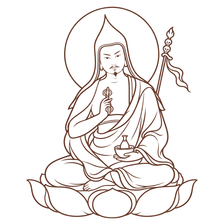
密续之旅 The Tantric Journey
(Please Note: This is Chapter Thirteen in the book Journey without Goal.) Body of talk: 34 min. Questions: 40 min. Overall: 75 min. Date: July 26, 1974
(请注意:本讲对应《无目标之旅》一书第十三章。)讲授:34分钟。提问:40分钟。总时长:75分钟。日期:1974年7月26日
导言 Introduction
A discussion of the basic meaning of yana and the tantric journey, accompanied by a discussion of kriya yoga yana, the first tantric yana. At the very end of the tape, there is a discussion of the importance and meaning of nyinthuns, or all day meditation practice.
本讲讨论乘与密续之旅的基本含义,同时讨论密续的第一乘——事瑜伽乘。录像带的最末部分讨论了 nyinthuns,即全天禅修的重要性与意义。
密续之旅。 Tantric Journey.
基 Ground
The ground of the tantric journey is the understanding of nonexistence or egolessness, as already discussed. We need to continue to question reality and to ask who the perceiver of reality is, as the ground of our journey on the path.
如前面所讨论的,密续之旅的基础是对不存在或无我的理解。我们需要不断质疑实相,并追问谁是实相的感知者,以此作为踏上道途的基础。
道 Path
With the understanding of egolessness or nonexistence, we begin to develop the knowledge of egoless insight.
随着对无我或不存在的理解,我们开始发展出对无我洞见的认识。
- Without this knowledge, there is no way to understand the tantric journey or tantric experience.
- 没有这种认识,就无法理解密续之旅或密续经验。
- This is also the basis of the difference between theistic and nontheistic traditions.
- 这也是有神论传统与非有神论传统之间差别的基础。
- In comparing theism and nontheism, we are not arguing about the existence of God but about the existence of the perceiver of God.
- 比较有神论与非有神论时,我们争论的不是神是否存在,而是感知神的那个人是否存在。
- There may be a seeming dichotomy or contradiction between the idea of having no struggle yet wanting to take a journey and having ambition. The ambition is essentially that we are inspired into nowness, this very moment.
- 不作挣扎的想法,与仍想踏上旅程、仍怀有志向之间,似乎存在对立或矛盾。这个志向,实质上是我们受到启发而进入当下,进入此时此刻。
- We can let the dichotomies or contradictions exist. They make us intelligent and cause us to question the path, so that we are not so gullible. This is good.
- 我们可以让这些对立或矛盾存在。它们使我们变得明智,促使我们质疑这条道路,从而不至于那么轻信。这是好事。
果 Fruition
Continual journey. It doesn’t matter whether we experience it as a forward or backward journey. What is important is to keep moving on the path.
持续的旅程。无论我们觉得自己是在前进还是在后退,都没有关系。重要的是在道上继续前行。
- It is somewhat like aging. As we grow old, we may feel that we are becoming more infantile or we may not enjoy the physical process of growing old. Nevertheless, we have no choice. We should regard the whole thing as a learning process.
- 这有点像衰老。随着年纪增长,我们可能觉得自己越来越孩子气,也可能不喜欢身体衰老的过程。然而,我们别无选择。我们应当把这一切视为学习的过程。
事瑜伽 Kriya Yoga
基 Ground
In order to see the vajra or tantric world properly, we have to see it in a highly purified way. This is the viewpoint of kriya, the first tantric yana.
为了正确地看待金刚世界或密续世界,我们必须以高度清净的方式来看它。这就是密续第一乘——事部——的观点。
- Kriya literally means “action,” so kriya yoga is the yoga of action.
- Kriya 的字面意思是“行动”,所以事瑜伽就是行动的瑜伽。
- Kriya is based on purity or cleanliness, which here is seeing reality from the sharpest or clearest possible perspective.
- 事部以清净或洁净为基础,在这里,这意味着以尽可能敏锐、清晰的视角看待实相。
道 Path
In kriya we see that there is both purity and dirt in the emotions. Initially, when emotions occur in a spontaneous way, they are pure or undefiled. Then we overlay all kinds of logics and attempts to possess or justify them, which is the impure quality of our emotionality.
在事部中,我们看到情绪既有清净,也有污垢。最初,情绪自发地出现时,是清净、未受染污的。随后,我们在它们之上叠加各种各样的道理,并试图占有它们或为它们辩解,这便是我们情绪中的不净特质。
- According to the Vajramala and other texts on kriya yoga, emotions are separated into pure and impure types. Pure emotion is the original flash of instantaneous experience. This is an experience of wisdom, or jnana.
- 根据《金刚鬘》及其他事瑜伽典籍,情绪分为清净和不净两类。清净的情绪是瞬间经验最初的一闪。这是智慧的经验,也就是 jnana 的经验。
- As our emotions deteriorate and are diluted by our overlays, they become ordinary passion, aggression and ignorance, which are regarded as dirt or impurity.
- 随着情绪恶化,并被我们叠加的东西冲淡,它们便成为普通的贪欲、嗔怒和愚痴,被视为污垢或不净。
- The original purity is vajra nature, which is inherently pure and cannot be contaminated. It is like the moon behind clouds, which is not fundamentally affected or obscured by the clouds.
- 最初的清净就是金刚本性,它本来清净,无法被染污。这就像云后的月亮,根本上并未受到云的影响或遮蔽。
- One should see the neuroses clearly, look at them, study them and then flush them down the toilet.
- 应当清楚地看见神经质习气,观察它们,研究它们,然后把它们冲进马桶。
果 Fruition
Having related with our impurities or garbage, the way to purify ourselves is by surrendering.
与我们的不净或垃圾建立联系之后,净化自己的方式就是全然交付。
- Ego has all kinds of tricks to turn this to its advantage, but fundamentally, we should just surrender completely.
- 自我有各种把戏,会把这件事变成对自己有利的东西,但从根本上说,我们只须彻底交付。
- In kriya yoga, there are visualizations as part of the practice, which are based on identifying with our inherently pure psychological state of being.
- 在事瑜伽中,观想是修持的一部分,其基础是认同我们本来清净的心理状态。
- The innocent or pure aspect of our being is seen as a deity, the embodiment of living enlightenment.
- 我们生命中天真或清净的一面被看作一位本尊,是活生生的觉悟的体现。
- Kriya yoga’s approach to life is based on segregating the good and pure from impure experiences and attitudes contaminated by egocentricity.
- 事瑜伽对待生活的方式,是把善与清净的东西,同受到自我中心染污的不净经验和态度区分开来。
- However, we are not trying to relate to something abstract but to real immediate experience.
- 然而,我们试图与之建立联系的,不是某种抽象的东西,而是真实、直接的经验。
听众提出的问题 Questions asked by the audience
1) You said we should feel the purity, recognize the neurosis and cut through all that. Why is purity first?
1) 您说,我们应当感受清净,认出神经质习气,并将这一切彻底斩断。为什么清净排在最前面?
2) You said that we dare to visualize our innocence in kriya yoga. How do you visualize that?
2) 您说,在事瑜伽中,我们敢于观想自己的天真。该如何观想呢?
3) You spoke of getting rid of egocentricity and neurosis. How that this differ in tantra from the Hinayana and Mahayana understanding?
3) 您谈到了去除自我中心和神经质习气。密续对这件事的理解,与小乘和大乘有什么不同?
4) Could you explain more about the phantom you mentioned in connection with egolessness?
4) 您提到过一个与无我有关的幽灵,能再多解释一些吗?
5) I don’t understand the difference between a theistic and nontheistic outlook. Can you explain more?
5) 我不明白有神论与非有神论观点之间的差别。您能再解释一些吗?
6) Would you say the bodhisattva has the same attitude as the tantrika, but is more naïve?
6) 您会不会说,菩萨与密续行者抱有同样的态度,只是更加天真?
7) You said the continuity of nonexistence is the basis of tantra. Tonight you said that we take pride in the purity of our existence. Is there a contradiction here?
7) 您说,不存在的连续性是密续的基础。今晚您又说,我们为自身存在的清净而自豪。这其中有矛盾吗?
8) If the emotions start out pure, how do they become impure?
8) 如果情绪起初是清净的,它们是怎样变得不净的?
9) Does this purity of kriya arise from faith in one’s own being?
9) 事部的这种清净,是从对自身存在的信心中生起的吗?
10) You said neurosis is to be cast out. What does the purification entail?
10) 您说,要把神经质习气抛出去。净化具体包含什么?
11) What’s the difference between jumping into a fire, as Naropa did, and which is positive, versus being gullible, which is a problem?
11) 像那洛巴那样跳进火里是积极的,而轻信是个问题,两者有什么不同?
12) Are there mutual qualities shared by innocence and cynicism, since both are pertinent to tantra?
12) 天真与怀疑态度既然都与密续有关,两者是否具有某些共同的特质?