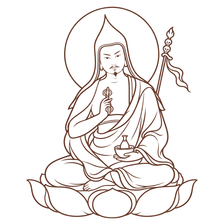
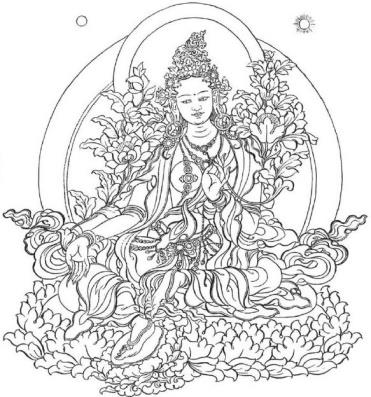
第二偈:洁白如秋月 Second Verse: White as Autumn Moon
Praise to Tāra! Whose face is like
A mass of hundreds of full autumn moons,
Blazing with expanding brilliant light of
A constellation of thousands of stars.
礼赞度母!您的面容犹如
数百轮秋日满月汇聚,
炽耀着向外扩展的明光,
如同数千星辰汇成的星群。
This verse means a female with a beautiful, clean-clear face like a mass of radiant light which resembles a celestial constellation. Like the radiant light from an assembly of thousands of stars, a female possessing a form of expanding, blazing clear, radiant light. Her body is white, clear, transparent and extremely beautiful and ravishing, emanating white, brilliant rays of light.
此偈意指一位面容美丽、清净明澈的女尊,犹如一团灿烂光明,好似天上的星群。她的形体如数千星辰汇聚的光辉一般,放射着向外扩展、炽耀清澈的明光。她的身体洁白、明澈、通透,极其美丽动人,散发着洁白灿烂的光芒。
本篇原注
21
The Tibetan term is sbas don, Tāranātha uses the word ‘hidden’ not ‘ultimate’ here, even though it is referring to the inner aspects of Tāra, it is not ultimate because it is still involving mental focus on objects of the mind. The ultimate meaning goes beyond concepts, objects and so on. However, in the Tika commentary, Tāranātha uses the word ‘definitive meaning’ (nges don) for similar explanations of the Tāras.
藏文术语是sbas don。多罗那他在这里用的是“隐”而非“究竟”一词;虽然它指度母的内在层面,但不是究竟,因为它仍涉及对心之对象的专注。究竟义超越概念、对象等。不过,在《蒂迦释》中,多罗那他对诸度母作类似解释时,用的是“了义”(nges don)一词。
22
The Tibetan term, nor bu here means peak tip of the penis.
此处藏文nor bu意为阴茎的顶端。
23
The Tibetan term, kun da is the Sanskrit word for jasmine, but here refers to white seminal fluid. With the inner heat tummo and tsa lung practises, bodhicitta refers to the white seminal element at the top of the crown.
藏文kun da源于梵文的“茉莉”,但这里指白色精液。在拙火与脉风修法中,菩提心指位于头顶的白色精质。