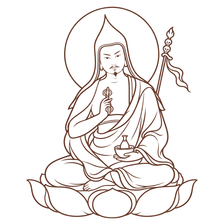
密续行者 The Tantric Practitioner
(Please Note: This is Chapter One in the book Journey without Goal.) Body of talk: 28 min. Questions: 16 min. Overall: 48 min. Date: June 15, 1974
(请注意:本讲对应《无目标之旅》第一章。)讲座正文:28 分钟。提问:16 分钟。总时长:48 分钟。日期:1974 年 6 月 15 日
This is the first talk of the seminar on tantra given by Chögyam Trungpa Rinpoche at Naropa Institute in the summer of 1974. The seminar was edited into the book Journey without Goal: The Tantric Wisdom of the Buddha, which is the main reference and reading material for the DVD class. However, students need to be aware that some material from the original lectures was condensed or inserted into another section of the book and that questions and answers were not included, although some material from the Q and A has been interwoven into the body of the book.
这是丘扬·创巴仁波切于 1974 年夏天在那洛巴学院讲授的密续研讨课程的第一讲。这门课程经编辑成为《无目标之旅:佛陀的密续智慧》一书,是这门 DVD 课程的主要参考资料和阅读材料。不过,学员需要注意,原讲座的部分内容在书中经过了浓缩,或被放入了其他部分;问答未收入书中,但问答中的部分内容已融入书的正文。
导言 Introduction
The first few minutes of the talk are an introduction to the course as a whole. The Vidyadhara emphasizes that the course is a theoretical introduction to tantra, or a “hypothetical situation,” one that gives students an idea of the path of tantra, which they may embark on in the future or may be approaching at the infant level at this time. He stresses that tantra, or Vajrayana, can only come out of a complete comprehension of Hinayana and Mahayana Buddhism to begin with.
讲座的前几分钟介绍了整门课程。持明上师强调,这门课程是对密续的理论性介绍,或者说是一种“假设情境”,让学员了解密续之道;他们可能在未来踏上这条道路,也可能此刻正处于接近它的起步阶段。他强调,必须先完整理解小乘和大乘佛教,密续,也就是金刚乘,才可能由此开展。
基 Ground
Who is studying tantra?
谁在学习密续?
- First, we need to ask who the tantric practitioner is, rather than concerning ourselves with how to practice tantra or what it is.
- 首先,我们需要问密续行者是谁,而不是关注如何修习密续,或密续是什么。
- The Vidyadhara introduces the meaning or definition of tantra, or the Tibetan gyü, as “continuity.” This relates to the continuity of our personal experience and our commitment to the Buddhist teachings, which is like a thread that runs through our experience of the Buddhist path.
- 持明上师介绍,密续,或藏语 gyü,其含义或定义是“相续”。这关乎我们个人体验的相续,以及我们对佛教教导的投入,如同一条线贯穿我们在佛教道路上的体验。
- Inquiring about who is practicing tantra takes us back to the Hinayana teachings. We have to look at egolessness, or the absence of self, which is also the absence of God. When we don’t have a conceptualized divine being, the situation is very open.
- 探问谁在修习密续,会将我们带回小乘的教导。我们必须审视无我,也就是自我的缺席,而这也是上帝的缺席。当我们没有一个概念化的神圣存在时,情境便十分开放。
- We use all kinds of relative reference points to either convince ourselves that we do exist (“I have a name; I wear clothes; I eat; I sleep”) or to convince ourselves that we don’t exist (by burning our birth certificate) to avoid being drafted.
- 我们使用各种相对的参照点,或是让自己相信我们确实存在(“我有名字;我穿衣服;我吃饭;我睡觉”),或是为了逃避征兵,让自己相信我们并不存在(把出生证明烧掉)。
- Discovering nonexistence in the Buddhist tradition has nothing to do with destroying relative reference points. Rather, we don’t use any reference points at all.
- 在佛教传统中,发现不存在与摧毁相对的参照点毫无关系。相反,我们根本不使用任何参照点。
- Trying to see ourselves without any reference point at all may make us feel more lost and confused. This may help us to realize the beginninglessness of the thread of tantra but we still feel heavy and lost, like a jellyfish or a robot.
- 尝试在完全没有参照点的情况下看自己,可能让我们感到更加迷失和困惑。这或许有助于我们领会密续这条线的无始性,但我们仍然感到沉重和迷失,像水母或机器人一样。
道 Path
A sense of humor enables us to dance with the situation, beyond our confusion.
幽默感使我们能够与情境共舞,超越自身的迷惑。
- We are still trying to find ourselves, and something that we can’t put a finger on is being a nuisance.
- 我们仍在试图找到自己,而某种我们无法确切指出的东西正在困扰着我们。
- We can’t get rid of the confusion or the flatness, but we begin to see how even the flatness, lack of inspiration, solidity and confusion are dancing constantly.
- 我们无法摆脱迷惑或平淡,但我们开始看到,即使是平淡、缺乏灵感、凝固感和迷惑,也都在不停地舞动。
- When we can dance with our situation, it becomes somewhat uplifted. However, something is still very confused and ambiguous.
- 当我们能够与自己的情境共舞时,情境便多少多了些昂扬之感。然而,仍有某种东西十分混乱、含混不明。
果 Fruition
Discovering the seed syllable of ambiguity.
发现含混不明的种子字。
- Ambiguity is called a seed syllable when it becomes a starting point rather than a source of problems.
- 当含混不明成为一个起点,而不再是问题的来源时,它就被称为种子字。
- The discovery of nonexistence comes from experiencing both the energy of humor and the “thingness” or form of confusion.
- 发现不存在,来自同时体验幽默的能量与迷惑的“物性”或形态。
- Form does not prove energy, and energy does not prove the existence of form, so there is no confirmation, just ambiguity.
- 形态不能证明能量,能量也不能证明形态的存在,因此没有任何确证,只有含混不明。
- However, at this point, the feeling of being lost has the quality of freedom rather than the quality of confusion.
- 然而,在这一点上,迷失的感觉带有自由的性质,而非迷惑的性质。
- This has to be a personal experience. Then we begin to feel that we really do not exist, and we begin to feel the big joke behind the whole thing.
- 这必须是亲身体验。随后,我们开始感到自己确实不存在,也开始感到整件事背后那个巨大的玩笑。
结语 Conclusion
A truly ambiguous talk, which the Vidyadhara says we may find confusing or even irritating, but he stresses that this examination of nonexistence is the only way to begin on the path of tantra. He ends with a discussion of how tantra is not a vague spiritual process but something precise, rare and unique, which we need to value and approach properly.
这确实是一场含混不明的讲座。持明上师说,我们可能会觉得困惑,甚至恼火,但他强调,对不存在的这一番审视,是开始踏上密续之道的唯一途径。最后,他谈到,密续不是一个模糊的灵性过程,而是精确、稀有而独特的东西,我们需要珍视它,并以恰当的方式接近它。
听众提出的问题 Questions asked by the audience
1) Can you tell us what the readings are for each class?
1) 能否告诉我们每堂课要读些什么?
2) Is the idea of egolessness here similar to the understanding of emptiness or sunyata?
2) 这里的无我观念,是否类似于对空性或 sunyata 的理解?
3) How can we make these teachings work in the American style?
3) 我们怎样才能让这些教导以美国式的方式发挥作用?
4) What is the difference between the Hinayana understanding of egolessness and what you spoke of today?
4) 小乘对无我的理解,与您今天所讲的有何不同?
5) I heard you say that some people are more tantric by nature than others. What do you mean by that?
5) 我听您说,有些人天性中密续的特质比其他人更强。这是什么意思?
6) If you’re not fascinated by sights and sounds but you are more preoccupied with who is experiencing them, are you less tantric by nature?
6) 如果一个人不着迷于景象和声音,而是更关注谁在体验它们,那么他天性中密续的特质是否较弱?
7) You used the word “inaccessible” to refer to the Vajrayana teachings. Why?
7) 您用“难以接近”这个词来形容金刚乘教导。为什么?