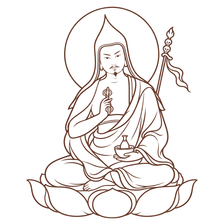
Following the Dzogchen Path
乌金督佳仁波切以色列之行,2011年7月19—25日 Orgyen Tobgyal Rinpoche’s Trip to Israel, 19-25 July 2011
Orgyen Tobgyal Rinpoche has always been fascinated by history, especially the history of religion. So, from the moment he heard about Jerusalem and how sacred it is to three of the world’s most widespread religions, he wanted to go there. When he casually mentioned his longing to see the Holy City to some Israeli Rigpa students, they immediately organized a visit, and in July 2011 Rinpoche arrived in Jerusalem.
乌金督佳仁波切一直对历史深感兴趣,尤其是宗教史。因此,从听说耶路撒冷,以及这座城市对世界三大广泛流传的宗教何等神圣的那一刻起,他便想前往。他偶然向几位以色列本觉会学员提起想看圣城的心愿,对方立即安排访问。2011年7月,仁波切抵达耶路撒冷。
For three days Rinpoche stayed in a beautiful apartment overlooking the Wailing Wall, which marks the western boundary of the holiest of Jewish sites, Temple Mount. Comfortably settled in his armchair and silently absorbed in his practice, Rinpoche would gaze out at the unceasing flow of devotees making their way to the 4000 year-old wall and to the Dome of the Rock above it—the centre of the universe for Jews and Muslims alike.
仁波切在一间俯瞰哭墙的漂亮公寓住了三天。哭墙标示着犹太教最神圣地点圣殿山的西界。仁波切安适地坐在扶手椅中,默默专注修持,望着络绎不绝的信众前往这道有四千年历史的墙,以及上方的圆顶清真寺;对犹太人与穆斯林而言,这里都是宇宙的中心。
Moshe, an ex-special forces soldier, accompanied Rinpoche and his monks through the narrow, winding streets, following the footsteps of Solomon and David, the Roman occupiers, and of course Jesus and Mahomet. And by his own admission, Rinpoche was the most unusual ‘tourist’ ever entrusted to Moshe’s care. In every corner of the holy city, rabbis and students in large fur hats and heavy black overcoat hurried through the ancient backstreets. Rinpoche said that many of them looked quite crazy. Then he added, “When Maudgalyayana and Shariputra came out of the forest they too looked virtually insane to the villagers they met—these days most Buddhist monks look much too much like ordinary people.”
曾为特种部队军人的摩西,陪伴仁波切与僧众穿行狭窄曲折的街道,追随所罗门、大卫、罗马占领者,当然还有耶稣与穆罕默德的足迹。摩西自己承认,仁波切是他受托照顾过最不寻常的“游客”。圣城每个角落,戴大毛皮帽、穿厚重黑外套的拉比与学生,都在古老后街中匆匆穿行。仁波切说,他们中许多人看起来颇为疯狂。随后补充:“目犍连与舍利弗从森林中走出来时,遇见他们的村民也觉得两人简直像疯子。如今,大多数佛教僧人看起来实在太像普通人了。”
On the fourth day Rinpoche and his party were driven through the desert for a ‘dip’ in Dead Sea, then north to Tel-Aviv, where Rinpoche was invited by the Rigpa sangha and Chokyi Nyima Rinpoche’s students to teach. With characteristic perspicacity and wit, Rinpoche described how the different elements of the path fit together and should be approached by modern Nyingma practitioners—especially Rigpa students. And on the evening before he left, Rinpoche patiently answered all the Rigpa students’ questions, as a way of thanking them for organizing his visit and caring for him so well.
第四天,仁波切一行乘车穿越沙漠,到死海“泡一泡”,再北上特拉维夫。在那里,本觉会僧团与确吉尼玛仁波切的弟子邀请他讲法。仁波切以一贯敏锐而风趣的方式,说明修道的不同要素如何结合,以及现代宁玛行者——尤其是本觉会学员——应如何着手。离开的前一晚,他耐心回答所有本觉会学员的问题,以感谢他们安排访问、悉心照顾。
This is the teaching Rinpoche gave on 23 July 2011. In it he shows how the different teachings—renunciation (the Fundamental Vehicle), bodhichitta (Mahayana) and deity practice (Vajrayana)—fit together on the Dzogchen path, what their role is and how to practise them. Always simple and practical, Rinpoche’s teaching goes directly to the heart of the matter. Once you’ve read it, there’s no way you could say that you don’t know how to reach enlightenment!
以下是仁波切于2011年7月23日所作的开示。他说明出离心(基础乘)、菩提心(大乘)及本尊修法(金刚乘)这些不同教法,如何结合于大圆满道路,各有何作用、应如何修持。仁波切的教导始终简明实用,直指要害。读过之后,你便无法再说,不知道如何达到觉悟!
Rinpoche speaks eloquently about the spiritual master, how to relate to him, and the importance of devotion: “From the point of view of the Dzogchen path, to accumulate merit, devotion is crucial!” Rinpoche’s overall message is that to jump too quickly onto the Dzogchen path, and to practise Dzogchen meditation exclusively is simply not enough. He goes on to lay out for us, with crystal clarity, what it is we must do and why, then leaves it to the us to study the available explanations and commentaries—like The Words of My Perfect Teacher—to help each of us take responsibility for our own path. Rinpoche feels that his job is to provide us with the map of everything we need to understand in order to follow the path of Dzogpachenpo all the way to enlightenment.
仁波切生动地谈到上师、如何与上师相处,以及虔敬的重要性:“从大圆满道路的观点来说,为积累福德,虔敬至关重要!”总体而言,他要传达的是:过早跳入大圆满道路,并且专修大圆满禅定,实在不够。他继续为我们极其清楚地铺陈,必须做什么、为什么要做,然后让我们自行研读已有解释与注疏,例如《普贤上师言教》,帮助每个人对自己的道路负责。仁波切认为,他的工作是为我们提供一张地图,呈现循大圆满之道直至觉悟,所需理解的一切。
Insightful. Uncomplicated. Definitive.
深刻。简明。确切。
引言 Introduction
The Vinaya teachings report that the Bhagavan Buddha said, “Gather with friends to talk about the Dharma.” And friends should gather together to share the Dharma, because talking about the Dharma helps us understand the teachings, removes our doubts and hesitations, and brings stability to our practice.
律藏教法记载,世尊佛陀说:“与朋友相聚谈法。”朋友们应当聚集分享佛法,因为谈论佛法,能帮助理解教法,遣除疑惑与犹豫,使修行稳固。
Generally speaking, the Buddha’s teachings are contained in nine successive vehicles. To follow these vehicles you need to rely on a teacher. Those who follow the two paths of the lower vehicles rely on a 'spiritual friend'; when they take the vows of individual liberation and receive the associated teachings, they see their teacher as their ‘father’ and themselves as his ‘children’.
一般而言,佛陀的教法包含于九乘次第。要循这些乘而行,需要依止老师。行持下二乘道路的人,依止“善知识”;受别解脱戒及相关教法时,视老师为“父亲”,自己为其“子女”。
In the Mahayana—the vehicle of the bodhisattvas—students think of their teacher as a ‘doctor’ and his teachings as ‘medicine’, thinking, “If I apply these teachings, I will be cured; if I don’t I will die.”
在大乘、也就是菩萨乘中,弟子视老师为“医生”,教法为“药”,心想:“若实践这些教法,我就能痊愈;若不实践,就会死去。”
To follow the Vajrayana vehicle, students must first receive an empowerment, because without it you’re not allowed to listen to the teachings. The lama from whom you receive the empowerment that matures you for the Vajrayana path must be seen as the ‘Lord of the Mandala’, which is also how you should see him when he gives you the Vajrayana ‘liberating instructions’—in other words, as you receive teachings.
要循金刚乘修行,弟子首先必须领受灌顶,因为没有灌顶,便不允许听闻其教法。赐予灌顶、令你成熟而堪行金刚乘道的上师,应视为“坛城主尊”;他给予金刚乘“解脱教言”时,也就是领受教法时,同样应如此看待。
When receiving teachings from the vehicle of Dzogpachenpo, we see the teacher as the Buddha himself, because the teacher shows us unequivocally that our own mind is the Buddha. This kind of transmission must be given by a teacher, but unless we see that teacher as the Buddha, we cannot truly receive the instruction.
领受大圆满乘教法时,我们视上师为佛陀本人,因为上师毫不含糊地向我们指出,自心就是佛。这种传承必须由上师给予;但若不视上师为佛,就无法真正领受教言。
Today’s talk has nothing to do with any of that because I am not a teacher and have none of the qualities of a teacher. I’m just here as a tourist. And you should know that I rarely teach. Very occasionally I say a few words to clarify points in the teachings, but only as a way of helping and supporting Sogyal Rinpoche.
今天的谈话与这些都无关,因为我不是老师,也不具备老师的任何功德。我只是来旅游。你们应当知道,我很少讲法,偶尔说几句话,澄清教法中的要点,也只是为了帮助、支持索甲仁波切。
I’ve travelled all over the world. In the early days as an attendant to Dilgo Khyentse Rinpoche, and since then for my own pleasure. Even so, I had reached my sixtieth year without ever having visited the incredibly famous country of Israel, which I’d heard so much about as a child and always felt I wanted to visit. Now that I’m here, Philip said I might as well give a teaching, so I agreed. Actually I kind of gave my word, which is how I ended up sitting on this chair.
我走遍世界,早年作为顶果钦哲仁波切的侍者,后来则为自己游乐。即便如此,到六十岁,我还从未访问过以色列这个极著名的国家。我从小就听说许多关于它的事,一直想来。如今既然来了,菲利普说,不妨讲个法,我就答应了。实际上,是我作了承诺,所以才坐到这把椅子上。
老师的功德 The Qualities of A Teacher
学识、证悟与利他事业 Knowledge, Realization, Positive Activity
Generally speaking, a lama who gives teaching should have three qualities: he must be knowledgeable, he must have experience and realization of practice, and he must have mastered positive activities.
一般而言,传法上师应具有三种功德:必须有学识,必须具有修行的觉受与证悟,必须通达利他事业。
The teachings also explain that knowledge alone is not useful, and that he must put the Dharma he has studied into practice. Through practice he develops qualities of meditative experience and realization, and once these experiences have permeated his mind, his teachings will be beneficial. If he doesn’t practise the teachings he studies, trying to teach others will prove fruitless.
教法也说明,只有知识并无用处,必须把所学佛法付诸修持。通过修行,生起禅修的觉受与证悟;一旦这些体验浸润其心,他所教的便会有益。若不修持自己所学,试图教导别人便不会有结果。
Take the example of a man who spends his entire life talking about compassion and bodhichitta and how extraordinary it is. He talks about how to generate compassion, how complete awakening results from cultivating compassion, and so on, but however well he is able to explain it, as he never applies the compassion teachings to himself, what benefit is there in endlessly talking about it? None whatsoever! With no compassion in his own mind, there is no benefit at all! On the other hand, the teachings of someone who isn’t as good at talking about it, but who has meditated on the different stages and developed a natural sense of compassion in himself, will have an immediate impact on others. Teaching Dharma without having practised is like saying, “I give you all the wealth of America!” But, as you don’t own that wealth, how can you give it?
譬如,一个人一生都在谈慈悲、菩提心,谈它们何等非凡。他讲怎样生起慈悲,培养慈悲如何带来圆满觉悟等等;但无论讲得多好,自己从不实践慈悲教法,没完没了地讲又有什么利益?毫无利益!自己心中没有慈悲,就一点利益也没有!另一方面,有人虽不那么善于讲述,却依不同阶段修习,心中培养出自然悲心,他的教导就会立即影响他人。未曾实修却传法,就像说:“我把美国所有财富都给你!”但那些财富不属于你,怎么能给人?
This is true for all nine vehicles. Whatever the Dharma teaching, a teacher must practice it and have matured at least some of the fruits of practice.
九乘全都如此。无论哪一种佛法教导,老师都必须修持,并至少成熟了一些修行果实。
A teacher who has become ‘learned’ and has experience and realization of practice automatically masters the third aspect: positive activity. ‘Positive activities’ are those activities you undertake for others motivated by compassion and altruism. Anything you do that doesn’t benefit others won’t fall into this category.
老师如果已经博学,又具有实修的觉受与证悟,便自然通达第三方面:利他事业。“利他事业”是以慈悲和利他心为动机,为别人所作的活动。不利益他人的任何行为,都不属于这一类。
In the same way the nature of the sun is such that it emits warmth and rays of light, a master who has the two qualities of being knowledgeable and the experience and realization that is the result of practice, will naturally act for the benefit of others. Of these two aspects, the second, practice, is the most crucial. As there is no end to what we can learn, it’s more important to practise whatever you study and that your practice bears fruit, than to spend all your time studying. Dharma qualities are inconceivable, and so a teacher who has developed these qualities will always manifest and act for the benefit of others.
如同太阳的本性就是散发温暖与光芒,一位具有学识及实修所生觉受证悟这两种功德的上师,会自然地利益他人。二者之中,第二方面——修行——最为关键。所能学习的没有穷尽,因此,相比把全部时间用来学习,更重要的是修持所学,令修行结出果实。佛法功德不可思议,培养出这些功德的老师,总会显现并行动,以利益他人。
博学、持戒与慈心 Learned, Disciplined and Kind
It is also said that teachers must have another three qualities: he must be learned, disciplined and kind-hearted.
也说老师须具另外三种功德:博学、持戒,以及心地慈善。
The first quality of being learned means that a teacher must be able to explain the teachings of each vehicle without bias, and he must have mastered not only the words but the meaning of each teaching. On top of that, merely to be able to explain the teachings is not enough. The teacher must know all the different aspects of the nine successive vehicles, and be able to explain clearly each vehicle’s View, Meditation, Conduct, Principles and Specific Features, without mixing them up. That’s how teachers must teach, otherwise the teachings will become a kind of soup. How do we make soup? By mixing different ingredients together, which cannot then be distinguished from one another once cooked. Similarly, a teacher might entertain you for an hour or two, and you may even leave his talk feeling amazed by what you have just heard, but the only benefit is that it relaxes your mind at bit, like watching a movie helps you unwind. And when you try to use what you've heard to practise the Dharma genuinely, the ‘understanding’ you've brought away from that 'teaching' won’t allow it.
第一种功德博学,是说老师必须能够无偏地解释各乘教法,不只掌握文字,也掌握每一种教法的意义。此外,仅能解释仍不够。老师必须了解九乘次第的各个方面,清楚说明每一乘的见、修、行、原则与特征,不使其混杂。老师必须这样教,否则教法就会变成一锅汤。汤怎么做?把不同材料混在一起,煮熟后,彼此便分辨不出。同样,一位老师或许能让你开心一两个小时,听完后你甚至觉得所闻令人惊叹,但唯一好处,只是让心稍微放松,像看电影舒缓心情一样。等你想把所闻用于真正修法时,从那场“教导”中带走的“理解”,却做不到这一点。
When the Buddha taught, he never mixed up different teachings. Likewise, a good teacher is first able to determine the needs of those he is about to address, then teach them accordingly. And a each sentient being has a unique disposition and capacity, the Buddha taught 84,000 kinds of teaching.
佛陀说法时,从不混淆不同教法。同样,好的老师首先能判断听众的需要,再作相应教导。每个众生的性情、能力各不相同,所以佛陀宣说八万四千种教法。
In addition to being learned, the teacher must also have discipline, which is the second aspect. This is because every single pledge we make on the path—from the vows of refuge right up to the samaya commitments of Dzogchen—must be maintained. And if you keep the individual vows of each vehicle, you can then tell others to do the same—to be able to tell others to keep their vows, a teacher must observe them himself. That’s what being ‘disciplined’ means.
除了博学,老师还须持戒,这是第二方面。因为我们在道上所作的每一个承诺,从皈依戒直到大圆满三昧耶,都必须守持。自己守持各乘相应戒律后,才能叫别人也这样做。要告诉别人守戒,老师自己必须遵守,这就是“持戒”的意思。
If you examine all the qualities necessary in a ‘teacher’, it’s easy to see that I, myself, am no ‘lama’. However, I have been following and practising the Dharma since childhood and have received teachings from 55 different teachers—that’s quite a lot of teaching. Throughout my life the Dharma has been very important to me, and I have always prayed that I would become a genuine Dharma practitioner.
若检查一位“老师”所需的一切功德,很容易看出,我自己并不是“上师”。不过,我从小就追随、修持佛法,从五十五位不同老师处领受过教法,所闻相当多。佛法一生对我都非常重要,我也始终祈愿,自己能成为真正的修行人。
一、什么是佛教? 1. What is Buddhism?
First, this term ‘Buddhism’. Actually, there is no such thing as ‘Buddh-ism’. A new religious tradition called ‘Buddhism’ has never been ‘created’.
先说“佛教”这个词。实际上,并没有什么“佛陀主义”(Buddh-ism),从来没有“创造”过一个名叫“佛教”的新宗教传统。
“轮回是苦” 'Samsara is suffering'
The approach of those who follow the Buddha’s teaching is that first you must identify what ‘samsara’, the cycle of existence, really is. The Buddha explained that ‘samsara is suffering’ and that in samsara what experiences suffering is the mind. So first we must ask ourselves: is samsara suffering, or not? Once you realize that samsara is suffering, you will have entered the Buddhist community. If you think samsara isn’t ‘suffering’, that it’s actually quite nice, you don’t need the Buddha’s teachings.
追随佛陀教法者的做法,是首先必须认清“轮回”——生死循环——究竟是什么。佛陀解释,“轮回是苦”,而轮回中经历痛苦的是心。因此,首先必须自问:轮回是不是苦?一旦认识到轮回是苦,便进入了佛教群体。若认为轮回并非“苦”,其实相当不错,就不需要佛陀教法。
The Buddha told us that, ‘samsara is suffering’, but he didn’t leave it at that. He also showed us the path that liberates us from suffering.
佛陀告诉我们“轮回是苦”,但没有止于此;他也指出了使我们从苦中解脱的道路。
不是理论,要实际修持! Not Theory, Practice!
Although the Buddha eventually taught the methods that free us from suffering, initially, he himself followed the wrong path and spent three countless eons slaving away in samsara before liberating himself by realizing buddhahood. And when he taught, he only spoke about what he had actually experienced. He didn’t ever merely theorize or twist the facts in any way. For example, Buddha said that if you act negatively by taking a life, once that negative action has matured, it will determine how you experience samsara. Likewise if you 'free' or protect lives, you will experience the appropriate result. Basically, Buddha just told us how things really are.
虽然佛陀最终教导了使我们离苦的方法,但最初他自己也曾走上错误道路,在轮回中辛苦挣扎三个无数劫,才由证悟佛果而解脱。他讲法时,只说自己真正经历过的事,从不只是构建理论,也不以任何方式歪曲事实。例如,佛陀说,若以杀生造恶业,一旦恶业成熟,就会决定你在轮回中的体验。同样,若“放生”或保护生命,就会经历相应结果。基本上,佛陀只是告诉我们,事物实际如何。
佛性 Buddha Nature
Buddha said that the higher realms of samsara provide the basis for experiencing some degree of joy and happiness, whereas the lower realms don’t. In the lower realms beings only ever spiral deeper and deeper into suffering. Of the three higher realms, the best place to be reborn, according to the Buddha, is the human realm, in a human body.
佛陀说,轮回中的善趣提供体验一定喜悦与幸福的基础,恶趣则没有。在恶趣,众生只会不断陷入更深的痛苦。三善趣之中,依佛陀所说,最佳转生之处,是人道的人身。
All sentient beings in the six realms of existence have one quality in common: they all have the ‘ground’ of freedom from suffering. What is this ‘ground’? Buddha nature: mind free of delusion. We must have this ‘ground’ in order to follow the path to awakening, and it’s also the ‘ground’ that sends us tumbling deeper into samsara.
六道一切众生有一个共同特点:都具备离苦的“本基”。这“本基”是什么?佛性,也就是离于迷乱的心。必须具备这一本基,才能走向觉悟;使我们跌入更深轮回的,也是这一本基。
The mind—basically the buddha nature—of a person who wanders endlessly in samsara is no different to the mind of the Buddha; the ground is the same. The only difference between them is that one is deluded and the other is not. The Buddha explained this difference, and it’s very important that you get to grips with it right from the start. What you mustn’t do is pretend to believe something that doesn't seem to you to be true—“These are Holy Words!”, “This is what the Buddha taught!”, “This is the Law!”, or “This idea has been imposed on me by people with power...” Don't think like that, it’s not like that at all.
无尽漂泊轮回者的心,基本上就是佛性,与佛陀的心并无不同,本基是相同的。唯一差别,是一个迷乱,一个不迷乱。佛陀解释了这个差别,从一开始就透彻理解它,非常重要。千万不要对自己觉得不真实的事情,装作相信:“这是圣言!”“这是佛说的!”“这是定律!”或“这个观念是有权势的人强加给我的……”不要这样想,根本不是这么回事。
前世与来生 Past and Future Lives
Samsara is without beginning, but it has an end: buddhahood. We take rebirth within samsara, which is where we have already lived many lives, and will live many more in the future. These days science is unable to accept past and future lives, yet there are a few scientifically-minded people who think “There must be something”; I've discovered this during conversations I’ve had with many people. It’s actually quite easy to prove through honest, objective reflection, but we don’t have to do that today because everyone here is Buddhist!
轮回没有开始,却有终点:佛果。我们在轮回中投生,已度过许多生,未来还会度过许多生。如今科学无法接受前世来生,但仍有一些具有科学思维的人认为“必定有些什么”;我与许多人交谈时发现了这一点。通过诚实、客观的思考,其实很容易证明。不过今天不必这样做,因为在座都是佛教徒!
So these are the first points that it’s really important for a practitioner to grasp. Plus, of course, that the reason we practise the Dharma is to free ourselves from samsara. This should also be clearly understood. Think about the shortcomings of samsara and the qualities of a buddha… but I don’t need to go into this. There are so many books that explain these reflections, so you should study them.
这些便是修行人首先必须掌握的重要要点。当然,还包括:修持佛法的原因,是要使自己脱离轮回。这一点也应清楚理解。思惟轮回的过患与佛的功德……不过,我不必详细讲,解释这些思惟的书很多,应当去学习。
That’s my first point.
这是我的第一点。
二、尊重老师 2. Respect for the Teachers
If you have arrived at the realization, “I must free myself from samsara”, how should you now proceed? Well, the path to liberation is what the Buddha taught, so you should study his teachings and put them into practice.
若已认识到“我必须从轮回中解脱”,接着该如何做?解脱道就是佛陀所教的,因此应学习他的教法,付诸修持。
At present, people like us are unable to meet the Buddha, which means the only way to learn about the Buddha’s teachings is to follow a teacher. This is extremely important. The moment there are no teachers left in the world to show us what to adopt and what to reject, the teachings will be finished. But even if there’s only one person left who can explain the following stanza properly, the teachings will still be here.
目前,像我们这样的人无法见到佛陀,因此,学习佛陀教法的唯一方法,就是追随老师。这极其重要。当世间不再有老师为我们指示何者应取、何者应舍时,教法便告终结。但即使只剩一个人,能正确解释以下偈颂,教法仍然存在。
If this teaching is repeatedly explained and transmitted to others—if there is a continuity of teaching—then the Dharma of transmission will continue to exist. And if students continue to develop a genuine understanding of the teachings and practice, and apply them as they were taught, then the Dharma of realization will remain. The presence in this world of the two aspects of the Dharma—the Dharma of transmission and the Dharma of realization—is a gift from our teachers. Why can we only get them from a teacher? Because our teachers hold the root, the Dharma of transmission, which is the basis from which the Dharma of realization develops. This is why the teacher is so important.
若这一教法不断被解释并传给他人,也就是传授相续不断,教法(传授之法)便会继续存在。如果弟子持续真正理解教法与修持,并依所教而实践,证法也会留存。教、证两种佛法在世间的存在,是老师赐予我们的礼物。为什么只能从老师处获得?因为老师持有根本,也就是教法,证法便依此发展。因此,老师如此重要。
师徒关系 Teacher-student Relationship
Now I come to my main point.
现在,说到我的主要观点。
In the past, genuine teachers were extremely rare. Only those who had received all the teachings, practised them, and as a result had a clear vision of the yidam deity, or their own teacher, would teach. This was still the case even fifty or sixty years ago. No one would teach the Dharma unless he had practised and achieved visible signs of accomplishment. Why were such teachers so rare? Because they thought, “Until I have myself benefited from the teachings, how can I benefit others?” Those willing to give empowerments were even more rare—for example, Dharma Lord Patrul Rinpoche himself said that he didn’t have the capacity to give empowerments. And only one or two lamas taught Dzogpachenpo.
过去,真正的老师极其稀少。只有领受全部教法、付诸修持,因此清楚见到本尊或自己的上师之后,才会传法。即使五六十年前,仍然如此。没有人会在未经修持、未获得明显成就征兆时传法。这样的老师为什么如此少?因为他们想:“在我自己尚未从教法获益之前,怎能利益他人?”愿意给予灌顶的人更少。例如,法主巴珠仁波切亲自说,他没有给予灌顶的能力。而传授大圆满的上师,只有一两位。
Students who aspired to practise Dzogchen from these teachers would have made a huge effort to purify their minds by first training in all the stages of the Ngöndro (the preliminary practices) then the ‘Main Practice’ of the yidam. Throughout this process they would have constantly examined the teacher to make sure he really had all the qualities of an authentic Dzogchen master; and the teacher would also have been checking the students. Only once all that had been accomplished would Dzogchen finally have been taught.
希望从这些老师处修学大圆满的弟子,会先训练前行的所有阶段,再修本尊“正行”,以极大努力净化自心。在整个过程中,不断观察老师,确认他真正具备大圆满上师的一切功德;老师也同样观察弟子。只有这一切完成之后,才最终传授大圆满。
By and large, those who received Dzogchen teachings in this way—Yeshe Lama for example—didn’t have to be reborn again in samsara. The accounts we read of their lives always describe ‘liberation’. And when such a person was dying, those at his bedside would often say, “Oh, he received Yeshe Lama”, meaning “Don’t worry about him, he’ll be fine.”
总的来说,以这种方式领受大圆满教法,例如《智慧上师》的人,不必再次投生轮回。我们读到的他们的生平,总是在描述“解脱”。这样的人临终时,床边的人往往说:“哦,他领受过《智慧上师》。”意思是:“不必担心,他不会有事。”
Nowadays it’s not like that. The biggest problem teachers’ have is how to find anyone to listen to their teachings. But you’ll never have trouble finding teachers who want to teach. Modern teachers advertise themselves crudely, with language like, “I give the most profound teachings. I grant the most profound empowerments”, and so on. Obviously, things have changed. I don’t know how it happened. But it was a change instigated by the most important of all the Tibetan Buddhist lamas—His Holiness Dalai Lama, His Holiness Sakya Trizin, His Holiness Karmapa and the highest lamas of the Nyingma tradition—all of whom are masters we look up to as ‘holders of the teachings'.
如今不同了。老师最大的难题,是如何找到人来听法;但想找到愿意讲法的老师,绝不会困难。现代老师直白地宣传自己:“我传最甚深的教法,我授最甚深的灌顶。”等等。显然,事情已经改变。我不知道怎么发生的;但推动这一改变的,是藏传佛教最重要的上师:达赖喇嘛尊者、萨迦法王尊者、噶玛巴尊者,以及宁玛传统最崇高的上师。他们都是我们敬仰为“教法持有者”的大师。
In any case, to come back to our subject. When you want to receive teachings, empowerments, or Dzogchen teachings, first you must check the person’s qualities and qualifications to make sure he is a genuine teacher. And of course the teacher must also examine the student. Even if teacher and student have the required qualities, once they have entered into a student-teacher relationship, they must continue to abide by the samayas. In fact, samaya is the most important element in their relationship—which is the crux of what I want to tell you today. Of course, before entering into a student-teacher relationship, you are quite free to do as you like, but not once it has been established.
无论如何,回到主题。想领受教法、灌顶或大圆满教法时,首先必须检查对方的功德与资格,确认是真正的老师。当然,老师也必须观察弟子。即使双方都具备所需条件,一旦建立师徒关系,仍须继续守持三昧耶。事实上,三昧耶是这种关系最重要的要素,也是今天我想告诉你们的核心。当然,在建立师徒关系之前,完全可以随自己的意愿行事;建立之后,就不能如此了。
These days too many students follow a teacher for a while, then turn against him, and even end up fighting him. But doing so will only land you in the worst possible hell where the suffering is the greatest. The karma of turning against your teacher is so strong that the moment you die, it will drive you straight into that hell. So the important thing here is that you don’t forge a samaya link with a teacher too quickly, then find out you can’t maintain your pure perception, or ‘sacred outlook’! Don't put yourself in the position of accumulating that terrible karma. There is no such thing in Buddhism as a ‘forced conversion’! No one can say to you, “You are not allowed not to come to the teaching. You cannot avoid taking this empowerment!” No one! This is my second important point, which, in the present context, is exceptionally important.
如今,太多弟子跟随老师一阵子,后来又背叛他,甚至与他争斗。但这样做,只会使自己落入最糟、痛苦最深的地狱。背叛老师的业力如此强大,一死就会将你直接驱入那一地狱。因此,这里重要的是:不要过快与老师建立三昧耶联系,然后才发现自己无法保持清净观或“神圣观”!不要让自己陷入积累这种可怕业力的处境。佛教没有“强迫皈依”这回事!没有人可以说:“你不可以不来听法。你不能不受这个灌顶!”谁都不可以!这是第二个重要要点,在当前背景下尤其重要。
Personally I don’t have this problem. I am 100% confident that not one of my students will turn against me. How can I be so sure? Because I haven't got any! Not even one! There is no one of whom I'd say, “This is my student”. I just have a few good friends. That’s my second point.
我自己没有这个问题。我百分之百确信,没有一个弟子会背叛我。为什么这么肯定?因为我没有弟子,一个也没有!没有谁会让我说“这是我的弟子”。我只有几位好朋友。这就是第二点。
三、行大圆满道需要福德 3. To Follow the Dzogchen Path You Need Merit
Westerners don’t like the Hinayana teachings of Buddhism, they all go for the Mahayana teachings. They have an affinity for the Mahayana and are very keen on the Secret Mantra Vajrayana teachings, with a particular inclination for the pinnacle of all vehicles, the teachings of Dzogpachenpo. Westerners really like Dzogchen.
西方人不喜欢佛教的小乘教法,都奔着大乘而来。他们与大乘有缘,也非常热衷秘密真言金刚乘,尤其倾向一切乘的顶峰——大圆满教法。西方人确实喜欢大圆满。
Dzogchen teachings certainly are extremely beneficial, yet extremely difficult to put into practice! Why isn’t Dzogchen easy? Because you need ‘merit’. ‘Merit’! In Dzogchen you are told, “Your mind is the Buddha”. On top of that, in this context ‘buddha’ refers to the greatest of the three manifestations of the Buddha, the dharmakaya. So, “Your mind is the dharmakaya!” How is this helpful? If you have merit, when you hear “Your mind is the Buddha”, it’s enough to liberate you—which is what happened when Shri Singha gave this instruction to Guru Rinpoche. He said, “Your mind is the Buddha!” And that was it! Guru Rinpoche was liberated.
大圆满教法当然极为有益,却也极难实际修持!为什么不容易?因为需要“福德”。“福德”!大圆满告诉你:“你的心就是佛。”而且这里的“佛”,指佛的三种显现中最殊胜的法身,所以是:“你的心就是法身!”这有什么帮助?若有福德,听到“你的心就是佛”,就足以解脱。师利僧哈向莲花生大师传授这一教言时,就是如此。他说:“你的心就是佛!”仅此而已,莲花生大师便解脱了。
If “Your mind is the Buddha” doesn’t work, the teacher will say a little more. He’ll explain that the nature of mind has three aspects: an empty essence, a cognizant nature and unimpeded compassion. The empty essence is the dharmakaya, the cognizant nature is the sambhogakaya and the unimpeded compassion—the dynamic energy of the dharmakaya and sambhogakaya manifesting as all that appears—is the nirmanakaya. So in this way, a teacher might develop the teaching just a little, as a way of helping those who have the merit to understand.
如果“你的心就是佛”没有起作用,老师会再多说一点,解释心性有三个方面:体性空、自性明知、悲心无碍。空的体性是法身,明知的自性是报身,无碍的悲心——法身与报身的力用显为一切显现——是化身。老师可能这样略作展开,帮助有福德的人理解。
The teacher might say to you, “Mind is your thoughts: the thoughts you had in the past, the thoughts you are thinking right now and the thoughts you’ll think in the future. But if you really look at your mind, none of your past thoughts exist any more, they have no more existence than space; none of your future thoughts have yet arisen, so they don’t exist either; which means that all you have is your present thought. If you now look at that present thought and recognize its essence, you will realize the nature of mind. And to maintain that recognition is the essence of the dharmakaya, the Buddha.”
老师也许会说:“心就是你的念头:过去曾有的念头、此刻正在想的念头,以及未来会想的念头。但真正观察心,过去的念头都已不存在,如同虚空一样不具存在;未来的念头尚未生起,因此也不存在;这意味着,你所有的,只是当下的念头。如果现在看着这个念头,认出其体性,就会了悟心性。保持这一认知,就是法身、佛的精髓。”
Sogyal Rinpoche teaches this every year, for example in the Tsik Sum Ne Dek, Hitting the Essence in Three Words teachings, and he uses different techniques for introducing the nature of mind, like uttering ‘phat’ and so on. Afterwards students always say, “That was extraordinary, I really experienced it!” They recognize the word ‘Hedewa’—‘wonderstruck’—and think, “This is exactly what I experienced.”
索甲仁波切每年都教这些,例如《椎击三要》,并运用喊“phat”等不同方法直指心性。之后,学员总说:“太非凡了,我真的体验到了!”他们认得“Hedewa”这个词,也就是“惊奇而愣住”,便想:“这正是我的体验。”
The Three Words are:
三要是:
Introducing the face of rigpa in itself.
Decide upon one thing, and one thing only.
Confidence directly in the liberation of rising thoughts.
直接指认觉性自身的本面。
唯一决断于此一事。
直接确信生起念头的解脱。
Whenever they are mentioned, everyone always says, “Oh yes, I know, I’ve heard this before!” I don’t think there’s anyone who hasn’t ever received these teachings! But, when it comes to really practising them, I don’t know anyone at all. I am sure there must be a few, but among the people I know and talk to, there is no one. And I’ve never heard of anyone in the Rigpa Sangha who has been introduced to the nature of mind and genuinely recognized it.
每次提到这些,大家总说:“哦,对,我知道,以前听过!”我想,没有谁不曾领受过这些教法!但说到真正修持,我一个也不认识。我相信一定有几个人;可在我认识、交谈过的人中,没有一个。我也从未听说本觉会僧团中,有谁得到心性直指后,真正认出了心性。
If you don’t have that recognition now, you won’t suddenly have it when you die. And there is even less chance of suddenly recognizing the nature of mind in the Bardo of Becoming. At the moment, while you are alive, your mind is in your body and your body provides a kind of support for your mind. But in the Bardo of Becoming there is no physical support for the mind. Added to which the karmic winds that play with mind, tossing it here and there, will be much fiercer than they are now and will have a far stronger effect.
现在若没有这一认知,临死时也不会突然有。有中阴时突然认出心性的机会,更加渺茫。此刻活着,心住在身体中,身体为心提供某种支持。但有中阴中,心没有物质支持。加之摆弄心、将其抛来抛去的业风,会比现在猛烈得多,影响也强得多。
Why is this the case? If you examine the situation and think about it a bit, this lack of realized practitioners amongst modern students isn’t likely to be the result of not having met the right teacher. For example, in the case of the Rigpa Sangha, Sogyal Rinpoche’s level of practice is extremely high, he is extremely realised—Nyoshul Khen Rinpoche told me this himself. And the Dharma teachings he gives are extraordinary and extremely powerful! But for the introduction of the nature of mind to happen successfully, the Three Authentics must come together: authentic devotion of the student, the authentic blessings of the master, authentic instructions of the lineage. Therefore, since in Rigpa you seem to have all three, the problem might be that students don’t have enough merit.
为什么会这样?稍微观察、思考便会发现,现代学员中缺少证悟者,大概不是因为没有遇见合适的老师。以本觉会僧团为例,索甲仁波切修行程度极高,证悟极深,这是纽修堪仁波切亲口告诉我的。他所传的佛法也非凡、极有力量!但要使心性直指成功,必须三种真实汇聚:弟子的真实虔敬、上师的真实加持、传承的真实教言。因此,既然你们本觉会似乎三者俱备,问题可能在于弟子福德不足。
Dilgo Khyentse Rinpoche used to say that if you feed a baby with an adult’s food, the baby won’t be able to digest it. Similarly, if you receive Dzogchen teachings but have no merit, you won’t be able to digest or retain them. So my point here is that everybody should focus on accumulating merit. There are the two types of accumulation: ‘accumulation with a reference or object’ involving subject, object and action; and ‘accumulation without reference or object’ which is meditation. In this case, when I say you need to accumulate merit, I mean the first kind of accumulation, with a reference. And there are so many skilful methods for doing this.
顶果钦哲仁波切常说,给婴儿喂成人的食物,婴儿无法消化。同样,若领受大圆满教法却没有福德,就无法消化或保持。因此,我这里的意思是,人人都应着重积累福德。有两种积累:涉及主体、对境、行为的“有所缘积累”,以及作为禅修的“无所缘积累”。此处说需要积累福德,是指第一种、有所缘的积累。为此有许多善巧方法。
Of course, you’ll need to train in bodhichitta in order to accumulate merit. There are two aspects to training in compassion: the bodhichitta of aspiration and bodhichitta in action. When we practise bodhichitta we bring both together. Once a Lama in Kham, Trogmé Arig, taught Dzogchen over and over again. At the end of his teaching, he took his student’s hand, squeezed it tightly, and said, “Don’t forget the main point: bodhichitta of aspiration and bodhichitta in action!” I’ve heard that he repeated this single sentence many times, while continuing to squeeze his student’s hand. All of which tells me that it’s absolutely necessary to cultivate bodhichitta of aspiration and bodhichitta in action. But I don’t think I need to talk about how to do it here because the world is now full of people who explain how to generate bodhichitta.
当然,要积累福德,就需要修学菩提心。修学慈悲有两个方面:愿菩提心与行菩提心。修菩提心时,二者结合。有一次,康区上师卓美阿日反复传授大圆满。开示结束时,他紧握弟子的手,说:“不要忘记要点:愿菩提心与行菩提心!”我听说,他不断紧握弟子的手,多次重复这一句话。这一切告诉我,培养愿、行菩提心绝对必要。但我想,这里不必讲如何做,因为如今世界上到处都有人解释如何发菩提心。
There is also the approach of the Secret Mantra Vajrayana, the main practice of which is ‘kyérim’—the ‘generation phase’ or ‘creation meditation’. Kyérim involves three aspects: the clarity of your visualisation, remembering the purity and vajra pride. First, the practitioner 'sets the framework' of the three samadhis—the samadhi of suchness, the samadhi of universal manifestation and the causal samadhi—to bring about the ‘clear visualisation’ of the deities. Having established a clear visualisation, you ‘remember the purity’, which is even more important than visualizing clearly. And of course, you also need to develop a feeling of ‘vajra pride’. As you practise, if you imagine that you and the deity are different, you are not practising Mahayoga. You cannot think, “At the moment we are different, but as I continue to practise we will become the same.” This is not allowed!
还有秘密真言金刚乘的方法,其主要修法是“生起次第”或“生起观修”。生起次第包含三个方面:观想清晰、忆念清净与金刚佛慢。首先,行者建立真如三摩地、普现三摩地与因三摩地的框架,生起本尊的明晰观想。明晰观想确立后,再“忆念清净”;这比观想清楚更加重要。当然,还须培养金刚佛慢。修持时,若认为自己与本尊不同,就不是在修玛哈瑜伽。不能想:“目前我们不同,但继续修下去,就会变成一样。”这样不行!
In Rigpa’s Dharma tradition, students recite sadhanas a lot, which is very good. However, you must also meditate on the words you recite; just chanting the words isn’t useful. So first you visualize clearly, then bring in the aspects of ‘vajra pride’ and ‘remembering the purity’.
本觉会的佛法传统中,学员念诵许多成就法,这很好。但念诵词句的同时,也必须修其意义;只是唱诵文字,没有用。所以,先观想清楚,再加入金刚佛慢与忆念清净。
In addition to all that, the Nyingma tradition includes specific instructions. Generally speaking the Rigpa Sangha is said to propagate a Rimé or non-sectarian attitude to the Dharma, while practising the termas of the Nyingma tradition. One of the special Nyingma teachings about kyérim practise is the Four Nails that Bind the Life-force of the Practice: the nail of all appearances as the deity, the nail of all sounds as mantra, the nail of emanation and reabsorption of rays of light to accomplish activities, and the nail of the unchanging wisdom mind. These four nails should be brought to mind during each session of sadhana practice.
除此之外,宁玛传统还包含特定教言。一般而言,本觉会僧团被说成提倡利美、即不分教派的态度,同时修持宁玛传统伏藏。宁玛关于生起次第的一项特殊教言,是系住修法命力的四钉:一切显现为本尊之钉、一切声音为真言之钉、放射收摄光芒以成办事业之钉,以及不变智慧心之钉。每一座成就法修持,都应忆念这四钉。
By practising Sutra (arousing bodhichitta of aspiration and bodhichitta in action) and Mantra (kyérim and dzogrim) and applying the experiential pith instructions, you will accumulate merit. And by perfecting the accumulation of merit you also purify obscurations.
修显教——发起愿菩提心与行菩提心,以及密乘——生起次第与圆满次第,并运用基于体验的口诀,就能积累福德。圆满福德资粮的同时,也净除了障碍。
How you purify obscurations can be explained through the following example. Imagine you have a precious object that has been so well wrapped up that you can’t see it. To be able to look at it you must first undo the wrapping. Seeing the precious object is like seeing the mind. When you see the mind, you see the Buddha. When you see the Buddha, you automatically have all the Buddha’s qualities. This is what we call 'seeing the nature of mind'. Once you’ve seen the nature of mind, there is nothing else to do. But until you've seen it, just talking about it won’t bring it out.
如何净除障碍,可以用一个例子解释。想象有件珍宝被包裹得严严实实,看不见。为了看见它,首先必须解开包裹。见到珍宝,就像见到心。见到心,就是见到佛;见到佛,自然具有佛的一切功德。这就是所谓“见到心性”。一旦见到心性,便没有别的事要做;但在见到之前,只是谈论,并不能使它显现。
Recordings of many of the Dzogchen teachings the great masters have given to Rigpa students were put on my iPad and I spent about a month listening to them. I think I’ve heard just about all of them now. There are some absolutely incredible and amazing teachings! As the saying goes:
有人把大上师传给本觉会学员的许多大圆满开示录音,放到我的iPad上,我花了大约一个月聆听。我想,现在差不多都听过了。其中有些教法,实在不可思议、令人惊叹!正如所说:
Meditate on it by day and you’ll become buddha that day.
Meditate on it by night and you’ll become buddha that night.
Those fortunate to have favourable karma don’t need to meditate:
This teaching grants them liberation from just hearing it.
昼修昼成佛,
夜修夜成佛。
善业具缘者,无须修持,
仅闻此教,即得解脱。
It’s almost unbelievable that such teachings were given! And by the greatest masters! There are teachings by Dilgo Khyentse Rinpoche, Dudjom Rinpoche, Dodrupchen Rinpoche, Penor Rinpoche—who gave the Nyingtik Yabshyi—many teachings by Nyoshul Khen Rinpoche—whose voice is not so clear, but who was translated by Sogyal Rinpoche—and incredible teachings by Khenpo Jigme Phuntsok. And on top of all that, Sogyal Rinpoche has taught continuously for decades. The power of these teachings is such that the ground at Lerab Ling should constantly be shaking—even inanimate, solid objects like rocks must by now have been penetrated by all that great wisdom!
几乎难以相信,这样的教法竟被传授了,而且由最伟大的上师传授!其中有顶果钦哲仁波切、敦珠仁波切、多智钦仁波切、贝诺仁波切——他传过《心髓四部》——的教法;有纽修堪仁波切的许多教法,他的声音不太清晰,但由索甲仁波切翻译;还有堪布吉美彭措不可思议的开示。除此之外,索甲仁波切连续教导了数十年。这些教法的力量如此强大,列绕林的地面理应不断震动,甚至岩石这样的无情坚固之物,如今也该被这一切广大智慧穿透了!
As the teachings given to Rigpa students have been of such exceptional quality and quantity, and by such unique teachers, it seems to me the only reason there are no realized Rigpa students is that they lack merit. Therefore, perfecting the accumulation of merit is crucial, and from the perspective of the Dzogchen path, to accumulate merit, devotion is crucial!
本觉会学员所领受的教法,质量与数量都如此非凡,传授者也如此殊胜,因此在我看来,学员没有证悟的唯一原因,就是缺乏福德。所以,圆满福德资粮至关重要;从大圆满道路的观点说,要积累福德,虔敬至关重要!
Having seen quite a number of Western Dharma students, it seems to me that the devotion of Rigpa students is quite good. Most have faith. But if they lose their devotion, they instantly turn against their teacher completely and start attacking him. However, while they are able to maintain their faith, they have good devotion. They also accomplish what their teacher tells them to. Therefore, I think that in terms of devotion, you should be OK.
我见过不少西方佛法学员,在我看来,本觉会学员的虔敬相当好,大多数有信心。但若失去虔敬,就立刻完全转而反对老师,开始攻击他。不过,只要能保持信心,他们的虔敬就不错,也会完成老师所嘱之事。因此,就虔敬而言,我想你们应当没有问题。
To increase your devotion you must invoke and pray. The statues and images arranged around you have been put there as a support for such prayers. If you have a picture of your teacher in your room, whenever you see it you will remember him. And whenever you remember him, you should invoke and pray to him. Then do the practice of merging your mind indivisibly with his wisdom mind. This is a very powerful method for the Rigpa Sangha. You all have so many pictures, even on your phone or in your car, they are everywhere. And this is a sign that you all pray and invoke. Even if you don’t pray, just to remember the teacher is good. Indeed, it is said that compared to meditating on hundreds of thousands of buddhas for thousands of years, remembering your teacher for an instant is far more powerful—this is also said in the Dzogchen tradition. Of all Dharma traditions, Dzogchen is the tradition that most reveres the teacher. According to Dzogchen, the lama is the most important and sacred element of all.
要增长虔敬,必须呼唤、祈请。周围陈设的佛像与图像,是这种祈请的所依。若房间里有上师照片,每次看见就会忆念他;每次忆念,都应呼唤、祈请。然后,修自心与上师智慧心不可分地融合。对本觉会僧团而言,这是极有力量的方法。你们有那么多照片,甚至手机里、车上也有,到处都有。这表明大家都在祈请、呼唤。即使没有祈请,只是忆念老师也好。事实上,据说,与用数千年观修数十万诸佛相比,刹那忆念上师,力量远大得多;大圆满传统也这样说。一切佛法传统中,大圆满最尊崇上师。依大圆满,上师是一切之中最重要、最神圣的要素。
That’s it for the teaching, if you want to call it a 'teaching'. Actually, it was more like a talk, so I won't describe it as a 'teaching'. And I was speaking specifically to Rigpa students.
教法就到这里,如果你们愿意称它为“教法”的话。实际上,它更像一次谈话,所以我不把它称为“教法”。而且,我是特别对本觉会学员说的。
I’ve been told there are a few students of Chökyi Nyima Rinpoche here. Chökyi Nyima and I follow the same tradition, the teachings of Chögyur Lingpa. Long ago I travelled with Erik Pema Kunzang and others to America and other places, and at that time I said all I have to say about the Chokling Tersar. So listen to those teachings carefully.
听说在座也有几位确吉尼玛仁波切的弟子。确吉尼玛与我遵循同一传统,也就是秋吉林巴的教法。很久以前,我曾与埃里克·贝玛昆桑等人前往美国及其他地方,那时把关于秋林新伏藏所要说的一切都讲了。所以,请仔细听那些开示。
For a few years now I’ve said that I won’t be travelling to Dharma centres anymore—it doesn’t help anyone and I find it exhausting. Why do I say that it doesn’t help anyone? Because when I teach it doesn’t have any impact. And that’s because the teachings my lamas—these incredible teachers—gave me, have had no impact on me. My root teachers have been teaching me all my life, yet I have nothing to show for it. Therefore, what possible benefit could my words have? Having said that, I am here to help Sogyal Rinpoche because of his connection with Jamyang Khyentse Chökyi Lodrö.
几年来,我一直说,不再去佛法中心旅行了。这帮不了任何人,我也觉得疲惫。为什么说帮不了人?因为我讲法,没有作用。而原因,是我上师们——这些不可思议的大师——所传的教法,对我也没有作用。根本上师一生都在教导我,可我没有任何成果可展示。因此,我的话又能有什么利益?话虽如此,我来这里是为了帮助索甲仁波切,因为他与蒋扬钦哲确吉罗卓有联系。
Chökyi Nyima Rinpoche is a very good lama. He is much more learned than I am. He is well-versed in all the 'sciences' and he is a much better person—I am a very selfish individual. Chökyi Nyima Rinpoche always tries to get along with everybody and is particularly good at teaching Western people and taking care of his students—‘taking care’ is an English expression, isn’t it? By contrast, the Westerners I know always complain that I don’t ‘take care’ of them at all. Instead, and I quote, I “Just use them and throw them away like a used tissue.” I’ve been told this many times. It’s the main criticism levelled at me.
确吉尼玛仁波切是非常好的上师,比我博学得多,精通一切“学科”,为人也好得多,我是个非常自私的人。确吉尼玛仁波切总努力与所有人相处融洽,尤其擅长教导西方人、照顾弟子。“taking care”是英语说法,对吧?反之,我认识的西方人总抱怨,我根本不“照顾”他们。相反,照他们原话说,我“只是利用他们,再像用过的纸巾一样扔掉”。这话听过很多次了,是针对我的主要批评。
Anyway, the main points I made today are:
无论如何,今天讲的主要要点是:
- First you must ask yourself, “Do I need the Buddha's teachings or not?” Meaning, if you think you need to be liberated from samsara, you should follow these teachings; if you don’t think you need liberation, you don’t need the teachings.
- The nature of samsara is suffering—this is the first thing the Buddha taught. The Dharma, Buddha’s teachings, explains how to pacify the suffering of samsara. This is based on Buddha’s experience, it’s not a theory he invented.
- If you feel the need to free yourself from samsara, you can achieve freedom by following a teacher.
- The Buddha said students should check the teacher and teaching, so the teacher must first be examined carefully. Buddha never said you should indiscriminately and thoughtlessly go to every teaching available. You should check thoroughly the teachers from whom you receive empowerments and Dzogchen teachings, because once you have entered into a teacher-student relationship, you can never, ever turn against that teacher. This is the most important point.
- The samayas of Dzogchen are extremely sacred. However, without merit they will not work, so you all need to accumulate more merit!
- The main practice in the Sutrayana vehicle of characteristics for accumulating merit is bodhichitta: the bodhichitta of aspiration and bodhichitta in action. In the Secret Mantra Vajrayana, we accumulate merit by practising kyerim and dzogrim.
- 首先必须自问:“我需不需要佛陀教法?”意思是,如果认为需要从轮回中解脱,就应追随这些教法;如果认为不需要解脱,也就不需要教法。
- 轮回的本性是苦,这是佛陀首先教导的。佛法解释如何平息轮回之苦,依据佛陀的体验,并非他创造的理论。
- 若觉得需要从轮回中解脱,可以通过追随老师而获得自由。
- 佛陀说,弟子应观察老师与教法,所以首先必须仔细观察老师。佛陀从未说,应不加分辨、不经思考地参加所有能够参加的教法。对于将从其领受灌顶和大圆满教法的老师,须彻底观察,因为一旦建立师徒关系,就永远、绝对不能背叛他。这是最重要的要点。
- 大圆满三昧耶极其神圣,但没有福德就不会起作用,因此大家都需要积累更多福德!
- 在显教法相乘中,积累福德的主要修法是菩提心,即愿菩提心与行菩提心;在秘密真言金刚乘中,则修生起次第与圆满次第来积累福德。
This is what I said during this talk. None of it was my own invention—I cannot be creative like that. These are the instructions I received from my teachers and what they taught me was based on the lineage of oral instructions. Today, I have just repeated what they told me. But I can’t talk too much, so that's it! As Trungpa Rinpoche once said: ‘Few words, vast meaning.'[2]
这就是本次谈话所说的内容。没有一项是我自己发明的,我没有那样的创造力。这些是从老师处领受的教言,而他们的教导又依据口传教言的传承。今天,我只是重复他们告诉我的话。不过,不能讲太多,就到这里!如创巴仁波切曾说:“文字简少,意义广大。”[2]
Translated by Gyurmé Avertin
Edited by Janine Schulz
英译:久美·阿韦尔坦
编辑:雅尼娜·舒尔茨
原注 Notes
出处与版本
原刊:ALL-OTR · Following the Dzogchen Path。讲授:23rd July 2011;Carmel Beach, Israel。原刊发布日期:2015-05-26。