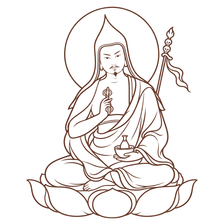
Rain of Amrita – An Offering of Sur by Patrul Rinpoche
Orgyen Tobgyal Rinpoche strongly recommends this text for those who wish to deepen their understanding of sur practice. In the text, Patrul Rinpoche describes in precise and graphic detail all the different types of guest that we invite to a sur offering. These descriptions are far more extensive than usually found in sur liturgies, helping us to generate devotion to those we invite out of faith, and compassion to the beggars, outcasts, fallen monastics and malevolent spirits who are the main objects of our offering. Patrul Rinpoche includes a special section for the spirits that held sway in his home region in Tibet—as Dilgo Khyentse Rinpoche wrote, “Kham was haunted in the past by many ghosts and evil spirits, and this was one of the reasons why Patrul Rinpoche used to explain the Bodhicharyavatara continually to his disciples. Before long, there were no more ghosts—or at least, no one came to any more harm. Such is the hidden power of Bodhichitta!”[1] Patrul Rinpoche’s compassion is evident throughout the text, particularly in his description of beggars who are devoted two sections. For each type of guest, we are instructed in how we should make offerings and what we should request of them. The text is an invaluable guide for Vajrayana practitioners.
乌金督佳仁波切强烈推荐此文给希望加深烟供修持理解的人。文中,巴楚仁波切精确、生动地描述了烟供所迎请的各类宾客。这些描述远比烟供仪轨中常见的详尽,有助于我们对以信心迎请者生起虔敬,也对供施的主要对象——乞者、被排斥者、失戒僧尼及恶意精灵——生起悲心。巴楚仁波切还为在其西藏家乡占据势力的精灵专设一节。如顶果钦哲仁波切所写:“过去,康区常有许多鬼魅恶灵出没,这是巴楚仁波切不断向弟子讲解《入菩萨行论》的原因之一。不久,便没有鬼了——至少,再没有人受害。这就是菩提心隐而不显的力量!”[1]巴楚仁波切的悲心贯穿全文,尤其体现在对乞者的描述中,专有两节讲到他们。对于每类宾客,文中都指导我们如何供施,以及应向他们祈求什么。此文是金刚乘修行者的珍贵指南。
烟供所需的总别教言[2] General and Specific Instructions Necessary for the Offering of Sur[2]
by Patrul Rinpoche
巴楚仁波切 著
Om ah hung
Om ah hung
The mandala of fire burns the offerings and sends out rays of perfectly pure light that merge with the smoke, rising up in great clouds of wisdom amrita, the remedy for the maras.[3] The offerings please the victorious ones and satisfy all beings of the six realms. They are multiplied and transformed by the magical means of bodhisattva Samantabhadra[4] and by recitation of the Space Treasury mantra.[5] May the victorious buddhas and their bodhisattva heirs bless these substances with the truth of their speech and the inconceivable power of their samadhi, transforming them into clouds of inexhaustible sublime offerings!
Bless the offerings with the Space Treasury mantra
以虚空藏咒加持供物
nama sarwa tatagaté bayo bisho mugebé sarwa takam utgaté saparana imam gagana kam soha
nama sarwa tatagaté bayo bisho mugebé sarwa takam utgaté saparana imam gagana kam soha
简略迎请四类宾客[6] Short invitation to the four types of guests[6]
Namo!
O victorious buddhas whose compassion is unfailing,
Through your magical power, come now to this sacred place.
Supreme bodhisattvas who think only of helping others,
Through the strength of your kind heart, come now to this sacred place.
And by the power and truth of the victorious ones and their heirs,
All you karmic debtors and guests invited out of compassion, come now too!
Namo!
悲心无欺的胜者诸佛,
请以神变力,即临此圣地。
一心利他的殊胜菩萨,
请以慈心力,即临此圣地。
又以诸胜者及佛子之力与谛实,
一切业债宾客与悲心所请宾客,也请莅临!
Vajra samaya dza!
Vajra samaya dza!
诸佛 Buddhas
Om ah hung
Om ah hung
O deities, you who are the manifestations of the Buddha’s three kayas, who are born out of great compassion, and who accomplish all the perfectly pure aspiration prayers.[7] You hold all sentient beings in your compassion throughout day and night—your sole concern is their welfare. You manifest as peaceful deities, wrathful deities, tramens[8] and so on; as the sound of the profound and vast teachings; and as the inconceivable display of your all-knowing enlightened mind. Since you manifest in all these ways, your vision is unimpeded and your skilful actions are inconceivable. Please rejoice in this sur offering of wisdom, this remedy for the maras, and enjoy it. Please bless us thanks to the power of the two accumulations.
菩萨 Bodhisattvas
Om ah hung
Om ah hung
Great bodhisattvas, heirs of the victorious ones, protectors of beings, although you delight in the infinite buddha fields that you manifest, and enjoy boundless wisdom and clairvoyance, please accept this sur offering, this wisdom amrita, for the sake of my own happiness and the well-being of all sentient beings. Through the truth of the bodhisattvas’ qualities which are unparalleled in all of samsara and nirvana—Manjushri’s wisdom, Vajrapani’s power, Avalokiteshvara’s compassion, Samantabhadra’s actions, Protector Maitreya’s liberation—and the perfect and sublime bodhichitta that all the heirs of the victorious ones have given rise to, together with the truth of these words, may these sumptuous and fine offerings that I have prepared be blessed so that they pervade throughout the three realms and have the power to satisfy every single being of all six classes.[9]
大菩萨、胜者之子、众生怙主,虽然您们安乐于自现的无量佛土,享有无边智慧与神通,仍请为我自身安乐及一切众生福祉,受此烟供、此智慧甘露。文殊之智、金刚手之力、观世音之悲、普贤之行、怙主弥勒之解脱——以菩萨这些于轮回涅槃无与伦比的功德之谛实,以及一切胜者之子所发圆满殊胜菩提心,加上此言之谛实,愿加持我所备丰盛精妙供物,使其遍满三界,有力满足六类中每一众生。[9]
声闻与缘觉 Shravakas and Pratyekabuddhas
Om ah hung
Shravakas and pratyekabuddhas,
Arhats who have exhausted all their defilements,
You who accomplished what they set out to do,
Who have laid down the burden of the five aggregates and will no longer be born in samsara,
Who have abandoned gathering and hoarding,
Who have realized primordial wisdom beyond existence,
I offer to you as alms this sur, this wisdom amrita, I have prepared with pure motivation
So that you will, in return, care for all sentient beings who have at one time been my very own mother.
Om ah hung
声闻与缘觉,
诸漏已尽的阿罗汉,
已成办所作,
已舍五蕴重担、不再生于轮回者,
已舍积聚囤藏,
已证超越三有之本智者,
我以清净发心备此烟供、此智慧甘露,作为布施奉献,
以此祈请您们护念一切曾为我母的众生。
金刚乘诸尊与持明 Vajrayana Deities and Vidyadharas
Om ah hung
Om ah hung
Male and female deities at the centre of the inconceivable mandalas of the secret mantras, vidya-mantras and dharani mantras, retinue, emanations and emissaries—all you countless deities I invite here. I also invite those who are considered mantra holders and care for students—those with a physical body and the ones beyond physicality who fly in the sky in their illusory bodies of wisdom. Through the power of your miraculous abilities and your great compassion, please enjoy this sur offering, the essence of which is amrita, as a ganachakra feast. Purify all my breakages of samaya, and make the power of mantras and samadhi blossom in me without any obstacle.
秘密咒、明咒与陀罗尼咒不可思议坛城中的主尊与佛母、眷属、化身及使者,一切无量诸尊,我都迎请至此。我也迎请持咒、护念弟子者,无论具有色身,或超越色身、以智慧幻身飞行虚空者。请以神通力与大悲,作为会供轮享用此本质为甘露的烟供。净除我一切三昧耶毁犯,使咒语与三摩地的力量在我身中无碍增长。
世间大力众 Powerful Beings of the World
Om ah hung
Om ah hung
I invite the great and mighty beings of this world, the most powerful gods, nagas, local deities, rakshasas and so on, the chiefs who hold power over people and resources, as well as those who aspire to be chiefs. I make this offering of sur, this wisdom amrita, to all of you, as well as to all the gross and subtle elemental spirits[10] who accompany you. These offerings have been blessed by the words of truth spoken by the victorious ones and their heirs so that they become a feast of everything that you could possibly wish for and desire—please accept them. This embodiment of the compassion of the victorious ones that grants the gods and all beings their share of offerings is bodhichitta, the treasure that fulfils all desires—may this offering please and satisfy you.
我迎请世间广大威猛之众,最有力的天、龙、地方神、罗刹等,掌握人众与资财的首领,以及希求成为首领者。我向您们及随从的一切粗细元素精灵[10],献此烟供、此智慧甘露。供物已经胜者及佛子谛实语加持,成为具足您们一切愿望、欲求的盛宴,请受用。令诸天与一切众生各得其分供物的这一胜者悲心化现,就是菩提心、满足一切愿望的宝藏。愿此供施令您们欢喜满足。
六类众生 Beings of the Six Classes
Om ah hung
Om ah hung
I invite all beings of the six classes who wander in the cycle of existence, who by nature believe phenomena to be real and are subject to craving, who are tormented by the sense of ‘I’ and ‘mine’, and endlessly take birth in samsara. They are attached to themselves and dislike what is other. They mistakenly see things in a dualistic way and grasp at gross appearances. Even though, bound by their physical bodies, they cannot gather here in an instant, even though the rarefied food that we offer cannot possibly satisfy them, through the power of my great compassion, I imagine that all sentient beings of the three realms are actually here in front of me. Through this sur offering, this remedy for the maras, may I perfect the paramita of generosity and may all sentient beings, who have at one time been my mother, be liberated from the suffering caused by their karmic perception and may they be filled with great joy.
我迎请流转三有的一切六类众生:其性习于认诸法实有,为渴爱所制,受“我”“我所”感所逼恼,无尽地投生轮回。他们贪著自身,厌恶他者,错误地二元分别事物,执取粗大显相。虽然受色身束缚,无法一刹那聚集此处;虽然我们所供的微细食物,不可能使其满足,但以我大悲之力,观想三界一切众生真实在我面前。愿以此烟供、此诸魔对治,使我圆满布施波罗蜜多;愿一切曾为我母的众生,脱离业力所现带来的痛苦,充满大欢喜。
乞者 Beggars
Om ah hung
Om ah hung
I invite those who are the most deserving of generosity and who offer bodhisattvas the opportunity to accumulate vast storehouses of merit—those who are the destitute of the world, the beggars, who go from door to door, placing their hopes in other people, who live the lives of vagrants, always subsisting on charity. All such people of lowly condition are the objects of my generosity and I hold them with compassion—may this sur offering, whose nature is amrita, reach them all. May those who are hungry be satiated, those who are cold find clothing, may this sur offering become the source of fulfilment for each and every one.
我迎请最应受布施、为菩萨提供积集广大福德宝藏机会的人:世间贫困者、乞者,挨家挨户,将希望寄于他人,过着流浪生活,总靠施舍维生。所有这些处境卑微者,都是我布施的对象,我以悲心摄持他们。愿此本性为甘露的烟供,遍达一切人。愿饥者得饱,寒者得衣,愿此烟供成为每个人所需圆满的来源。
被排斥者 Outcasts
Om ah hung
Om ah hung
I invite outcasts who live on the boundaries of the living and the dead, whose food is left-overs and drink is dregs, who reap meagre fruit from their past generosity and have only a limited capacity to give, whose radiance[12] is weak, and who wear dull, faded clothes. May these poor and destitute sentient beings enjoy this sur offering, the wisdom remedy for the maras. May it fulfil their needs and satisfy them. May it naturally pacify the torment of their hunger, thirst and lowly condition. May their strength and standing grow so that they become equals among their kind. May they then practice the noble dharma.
我迎请居于生者与死者边界的被排斥者:以残食为食、沉渣为饮,往昔布施所得果报微薄,施予能力也有限,光彩[12]衰弱,身着黯淡褪色衣物。愿这些贫苦众生享用此烟供、此对治诸魔的智慧。愿其满足所需,令其饱足;愿自然平息饥渴与卑微处境之苦。愿其力量、地位增长,与同类平等;愿其由此修持圣法。
堕落的僧尼 Degenerate Monastics
Om ah hung
Om ah hung
These degenerate times have led some people of loose morals to take the robes of a monk or nun, motivated solely by their wish to better their lot or to find security. They wear the outer garb of a monastic—their maroon and yellow rags. They appropriate for their own sustenance precious offerings given in faith to the sangha. The colours of their robes are dark bluish and a faded yellow. They are seldom satisfied with what they have to eat and crave the food of others. They eat tormas that are offered to the deities, beg food from everyone they meet, seize food being distributed to the sangha, take the food that is offered out of devotion, scavenge for leftovers, stretch out their hands when in the dining hall, hold out their cup when drinks are being prepared, and drool when they see meat. A great spread of food fails to satisfy them, they readily part with their money for what looks like meat, even if it may not be, and give the same value to meat and butter.
衰败时代,使一些操行放逸者穿上僧尼袈裟,动机只是改善处境或寻求安稳。他们外着僧服,披绛红与黄色破布,将信众供养僧团的珍贵供物占为己有,用以糊口。其袈裟颜色暗青、黄已褪色。他们很少满足于自己的食物,贪求他人所食;吃供给诸尊的食子,逢人乞食,夺取分给僧团的食物,取走虔敬供献之食,搜寻残羹,在食堂伸手,在备饮时递杯,见肉便垂涎。满桌盛宴也不能令其满足;凡看似肉的东西,即使未必是肉,也愿花钱买,把肉与酥油看得同样贵重。
They have little respect for the representations of enlightened body, speech and mind, and readily forget about them. They scavenge around rotting corpses like vultures and treat the flesh of animals that died of infectious disease as if it was gold or silver. They beg for tea in summer, for butter in autumn and for wheat in winter. They come when they’re not invited, they crave things they don’t need, they get angry when they’re denied what they want, and they steal when people look away. Give them one thing and they’ll ask for two—the more you give, the more they ask for.
他们不甚尊重觉悟身、语、意的所依,轻易将之忘却;像秃鹫般在腐尸周围觅食,把因传染病而死的动物肉,看作金银一般。夏天乞茶,秋天乞酥油,冬天乞小麦。不请自来,贪求不需要之物,所求被拒便生气,趁人不看便偷取。给一件,便要两件;给得越多,要得越多。
I offer this sur offering of wisdom amrita to all such people who constantly expect something from others—those from the past, those who have died, those who are still living, and those still to come. May they be satisfied and find contentment. May they never experience any hunger or thirst. May so little as a tiny speck of food nourish them fully. May they never covet what other people pile on their plates. May they have a bright and healthy complexion, full stomachs and be naturally joyful. May they always practice the dharma and strive to purify their obscurations, and may they become worthy objects of faith and inspiration.
对于所有这些总向他人期待所得的人,无论过去、已死、尚活或未来者,我都献此智慧甘露烟供。愿其满足、知足,永不饥渴;愿仅一小粒食物,也能充分滋养;愿不再贪求他人盘中堆积的食物。愿其容光健康明润,腹中饱足,自然欢喜;愿常修佛法,精勤净障,成为堪受信仰、启发他人的对象。
乞者[13] Beggars[13]
Om ah hung
Om ah hung
I invite those who subsist from begging, who comb the ground to pick up rags, who loiter near people’s doors. Their faces are grey like ashes. They don’t speak, they whimper. They hold out their hands and their bowl. They always carry a staff and an empty bag. They call out to people they know and grovel to those they don’t know. In the summer they yearn for yoghurt, begging for the empty pots and water that rinsed them. In autumn they long for grain and rummage for chaff and dry fodder. In spring they dream of butter, arguing over the dregs from churning and the leather of the butter-bag. In winter they crave meat and beg for gnawed bones and dirty broth. Time after time, they go out begging. They leave early in the morning and come back late at night, or if not the next day. To say, “They’re not coming today” is idle talk—they always come! They turn up to eat as if they’d taken a sacred pledge, they utter their refrain like some sort of dumb litany. When they’re beaten, they don’t respond. They always speak sweetly, but inside they’re ruthless. They are never satisfied with what they receive and flare up when people don’t give them anything. They always expect something from others.
我迎请以乞讨维生者,遍地搜寻破布,在别人门边徘徊。他们面如死灰,不说话,只呜咽,伸出双手与碗,常带手杖与空袋。向认识的人呼喊,向陌生人卑躬屈膝。夏天想要酸奶,乞求空罐和洗罐水;秋天渴望粮食,搜寻糠秕、干草;春天梦求酥油,为搅酥剩渣与酥油袋的皮革争执;冬天贪肉,乞求啃过的骨头和污汤。一次次出门行乞,清早离去,深夜才回,甚至隔天才回。说“今天他们不会来”,只是空话——他们总会来!来吃饭仿佛立过神圣誓约,重复的乞求像一种呆板诵词。挨打也不回应,总说甜言,内心却严酷无情。得了东西从不满足,别人不给,便发怒。他们总向他人期待所得。
I make this offering of wisdom amrita, this sur, to all the beggars of this world—to men and women, to the disabled, the blind and the deaf. May they be fully satisfied, may it soothe their hunger, quench their thirst, restore the eyesight of the blind, the hearing of the deaf, the limbs of the disabled. May they enjoy perfect happiness and well-being, and always practice the dharma.
我向世间一切乞者,无论男女、肢体残疾者、盲者、聋者,献此智慧甘露烟供。愿其充分满足;愿此供施缓解饥饿、止息干渴,令盲者恢复视力、聋者恢复听力、残疾者恢复肢体。愿享圆满安乐福祉,恒常修持佛法。
中阴众生 Bardo Beings
Om ah hung
Om ah hung
I invite those who, because they didn’t have anything to eat while they were alive, constantly thought of taking food from poor people or from the alms offered to the sangha. They died from hunger or from cold, without hearing a word of dharma. Even if they did hear the dharma, they were devoid of faith because they spent too much time with lamas and monastics and became too familiar with them. Since they were unable to benefit from the dharma, they ended up in the bardo of becoming or in one of the two hungry ghost realms.[14]
我迎请这样的人:生时无食,常想着从穷人或供养僧团的施食中取食;饿死或冻死,未闻一句佛法。即使闻法,也因与上师、僧尼相处太久,过于熟悉而没有信心。由于未能从佛法得益,最终落入有中阴,或两类饿鬼境界之一。[14]
They experience all sorts of hallucinations, such as day and night being reversed and the three kinds of suffering, of cold, hunger and thirst. They always loiter near people’s houses and doors; they can see food, drink and money but cannot take them. They are tormented by fear and hatred. When death came upon them they looked towards those who were still living, with their arms outstretched, their attachment as strong as ever. They continue to gather in the temple when the conch sounds for practice, hoping to find food and drink. But even if they wait next to where the offerings are laid out, they never receive any—no one sees their pleading faces nor their outstretched hands. Because they are ignored, their minds blaze with anger. Everywhere appears dark to them, as if at dusk, and their bodies are mere shadows. Rain, snow and blizzards torment them. For them, green fields are black, crops are dry, gold is covered in rust, faces are repulsive, and speech is injurious. They long for food and are tormented by thirst. They scavenge for the dregs of used tea, and eat snot and spittle.
他们经历种种幻觉,如昼夜颠倒,遭受寒、饥、渴三苦。总在屋舍门前徘徊,看得见饮食钱财,却无法取得,备受恐惧与憎恨折磨。死亡来临时,他们伸着双臂,望向尚活的人,贪恋丝毫未减。法螺召集修法时,他们仍聚入寺殿,希望找到饮食。可是,即使守候在供物陈列之处,也什么都得不到;无人看见乞求的面容和伸出的双手。因遭忽视,内心怒火炽燃。他们看一切地方都昏暗,如在黄昏,身体仅是影子。雨、雪与暴风雪令其受苦。对他们而言,绿野漆黑,庄稼枯干,黄金锈蚀,面容可憎,言语伤人。他们渴求食物,备受干渴,搜寻泡过的茶渣,食鼻涕与唾液。
To all such beings who hunger after sur offerings and tormas, I offer this wisdom amrita which, like a great treasure, appears in the form of whatever each one desires and needs. Satisfied and sated, may they be free from all craving for food and drink. May they remember their deities and lama without expectation or attachment, and may their faith and heartfelt prayers lead them swiftly to the pure fields.
对于所有这些渴望烟供与食子的众生,我供此智慧甘露,如大宝藏,显为各自所欲所需。愿其满足饱足,不再渴求饮食;愿其不怀期待、贪著,忆念本尊与上师;愿其信心与至诚祈请,令其迅速往生净土。
Until then, you remain amidst the great multitude of beings who have passed into the bardo, while here amongst the living, our numbers are few. Dead, don’t hurt the living. Don’t hope for too much from them. Avoid desire and attachment. Do not steal the vital essence of nutritious food. Do not claim the enriching power (yang) of the herds. Do not cause feuds and unrest within families. May this sur offering, which is amrita in nature, satisfy you completely. And through it, may you receive the blessing of all the buddhas and bodhisattvas and give rise to the precious mind of enlightenment.
在此之前,你们仍处于已入中阴的广大众生群中,而我们这里活着的人,数量稀少。亡者,不要伤害生者,不要对他们期望太多,避免贪欲执著。不要窃取滋养食物的精华,不要夺取畜群的增益福气,不要在家庭中挑起仇怨纷乱。愿此本性甘露的烟供,令你们全然满足;愿由此得到一切佛菩萨加持,生起珍贵觉悟心。
Insert: Dedicating Sur Offering Specifically to the Guests of Compassion[15]
Om ah hung
The suffering of this degenerate age also affects those who follow the discipline of the robed monks and nuns. Motivated by the wish to better their lot or avoid hardship, they wear the iconic saffron robe and support themselves from offerings made to the sangha. Their food scarcely satisfies them—they crave what other people have to eat, control the amount of food given to the community, and take alms that were offered in devotion. They beg for butter in summer and barley in autumn. They barge in on people, solicit them unnecessarily, and become exasperated when they don’t receive what they want. If you give them enough offerings to last for a year, they’ll shamelessly come back and ask for more. They always count on being supported by others.
I offer this sur offering of wisdom amrita to all such people—those who are dead, those who are still alive and those yet to come. May it satisfy and fulfil them. May they never feel hungry. May they find nourishment from even just a tiny speck of food and may they never covet the food piled on the plates of others. May they have a bright and healthy complexion, full stomachs, and be naturally joyful. May they always practice the dharma and strive to purify their obscurations, and may they become objects of faith and inspiration.
插入文:专向悲心宾客回向烟供[15]
Om ah hung
衰败时代之苦,也影响着遵循僧尼律仪、身着僧服者。为改善处境或逃避艰难,他们穿上标志性的藏红花色袈裟,依僧团供养维生。自有食物难令满足,贪求他人所食,控制给予僧众的食物数量,取用虔信供施。夏天乞酥油,秋天乞青稞。闯入别人家,无故求索,得不到所求便恼怒。即使给了足够维持一年的供物,也毫无羞耻地再来索求。他们总指望他人供养。
对于所有这些已死、尚活、未来的人,我献此智慧甘露烟供。愿其满足饱足,永不饥饿;愿仅一小粒食物便得滋养,永不贪求他人盘中堆积之食。愿其容光健康明润,腹中饱足,自然欢喜;愿常修佛法,精勤净障,成为信仰与启发之所依。
巴楚仁波切所在地区的地方神与精灵 Local Deities and Spirits in Patrul Rinpoche’s Area
All you local deities, Nyenchen Töpatsal[16] and the rest, who pitch sides one against the other during wars and robberies, who incite people to gain victory for their camp and to defeat their enemies—use your miraculous abilities to come here now without delay. I, a yogi, have blessed this sur offering with mantra, mudra and samadhi—in essence it is amrita, the remedy for the maras, outwardly it takes the form of whatever pleases the senses, like a wish-fulfilling jewel or a wish-granting tree. Accept these inexhaustible objects of delight that will endure for a kalpa, and inspire people to be kind and altruistic. Make people in all countries of the world, but especially the regions of the Machu, Dzachu and Marchu rivers, be free of any prejudice or preference for kin or outsider. May they instead be kind to one another, benevolent and loving, and live together in harmony. May they instantly put an end to all harmful behaviour such as bickering, fighting and arguing. In short, please do all that you can to instil in everyone, whether human or not, an irrepressible enthusiasm to act in accordance with the dharma. Do not go against the words and commands of the accomplished siddhas of the past, such as the glorious vajra master of Oddiyana, the great Padmakara, and support the completion of all projects started by Pema Chöpel, the former administrator and deputy who followed the instructions of the king of Dergué, the ruler of this vast country who protects the dharma. May everything be accomplished without obstacle, just as he envisioned.
一切地方神,念钦托巴匝[16]等,在战争、劫掠时挑动双方对立,煽动人们为己方取胜、击败敌人者,请运用神通,立即来此,不要迟延。我这瑜伽士,已以咒、印与三摩地加持此烟供:本质为甘露、诸魔的对治,外相如如意宝、如意树,显为一切悦意境。请受用此经劫不尽的无量喜乐之物,并促使人们仁慈利他。令世间一切国土,尤其玛曲、扎曲、玛尔曲 三条河的流域的人们,对于亲族、外人,都无偏见、偏爱;相互友善、慈爱关怀、和睦共处。愿立即止息口角、争斗、争论等一切伤害行为。总之,请尽一切力量,使所有人及非人都生起无法抑止的热忱,依法而行。不要违背过去成就者,如邬金吉祥金刚上师、大莲花生的言教与敕令;并请支持 贝玛确培 所发起的一切事业圆满成办。他曾是依德格王旨意行事的总管与副手;德格王统治广大国土,护持佛法。愿一切无碍成就,如他所愿。
I summon in particular the old professor Sonam Tenpa, professor Ngawang, Sé Palchen Gönpo, Wangchen Kartsé and so on—all those who have taken non-human form as elemental demons because they believed that their thoughts, fuelled by desire and aversion, were real, and that dream-like appearances were truly existent—those who now try their utmost to disturb the peace and happiness of the kingdom in all kinds of ways. Use your miraculous ability to travel, which you developed as a result of your karma,[17] to come here now to enjoy this sur offering, this remedy for the maras. Be kind to all beings, focus your mind single-pointedly on wishing to go to a pure field, such as Sukhavati or Lotus Light, and pray that you will exhaust your negative karma and become disciples worthy to be trained by the buddhas and bodhisattvas.
我尤其召请老教授 索南丹巴、教授 阿旺、赛班钦贡波、旺钦嘎泽 等。他们认由贪嗔激起的念头为真实,认梦幻般显相为实有,因此投生为非人元素魔;如今竭尽所能,以种种方式扰乱国土安乐。请用业力所得的行走神通[17],即刻来此享用烟供、诸魔的对治。请善待一切众生,专心愿往生极乐、莲花光等净土,祈愿尽除恶业,成为堪受佛菩萨调教的弟子。
I summon all others who commit negative actions, such as those who take delight in animal sacrifices and those who kill during wars and disputes, since they will constantly suffer from fear and anxiety throughout their life, and will endure unbearable heat and cold in the hell realms after they die. Therefore, never transgress what we bodhisattvas, heirs of the victorious ones, tell you to do.
我召请其余一切造恶者,如喜好杀牲祭祀者、在战争争端中杀戮者,因为你们一生将不断受恐惧忧虑之苦,死后还将在地狱忍受难以承受的寒热。因此,切勿违背我们这些胜者之子菩萨的吩咐。
This food offering fills the three realms, which are pure buddhafields.
It reaches the guests of our compassion—all beings in the three planes of existence.
Through the power of the profound dharmata,
May you enjoy this inexhaustible treasury of every want and need!
此食供遍满三界清净佛土,
达于我等悲心宾客——三有一切众生。
以甚深法性之力,
愿你们享用此一切所欲所需的无尽宝藏!
Om mani padme hung hrih
Om mani padme hung hrih
红烟供 Red Sur
A practice of red sur to put an end to cattle epidemics. At the beginning of the sur offering to the four types of guests say,
止息牛畜瘟疫的红烟供修法。向四类宾客修烟供之初,诵:
Also recite the names of the four tathagatas:
亦念四如来名号:
Every kind of gyadré and gongpo spirit[20] in existence, whether important or not, and especially all you elemental spirits, hungry ghosts and pishachis[21] who steal life, deplete the radiance of beings[22] , suffocate beings, rule over the sicknesses of humans, act out of anger and malice, cause disease in black cattle[23] and so on, as well as all other malevolent spirits—come now and accept these delightful and sumptuous offerings. They are an inexhaustible bounty of whatever you might wish for or desire—food and drink, places to live, mountains of flesh, oceans of blood, mounds of bones, skin with flesh and hair, rain of marrow, brain and grease, and so on.
Everything you might possibly wish for is here and will never diminish no matter how much you eat, how much you drink, or how much you smear onto your body. The offerings are higher than mountains, deeper than oceans and longer than rivers. They are the most excellent medicines that can cure all diseases, the elixir that can revive the dead, the great potion that can eliminate suffering. With all this clearly focussed in my mind, I offer them to you, I give them to you, I dedicate them to you. May they satisfy all your desires. May your mind be filled with love, compassion and a deep sense of care for all beings. May you stop harming humans and animals and may all beings be free from the fear of losing their life.
凡你们所愿,此处皆有;无论吃多少、喝多少、往身上涂抹多少,永不减损。供物高于山、深于海、长于河,是能治一切病的最胜良药、令死者复生的灵丹、消除痛苦的大药。我心中清晰专注于此,向你们供养、施予、回向。愿满足你们一切欲求,愿心中充满对一切众生的慈、悲与深切关怀;愿停止伤害人畜,愿一切众生免于丧失生命的恐惧。
Repeat this section many times.
此段重复多次。
At the end say,
最后诵:
Namo!
Through the power of my aspirations,
The power of the tathagatas’ generosity,
The power of the basic space of phenomena,
I present these offerings to the noble ones.
May whatever positive intention
To benefit every sentient being,
Any positive action of any kind,
Anywhere in the universe,
Be accomplished without impediment!
Namo!
以我发愿之力,
如来布施之力,
诸法法界之力,
我向圣者奉献此供。
为利益每一众生的
任何善意、
任何种类的善行,
无论在宇宙何处,
愿皆无碍成办!
This concludes the practice of generosity of giving material offerings.
至此,财物布施修法结束。
Like a star, hallucination, candle,
Magical illusion, dewdrop, bubble,
Dream, lightning or cloud—
Know all compounded phenomena to be like this.
如星、幻觉、烛火,
幻术、露滴、泡沫,
梦、电光或云——
应如是知一切有为法。
These two stanzas represent the generosity of giving the dharma. Dedicate, and arouse loving-kindness and compassion.
此二偈代表法布施。回向,并生起慈悲。
By Patrul. Virtue.
巴楚所作。善哉。
Translated by Gyurme Avertin
Edited by Philip Philippou
英文翻译:久美·阿韦尔坦
英文编辑:菲利普·菲利普
原注 Notes
The Nectar of Manjushri’s Speech: A Detailed Commentary on Shantideva’s Way of the Bodhisattva. Translated by the Padmakara Translation Group. Shambhala, 2010, page 132.
《文殊语甘露:寂天〈入菩萨行论〉详释》,莲花翻译组 译,香巴拉出版社,2010年,第132页。
See Patrul Rinpoche. The Words of My Perfect Teacher. Revised. New Haven Conn.: Yale University Press, 2010, pages 72-76.
见巴楚仁波切,《普贤上师言教》,修订版。康涅狄格州纽黑文:耶鲁大学出版社,2010年,第72—76页。
出处与版本
原刊:ALL-OTR · Rain of Amrita – An Offering of Sur by Patrul Rinpoche。原刊发布日期:2021-07-29。