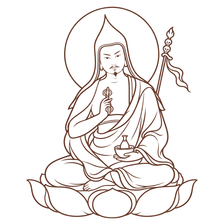
Presentation of Orgyen Tobgyal’s Set of Ten Kagyé Thangkas
Orgyen Tobgyal Rinpoche is, and always has been, a great patron of the Buddhist arts. Of course, these days, it’s become fashionable either to invest large sums of money in antique, historical artefacts, or to use new technologies to reproduce many images and statues quickly and in large quantities. In spite of both these trends, Rinpoche himself continues to follow in the footsteps of the great lamas of the past, by employing the best artists and craftspeople he can find, then guiding their work based on his own deep knowledge and experience of the teachings.
乌金督佳仁波切一直以来都是佛教艺术的重要护持者。如今,无论是投入巨资购买古老的历史文物,还是运用新技术,快速、大量地复制画像和塑像,都已成为潮流。尽管有这两种趋势,仁波切仍继续追随过去大喇嘛们的足迹,聘请他所能找到的最优秀的艺术家与工匠,再依据自己对教法的深厚理解和经验,指导他们创作。
In the following transcript, Rinpoche talks about a series of ten thangkas based on the Kagyé teachings, which he personally commissioned and guided to completion. It was the first time this set of Kagyé thangkas had ever been painted.
在以下录音整理稿中,仁波切介绍了一套依据八大法行教法绘制的十幅唐卡。这套唐卡由他亲自委托制作,并指导完成,是这一整套八大法行唐卡首次问世。
These thangkas were created to support practitioners of the Mandala of the Eight Great Deities: The Assembly of Sugatas (Kagyé Deshek Düpa) that bring together the essence of all tantras, compendiums and pith instructions.
制作这些唐卡,是为了辅助《八大法行·善逝总集》坛城的修行者;这一法门汇集了一切密续、教敕与窍诀的精髓。
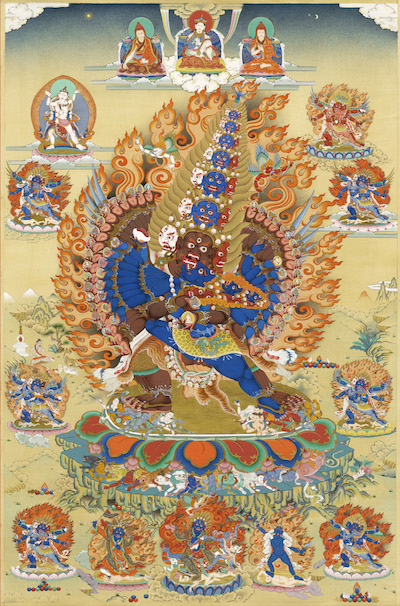
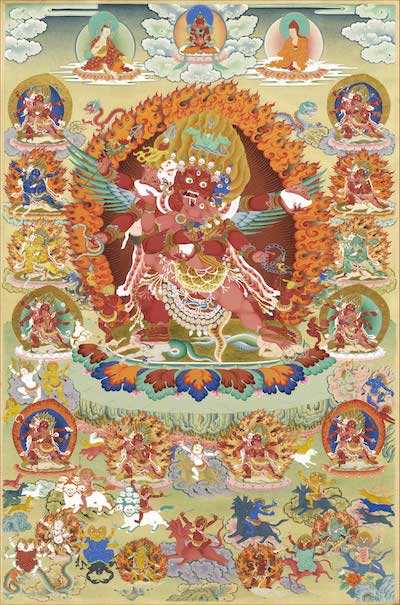
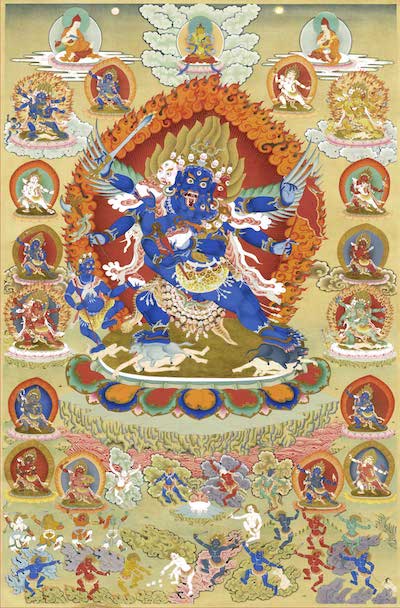
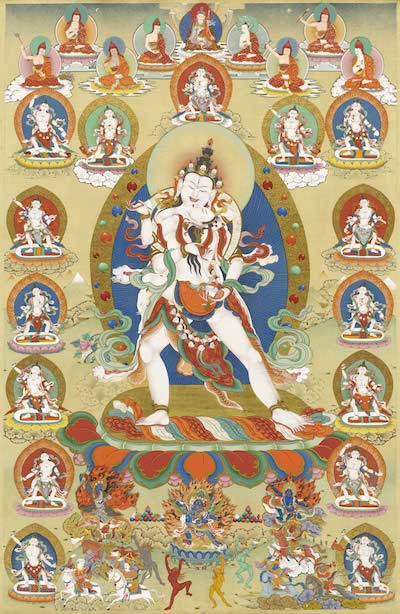
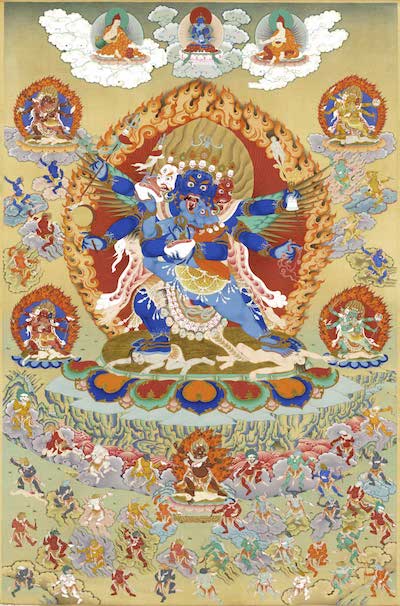
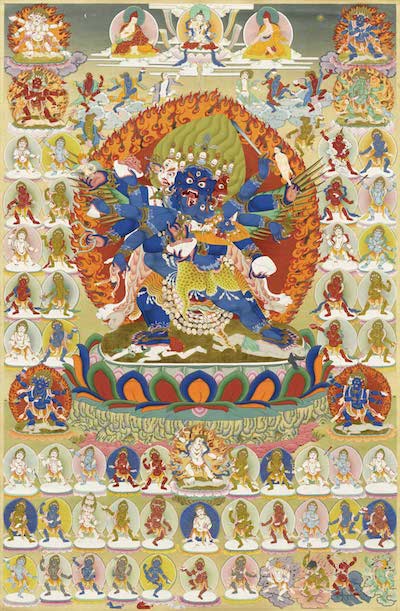
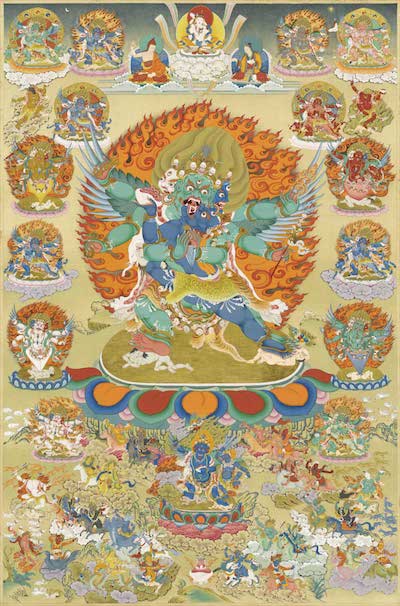
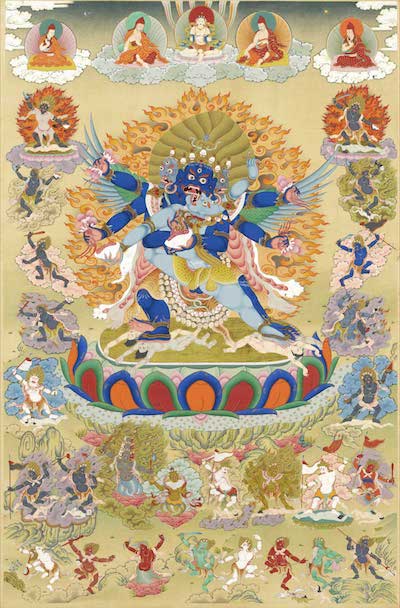
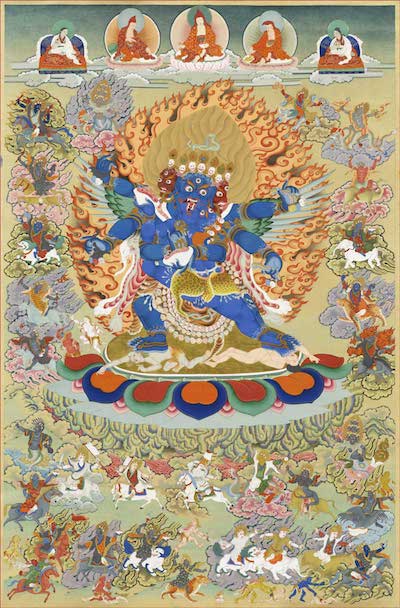
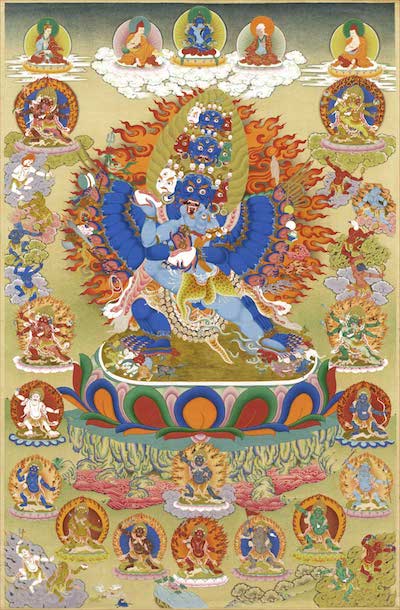
The ‘eight sadhana teachings’ are:
“八种修部教法”是:
- Jampel Ku (Yamantaka, enlightened body);
- Padma Sung (Hayagriva, lotus speech);
- Yangdak Tuk (Yangdak Heruka, enlightened mind);
- Dudtsi Yonten (Amritakundali, enlightened qualities);
- Purba Trinlé (Vajrakilaya, enlightened activity);
- Jikten Chötö (mundane worship);
- Möpa Drangak (maledictory fierce mantra);
- Mamo Bötong (Mamo, calling and dispatching)
- 文殊身(即阎曼德迦,觉悟之身);
- 莲花语(即马头明王,莲花之语);
- 真实意(即真实嘿噜嘎,觉悟之意);
- 甘露功德(即甘露军荼利,觉悟之功德);
- 金刚橛事业(即金刚橛,觉悟之事业);
- 世间供赞(即世间礼供);
- 猛咒诅詈(即施行诅咒的猛烈密咒);
- 玛姆遣使(即召请与遣派玛姆)。
There is a thangka for each of them in this set, plus a thangka for their main deity, the Lama Rigdzin. In all nine thangkas of the Nine Glorious Ones, the main deity is surrounded by its entire retinue and specific protectors. The tenth thangka is a samaya-support of the self-visualization for the elaborate kyérim and dzogrim practices of Chemchok Heruka, with Chemchok Heruka as the main deity, surrounded only by the other main Kagyé deities. So there are ten thangkas in this set.
这套唐卡中,上述每一尊都有一幅,另有一幅他们的主尊持明上师。这九幅九吉祥尊唐卡中的每位主尊,周围都环绕着其全部眷属及专属护法。第十幅唐卡,是大胜嘿噜嘎广轨生起次第与圆满次第修法中自生观想的三昧耶所依,以大胜嘿噜嘎为主尊,周围只环绕其余八大法行的主尊。因此,这套唐卡共有十幅。
The Kagyé are the main yidam deities practised by Guru Rinpoche Padmasambhava, and the path the vidyadharas of the Nyingma school followed; therefore it should be the focus of practice for all Nyingmapas.
八大法行是莲花生大师主要修持的本尊,也是宁玛派持明众所行之道,因此应当成为所有宁玛行者修持的重点。
As they are so important, I started to wonder if anyone had ever made an accurate set of thangkas representing all the Kagyé deities. I searched high and low throughout India and Tibet, asking everyone I know for guidance, but despite all my efforts, I could not find what I was looking for.
由于它们如此重要,我开始想:是否有人绘制过一套准确呈现八大法行所有本尊的唐卡?我在印度与西藏各处遍寻,向所认识的每个人请教,但费尽心力,仍找不到想要的东西。
Then I heard of a very sacred and blessed thangka belonging to one of the Nyingma monasteries of Dergé that was said to depict all 725 deities of the Kagyé. Eventually, using every means at my disposal, I managed to see a copy, only to discover that although the main deities appear, the retinue simply show their main manifestations in the four families, while only a few of the lineage masters and protectors have been included.
后来,我听说德格的一座宁玛寺院藏有一幅非常神圣、极具加持的唐卡,据说画了八大法行全部七百二十五尊。最后,我用尽所能,终于看到一份复制图,却发现虽然主尊都在,眷属只画出四部中的主要化现,而且仅收录少数传承上师与护法。
In the meantime, I came across a book of photos of artefacts in the great Potala palace of the Land of Snows, the land of the Dharma, in which I found images of some of the Kagyé deities, namely Jampel Ku, Pema Sung, Yangdak Tuk, Dudtsi Yönten, Jikten Chötö, Mamo Bötong and Möpa Drangak, accompanied by their entire retinues. Overjoyed at having discovered these authentic representations, I felt confident that I could now make an accurate new set of thangkas.
与此同时,我偶然见到一本写真集,收录雪域佛法之地宏伟的布达拉宫中的文物照片。在其中,我找到了八大法行一些本尊的画像,即文殊身、莲花语、真实意、甘露功德、世间供赞、玛姆遣使与猛咒诅詈,全部都带有完整的眷属。我为找到这些可靠的形像而欣喜不已,觉得如今终于有把握制作一套准确的新唐卡了。
The only problem was that the book didn’t include images of Phurba Trinlé and Lama Rigdzin, and so I had to rely on other authentic sources to make these two thangkas, basing the design on terma texts and writings of great masters, to the best of my ability.
唯一的问题是,书中没有金刚橛事业与持明上师的画像。因此,制作这两幅唐卡时,我不得不依靠其他可靠来源,尽己所能,依据伏藏法本与大德著作来设计。
I also found that the colours, hand implements, and other details in the Potala photos to be different from those mentioned in the The Eight Great Deities: Assembly of Sugatas (Kagyé Deshek Düpa) texts, but as the thangkas in the photos were made according to the Self-arisen Eight Great Deities (Kagyé Rangshar) of the Northern Treasure Cycle, or another very reliable source, there is no doubt they are correct. So, I have based this new set of Kagyé thangkas on Nyangrel Rinpoche’s Kagyé Deshek Düpa tradition, which is one of the three great great Kagyé cycles.
我还发现,布达拉宫照片中的颜色、手持法器及其他细节,与《八大法行·善逝总集》法本所说有所不同。但照片中的唐卡是依照北伏藏法系的《八大法行自然显现》,或其他极为可靠的来源绘制,所以其正确性毋庸置疑。因此,我以娘热仁波切的《八大法行·善逝总集》传统为依据,制作这套新的八大法行唐卡;这一传统是三大八大法行法系之一。
I also examined the detailed description of the pure aspects of the 725 deities that practitioners must remember that can be found in the elaborate practice of Assembly of Sugatas and Jamgön Mipham’s Explanation of the Eight Great Deities (Kagyé Namshé). When I compared them with the Great Meditational Instruction Manual of the Assembly of Sugatas terma (volume nine), I found minor differences and resolved any conflicts by following the descriptions in the Great Meditational Instruction Manual. The representations of the deities were therefore produced without any mistakes being introduced.
我还考察了修行者必须忆念的七百二十五尊清净表义的详细说明,这些说明见于《善逝总集》广轨,以及蒋贡米滂的《八大法行释》。我将它们与《善逝总集》伏藏第九函中的《大禅修引导手册》作比较,发现少许差异;凡有冲突,均依《大禅修引导手册》的描述作取舍。因此,制作这些本尊形像时,没有引入任何错误。
I also found that the Great Meditational Instruction Manual only mentions the names of the protectors and does not provide details about their heads, hands, and so on. And so for details of those protectors that did not appear clearly in the photos from the Potala, I referred to Jamyang Khyentsé Wanpo’s empowerment cards for the great Kagyé empowerment, which I have.
我也发现,《大禅修引导手册》只提到护法的名称,没有交代头、手等细节。因此,对于布达拉宫照片中看不清楚的护法细节,我参考了自己收藏的、蒋扬钦哲旺波用于八大法行大灌顶的灌顶卡。
Each image in these new thangkas has been based on sources that I examined in minute detail, and I think practitioners can be confident they are correct.
这些新唐卡中的每一尊形像,都依据我仔细考察过的来源绘制。我想,修行者可以确信它们是正确的。
唐卡画师 The Thangka Painters
To be able to make samaya drawings of a deity’s physical appearance, the most excellent kind of artist will have received the empowerments and maintained the samayas. At the very least, the artist must have received the specific blessings for painters. To find such a person has proved extremely difficult, so I commissioned artists who have faith in Guru Rinpoche, no wrong views about the Nyingma teachings, and a vast compassionate attitude. The thangka painter Kalzang Dorje, who was born in Eastern region of Kham, was the main artist. Shonu Dondrup Dorje of Dergé, Tashi Dorje of Denma, Tashi Dorje of Dergé, Sonam Puntsok, and Sonam Palden assisted him. It took more than three years for the hands of these artists to bring these ten thangkas into being.
要绘制本尊身相的三昧耶画像,最上等的画师应当已领受灌顶,并守持三昧耶。至少,画师也必须领受过专门给予绘画者的加持。要找到这样的人,事实证明极其困难。因此,我委托的画师,都对莲花生大师有信心,对宁玛教法没有邪见,并具有广大的慈悲心。出生于康区东部的唐卡画师格桑多杰担任主画师。德格的宣努敦珠多杰、邓玛的扎西多杰、德格的扎西多杰、索南彭措以及索南班丹协助他。这十幅唐卡经他们之手,用了三年多才完成。
It was an arduous business, but one I undertook because I know from experience that when beginners start to practise the generation phase they need a visual support, as do students new to Kagyé practice. And although there are many thangkas of the main Kagyé deities, thangkas that depict the main deities together with their entire retinue are extremely rare. So, I oversaw the creation of such thangkas because they will be of great benefit to practitioners. I also always kept in mind how easy it is these days to make reproductions, and would like to offer sets to various Nyingma monasteries.
这是件艰难的事,但我仍承担下来,因为经验告诉我,初学者开始修生起次第时,需要可见的所依,初修八大法行的学人也是如此。虽然八大法行主尊的唐卡很多,但将主尊连同全部眷属一并画出的唐卡,却极为罕见。因此,我督导制作了这样的唐卡,因为它们会对修行者大有利益。我也一直记着,如今制作复制品是多么方便,并希望向各宁玛寺院供养成套的唐卡。
In the presence of many noble beings—for example: the supreme refuge and object of offering for men and gods as perfect as the bodhi tree, the omniscient Rabsel Dawa, or Trulshik Chökyi Lodrö—I have received the empowerments for the three Kagyés, as well as a great number of other elaborate, medium, and concise empowerments. I may not really practise or benefit others by teaching or propagating the Dharma, but I do have the three kinds of faith for the teachings in general, and in particular for the precious teachings of the three inner yoga tantras. As a result, my mind stream has ripened a little, and I, the so-called ‘tulku’, Orgyen Tobgyal, have created these thangkas with a very pure mind and through great effort, bringing together the necessary investment and the required work, so that I may enjoy throughout all my lives, a connection with the supreme yidam deities of The Eight Great Deities: Assembly of Sugatas.
I wrote this in the Tibetan year of the water dragon, in the month when the purvabhadrapada constellation rises with the full moon, on the tenth day of its waxing moon, a most excellent holy day, 25 September 2012.
此文写于藏历水龙年,室宿与满月同升之月的上半月第十日,最为殊胜的圣日,即2012年9月25日。
May virtue increase!
愿善增长!
Translated by Gyurmé Avertin
Edited by Janine Schultz
英译:久美·阿韦尔坦
英文编辑:雅尼娜·舒尔茨
出处与版本
原刊:ALL-OTR · Presentation of Orgyen Tobgyal’s Set of Ten Kagyé Thangkas。讲授:25th September 2012;Lerab Ling, France。原刊发布日期:2017-12-07。