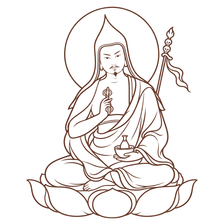
Nyaluk Phurba Mantra Recitation: The Aspect of Mind
The Nyaluk Phurba is a treasure teaching revealed by Dilgo Khyentse Rinpoche. Each year Orgyen Tobgyal Rinpoche practice the drupchen of this terma with his monks at his monastery, in Bir, India. During the drupchen, Orgyen Tobgyal Rinpoche paused to share with his monks an explanation of the Dzogchen instruction from Guru Rinpoche that appears in the Nyaluk Phurba terma—something he had never done before. Fortunately, this special happening was recorded and is shared with you here.
《娘派金刚橛》是顶果钦哲仁波切取出的伏藏教法。每年,乌金督佳仁波切都会在印度比尔的寺院,与僧众一起修持这部伏藏的大修。此次大修期间,乌金督佳仁波切暂停修法,向僧众解释《娘派金刚橛》伏藏中莲花生大师所传的大圆满教授,这是他过去从未做过的事。幸运的是,这次特别的开示被录了下来,现在与大家分享。
Following the sections of the mantra recitation that relate to the enlightened body and speech, comes the section of enlightened mind, which concerns meditation. Here you need to actualize what is written in the text. These vajra words of the terma are incredibly blessed and I will now explain them a little to you.
在与觉悟身和语有关的持咒部分之后,是觉悟意的部分,涉及禅修。在这里,你需要令仪轨所写的内容实际现前。这些伏藏金刚语具有不可思议的加持,我现在稍作解释。
My mind free of all elaboration…
我心远离一切戏论……
What does this mean? Mind doesn’t actually exist. If you search for your mind, you won’t be able to find anything, even if you were to search for one hundred years. But neither is it non-existent, since all thoughts of past, present and future arise from it. Therefore it is neither non-existent nor existent. It is also beyond the extreme of being neither existent nor non-existent, because mind and thoughts have never been born or produced.
这是什么意思?心并不真实存在。如果你寻找自己的心,即使找上一百年,也找不到任何东西。但它也不是不存在,因为过去、现在、未来的一切念头都从中生起。因此,它既非不存在,也非存在。它还超越了既非存在、亦非不存在这一边,因为心与念头从来未曾出生、未曾产生。
Thoughts are not bad in themselves, simply the dynamic expression of mind that arises. However, when we don’t know that they are the dynamic expression of mind, they become thoughts and we are deluded. Deluded thoughts then proliferate: “better”, “worse”… They arise uninterruptedly and we are deluded.
念头本身并不坏,只是心的活力展现生起了。然而,当我们不知道它们是心的活力展现时,它们就成为妄念,我们也就迷惑了。迷乱的念头接着不断增生:「更好」「更坏」……它们不间断地生起,我们便处于迷乱之中。
‘Deluded mind’ corresponds to these thoughts. But when the text says, “My mind”, it is not referring to the deluded mind. “Free of all elaboration” means when past thoughts have ceased, future ones have not yet arisen, and there is no thought in the present—this is rigpa. This is the yidam deity, Vajrakumara. But unless your practice is at the level of Dzogchen, it will be difficult for you to realize. When you do realize it, however, you will have taken hold of the path to buddhahood. Jamgön Mipham Rinpoche said,
「迷乱的心」指的就是这些念头。但原文说「我心」时,并不是指迷乱之心。「远离一切戏论」,是指过去的念头已止息,未来的念头尚未生起,现在也没有念头;这就是觉性。这就是本尊金刚童子。不过,除非你的修持已经达到大圆满的层次,否则很难证悟它。然而,一旦证悟,你便把握住了成佛之道。蒋贡米滂仁波切说:
Because it is too easy, we don’t trust seeing it;
It is realized through the lama’s pointing out instruction.
因为太过容易,见到也不信;
依上师直指教授而证悟。
Actually it is easy, but because it is so easy, we don't recognize it. Even if we do recognize it a little, we don’t trust that it is rigpa. Since it cannot really be explained or thought about, we need to be introduced to it through the blessings of the lama, which comes as a result of our practice.
其实它很容易,但正因为如此容易,我们才不认识它。即使略有认识,也不相信这就是觉性。由于它确实无法言说、无法思议,我们需要通过上师的加持而被直指认出,而这种加持来自我们的修持。
In any case, when your stream of thoughts is interrupted (the next thought hasn’t yet arisen) this empty state, vividly clear, wide awake, devoid of any identifiable nature, is the deity Vajrakumara; it is the essence of the dharmakāya. All the deities arise from the energy of the empty essence, as the display of primordial wisdom. Therefore, the empty essence is Vajrakumara.
无论如何,当念头之流中断,下一个念头还未生起时,这个空的状态,鲜明清晰、完全醒觉,没有任何可辨认的自性,就是本尊金刚童子;它就是法身的精髓。一切本尊从空性本体的能量中,作为本初智慧的展现而生起。因此,空性本体就是金刚童子。
Of course, this display of the deities includes the manifestations with three faces and six hands, nine faces and eighteen hands, twenty-one faces and forty-two hands, and so on. They are the display of primordial wisdom which arises for the sake of beings to be tamed.
当然,本尊的这些显现,也包括三面六臂、九面十八臂、二十一面四十二臂等等形相。它们是本初智慧的展现,为了所化众生而生起。
Whatever arises, or doesn’t arise, is complete within emptiness. How is that so? The essence is empty. But it is not an empty void. Its nature is the display of the empty essence, clear light. Clear light doesn’t refer to something like an electric light, but to all the thoughts—the positive ones such as faith, devotion and pure perception, and the negative ones such as pride or jealousy—which are the appearances that unfold from the dynamic energy of the empty essence. They arise, but they don’t actually exist; they have a physical form but they don’t exist, like magical illusions or movies.
无论生起什么,或不生起什么,都在空性中圆满具足。为什么呢?因为本体为空。但它不是一片空无。其自性是空性本体的展现,是光明。这里的光明,并不是像电灯那样的东西,而是所有念头:善的,如信心、虔敬、净观;不善的,如傲慢或嫉妒。这些都是从空性本体的活力中展开的显现。它们虽生起,却不真实存在;虽然有形相,却不存在,如同幻术或电影。
If you realize that when they arise, then they are liberated and disappear. Then they arise again, and disappear again. This is called “simultaneous realization and liberation” or “liberation upon arising”, which means that the appearances arise and at the same time they are liberated, in other words they vanish. The one who knows about the arising and about the liberation is the clear light. The text continues,
如果它们生起时,你能证悟这一点,它们便会解脱、消失。然后又生起,又消失。这称为「证悟与解脱同时」,或「生起即解脱」,意思是显现生起的同时,就得到解脱,换句话说,就是消失了。知道其生起、知道其解脱的,就是光明。仪轨接着说:
Remain evenly in the natural state of clear light.
于光明本然之中平等安住。
Abiding in this clear light recognition, do not change or alter anything, but remain in evenness. If you remain evenly in clear light, as it is the ground of the yidam Vajrakumara, and of all the completely awakened victorious ones of the three times and their heirs, the deities will arise. The whole of samsara also arises from it. The whole of nirvana, complete and perfect buddhahood, comes from it. Therefore this is the buddha, the dharmakaya.
安住于对这光明的认知中,不改变、不改造任何东西,而是平等而住。若平等安住于光明,因为它是本尊金刚童子,以及三世一切圆满觉悟胜者与佛子的根本,诸尊便会生起。整个轮回也由此生起;整个涅槃、圆满正等觉佛果,也由此而来。所以,这就是佛,就是法身。
This is what we call ‘introduction’. Today I’ve explained the meaning of Guru Rinpoche’s vajra words in the terma to you, something I’ve never done before. Reflect on this meaning as you follow the text:
这就是我们所说的「直指」。今天,我向你们解释了伏藏中莲花生大师金刚语的含义,这是我以前从未做过的。依仪轨修持时,要思惟这个含义:
My mind free of all elaboration,
Vajrakumara’s complete appearance…
我心远离一切戏论,
金刚童子显现圆满……
How is it “complete”? As you rest in the empty essence and clear light nature, illusory-like appearances are liberated upon their arising; there is simultaneous realization and liberation. You should write down the phrase “Remain evenly in the natural state of clear light”—take it with you in your pocket, look at it repeatedly, and reflect on its meaning. You need to contemplate this again and again.
怎样才是「圆满」呢?当你安住于空性本体与光明自性中,如幻的显现一生起便解脱,证悟与解脱同时。你应该把「于光明本然之中平等安住」这句话写下来,随身放在口袋里,反复看,思惟其含义。你需要一再思惟。
Today, I’ve explained this to you and there’s nothing more that can be said. You need to go away and reflect on it—it doesn’t work if the lama just gives teachings. If you do this, an understanding will arise. But this understanding is just a means. When you reflect on the meaning and have some grasp of it, that is merely understanding. Understanding is good, but not so beneficial in itself. You need to experience what you have understood. How do you reach that experience? By thinking about the meaning repeatedly, in many short sessions, whilst you meditate. Then when you actually experience it directly for yourself, you will be certain of what you see. Of course, in the beginning doubts will still be there, but if you continue to reflect and meditate, you will reach a point of certainty when you realize, ‘This is it! This is the wisdom of realization, the yidam deity Vajrakumara, empty in essence, cognizant in nature!’ If you reach that kind of clear conviction, you will have reached the level of realization. First comes understanding, then experience, then realization. This realization will slowly grow.
今天,我已向你们作了解释,再没有更多可说的了。你们需要回去思惟;仅仅上师说法,并不能起作用。若如此行持,就会生起理解。但这种理解只是一种方便。你思惟其义、有所把握时,那还只是理解。理解是好的,但它本身的利益并不那么大。你需要亲身体验所理解的。怎样才能达到这种体验?在禅修时,以许多短座,反复思惟其义。随后,当你真正亲身直接体验时,就会确信自己所见。当然,起初仍会有疑惑,但若继续思惟与禅修,便会达到确信的境地,了知:「就是这个!这就是证悟智慧,就是本尊金刚童子,本体空性、自性明知!」如果达到这种清晰的确信,你便达到证悟的层次。先是理解,再是体验,再是证悟。这种证悟会慢慢增长。
Even though you arrive at this clear decision and certainty, mind’s fabrications will still appear. At such time, it is said that you need to ‘strengthen and master what has been recognized’. Firstly, you recognize and have conviction that this is it. This is merely recognition, however—you then need to meditate on it. You need to meditate for a long time, to pray to the lama, and to arouse devotion in order to receive blessings and siddhis. Slowly, you will then be able to master what you have recognized.
即使已获得这种清楚的决断与确信,心的造作仍会出现。此时,就需要如所说的「增强并熟练已认出的」。首先,你认出并确信就是它。不过,这还只是认出;然后,你必须对此禅修。你需要长时间禅修,祈祷上师,生起虔敬,以获得加持与悉地。慢慢地,你便能熟练掌握所认出的。
It will only grow to full maturity if you meditate, otherwise it won’t happen. You may have a glimpse of recognition, but if this becomes covered with ordinary thoughts, it will not develop into full maturity. So you need to meditate. If you meditate repeatedly and invoke the lama’s blessing and compassion, it will then grow fully. ‘To master it’ and ‘full maturity’ mean that you have conviction; you have come to the conclusion and certainty that there is nothing more than this. ‘Growing to full maturity’ is like when a child who doesn’t know much about the world becomes a full adult and is able to get things done. You need to reach that level of conviction.
唯有禅修,它才会完全成熟;否则不会发生。你可能曾有一瞥认知,但若被凡常念头覆盖,就无法发展到完全成熟。因此,你需要禅修。如果反复禅修,祈请上师的加持与悲心,它就会充分增长。「熟练掌握」与「完全成熟」,是指你已有确信,已经得出定论并确定,除此之外再无其他。「增长至完全成熟」,就像一个不太懂世事的孩子,长成能够办事的成年人。你需要达到那种确信的程度。
Once it grows fully, you will gain stability in your meditation. Then your realization will remain unchanging, no matter what arises, regardless of what happens. You will see the buddha dharmakaya’s own face and realize Mahamudra and Dzogpachenpo. Once you reach this level of realization, you will have no fear of falling into the three realms of suffering of samsara, nor any hope to actualize the wisdom of a buddha. Not only that, all thoughts such as birth, death, illness or ageing will become mere labels at this point—as you reach the certainty of that immovable realization, you will no longer be afraid of them. You will ‘seize the stronghold of the dharmakaya’s realization’. The following example is given. Imagine a child wandering outside his palace not knowing that he is the king, amongst people who also don’t know his real identity. When he becomes aware that he is the son of the former king, and when people hear that too, he is placed on the throne and effectively becomes the king from that moment on. No one can harm him anymore. Likewise, once you’ve seized the stronghold of the dharmakaya, nothing can perturb you anymore.
一旦充分成熟,你的禅修便会稳固。此后,无论生起什么、发生什么,证悟都保持不变。你会见到佛法身的本来面目,证悟大手印与大圆满。一旦达到这种证悟层次,就不会再害怕堕入三界轮回之苦,也不会再希求现前佛智。不仅如此,此时一切生、死、病、老等念头,都只成为名称。当你对这不动的证悟获得确信,就不再惧怕它们。你将「占据法身证悟的坚固堡垒」。有这样一个譬喻:设想一个孩子在自己的王宫外游荡,不知道自己就是国王,周围的人也不知道他的真实身份。当他知道自己是前王之子,人们也听说此事之后,他便被安置在王座上,从那一刻起真正成为国王。再没有人能伤害他。同样,一旦占据法身的堡垒,就再没有任何事能扰乱你。
To meditate on this and abide by that recognition is ‘the recitation of Vajrakumara’s mind.’
对此禅修,安住于这一认知,就是「金刚童子意之念诵」。
As I have told you the other day, I play the role of the lama and you play the role of monks, so I need to teach you the dharma. The crucial thing is that you know a little about practice. What we have done today is very easy in one way, but is also very significant. These five minutes of explanation—which has been easy to give—will have great benefit, whereas studying the pechas for ten or fifteen years without learning the practical, pith instructions that encapsulate the crux of the practice, is useless and only breeds more thoughts.
正如前几天我对你们说的,我扮演上师的角色,你们扮演僧人的角色,所以我需要向你们说法。关键是,你们对修持要稍有所知。今天我们做的事,从一方面说很容易,却也非常重要。这五分钟的解释,讲起来很容易,却会带来很大利益;反之,若没有学习到把握修持关要的实修窍诀,即使研读经书十年、十五年,也没有用,只会增添更多念头。
This teaching is important, and you should all think well about it.
这篇教言很重要,你们都应认真思惟。
Translated by Gyurme Avertin
Edited by Philip Philippou
英译:久美·阿韦尔坦
编辑:菲利普·菲利普
出处与版本
原刊:ALL-OTR · Nyaluk Phurba Mantra Recitation: The Aspect of Mind。讲授:15th October 2020;Bir, India。原刊发布日期:2021-12-13。