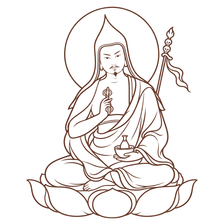
Sur Offering: Basic Principles
Recently, Dzongsar Khyentse Rinpoche and Orgyen Tobgyal Rinpoche have asked as many practitioners as possible to offer sur practice to repay the karmic debts that are an important cause of the alarming spread of covid in India, and in other parts of the world. In 2010, Orgyen Tobgyal Rinpoche explained very simply how to do a sur offering, which is not a complicated practice. He based his teaching on the Chokling text of sur offering, which you can find here. He gave this teaching when he was visiting Dzogchen Beara to help with the building of the new protector shrine. During his visit, he advised to offer sur for all the people who died in the past in the region during the great famine. We have also included the video of Rinpoche demonstrating the mudras that he mentions.
Human beings need two legs to walk and we need to accumulate both merit and wisdom to develop the qualities of an enlightened being. Numerous methods for perfecting the two accumulations can be found in the sutras and tantras. And according to tantra, the samaya of the Ratna family – one of the five buddha families – is the practice of generosity. Sur offering is a tantric method for practising generosity.
人需要两条腿才能行走,我们也需要同时积累福德与智慧,才能开展觉者的功德。经续中有许多圆满二资粮的方法。依密续而言,五佛部之一宝部的三昧耶,就是修布施。烟供是密续中修布施的一种方法。
There are two kinds of sur, white and red. I will explain these practices very briefly, beginning with the white sur.
烟供有白、红两种。我会非常简略地说明这两种修法,先从白烟供开始。
一、白烟供 I. White Sur
四类宾客:烟供的接受者 The Four Kinds of Guests: the Recipients of Sur Offerings
I will start by describing who the recipients of sur offerings are. After all, how can you offer someone food if you don’t know who they are?
我先说明,烟供的接受者是谁。毕竟,如果不知道对方是谁,又怎么能供他食物呢?
When we practice sur, we make offerings to four kinds of guest. The first kind, who are called “the guests invited out of respect – the three jewels”, do not dwell in the three realms of samsaric existence because they have attained the peace of nirvana. The sutra teachings describe them as the buddhas and bodhisattvas and the tantric teachings describe them as the three roots – lama, yidam and dakini.
修烟供时,我们向四类宾客献供。第一类称为「因恭敬而迎请的宾客——三宝」。他们已证得涅槃寂静,不住于轮回三有之中。经教称他们为诸佛菩萨;密续教法则称为三根本——上师、本尊、空行母。
When we talk about ‘buddhas’, a statue of Shakyamuni Buddha usually springs to mind, but that’s not what it means. When we practice sur, we don’t invite just one buddha, but the buddhas from all the billions of universes – more buddhas than there are grains of sand in the river Ganges. (Some say even more! They say the grains of sand in the river Ganges multiplied by one hundred, while others multiply by one thousand, and still others multiply by one hundred thousand!). Basically we invite every single buddha. ‘Bodhisattvas’ means all the bodhisattvas, such as the eight Close Sons and the rest. So we invite all the bodhisattvas from this universe and from all the other universes.
说到「佛」,我们心中通常会浮现一尊释迦牟尼佛像,但这里并不是这个意思。修烟供时,我们迎请的不是一尊佛,而是数十亿宇宙中的一切诸佛,其数量比恒河沙还多。(有些人说还要更多!有人说是恒河沙数的一百倍,有人说一千倍,还有人说十万倍!)总之,每一尊佛都迎请。「菩萨」是指一切菩萨,如八大近子等等。因此,我们迎请此宇宙及其他一切宇宙中的所有菩萨。
Lamas, yidams and dakinis are another inconceivably vast category – don’t the teachings tell us everything that appears and exists is the manifestation of the lama? The same goes for the yidams: there are peaceful yidam deities, wrathful deities, and some deities are neither peaceful nor wrathful. The amount of dakinis is also inconceivable: it is said that in each pore of a human being’s skin there are hundreds of thousands of dakini cities. We must therefore imagine an incredibly vast number of guests who we invite because we respect them.”
上师、本尊与空行母,又是广大不可思议的一类。教法不是说,一切显现与存在都是上师的化现吗?本尊也是如此:有寂静本尊、忿怒本尊,以及非寂静非忿怒的本尊。空行母的数量也不可思议;据说,人身皮肤的每一个毛孔中,都有数十万座空行母城。因此,我们必须观想,由于恭敬而迎请的宾客数量极其广大。
The second kind of guest are “guests invited for their qualities – the protectors”, which includes all the male, female and neuter dharma protectors. The beings who lived at the same time as the Buddha for example, who met him face-to-face, and in his presence, pledged to protect the virtuous and their activities. The first and second kinds of guest are known as the two ‘superior’ recipients of offerings.
第二类是「因功德而迎请的宾客——护法」,包括一切男性、女性与中性的护法。例如,与佛陀同时住世、亲见佛陀,并在佛陀面前发誓保护行善者及其善行的众生。第一、第二类宾客,称为上方两类供养对境。
The third kind are the “guests of the six classes invited out of compassion”, meaning the sentient beings of the six realms of existence – hell beings, pretas, animals, humans, demi-gods and gods. We feel compassion for the six classes of beings because they are bound by their deluded perception of how things appear and suffer as a result of their negative emotions and karma. These are the guests who we invite because we feel compassion for them. The people we hold most dear in this life – our parents, children, family and friends – are especially important to us, whereas the guests invited out of compassion include all the sentient beings who have wandered throughout the three realms of existence since time immemorial. They have not been wandering for merely a hundred, a thousand or even a million lifetimes, but for billions and billions of lifetimes. At times they have been members of our family, or our bitterest enemy, or entirely indifferent to us, but through this process, we have made a connection with each one of them.
第三类是「因悲悯而迎请的六道宾客」,即六道众生:地狱众生、饿鬼、畜生、人、阿修罗与天人。我们对六道众生生起悲心,因为他们被对显现的迷乱认知束缚,由烦恼与业而受苦。这些就是我们出于悲心而迎请的宾客。此生最亲爱的人——父母、子女、亲属与朋友——对我们格外重要;而因悲悯迎请的宾客,则包括自无始以来流转于三有的一切众生。他们并非只流转了一百、一千,甚至一百万世,而是数十亿、数十亿世。其间,他们曾是我们的家人,或最深的仇敌,或与我们毫不相干的人;但在这一过程中,我们已与每一个众生结下因缘。
The fourth kind of guest are those with whom we are karmically indebted. These negative influences (dön) and obstructing forces (gek) might be malicious ghosts (shindré), ghosts who appear human (söndré), damsi demons, gyalgongs, phodong, modong and others. These are all different kinds of obstructing forces to whom we owe karmic debts and who are angry with us. Why are they angry with us? Perhaps, for example, a murder was committed in a previous life. The karmic debts and bond of vengeance we have with them is why they are intent on creating harmful situations for us in this life.
第四类宾客,是我们欠有业债的对象。这些作祟者与障碍者,可能是恶鬼、显现为人形的鬼、丹思魔、嘉贡、颇东、莫东 等等。这些都是不同种类的障碍力量,我们欠他们业债,他们也对我们怀有嗔恨。为什么恨我们?比如,过去世可能曾有杀害之事。我们与他们之间的业债和仇怨之结,使他们一心想在此生为我们制造伤害的处境。
These are the four categories of beings who are the recipients of our sur offerings.
以上四类众生,就是烟供的接受者。
本尊观修 Deity Meditation
As we offer sur, we practice the yoga of the yidam deity. The deity we choose to practice is the very manifestation of compassion, noble Avalokiteshvara, who appears in various forms. When you make sur offerings, you can visualize yourself as four-armed Avalokiteshvara or in the form the Tibetans call Semnyi Ngalso – ‘resting in the nature of mind’.
作烟供时,我们修持本尊瑜伽。所选的本尊,是悲心的化现——圣观世音菩萨。他显现种种形相。作烟供时,可以观想自己为四臂观世音,或藏人称为「心性休息」的形相,意即「安住于心性」。
Clearly visualize your body as the deity. The deity’s body is formed with light and perfect the moment you think of it, yet empty. The most important thing to do as you visualize yourself as the deity is to meditate on compassion by focusing your mind entirely on your compassion for all sentient beings. This is how to meditate on yourself as Avalokiteshvara.
清晰观想自身为本尊。本尊的身体由光组成,一想到就圆满具足,却又是空的。观想自己为本尊时,最重要的是修悲心,将心完全专注于对一切众生的悲悯。这就是如何观修自己为观世音菩萨。
Before you can make sur offerings, you must first light a fire. The instructions say that, if possible, we should make a fire with dung, which is thought to be the best fuel – even better than wood. But the blaze should not be as fierce as a fire puja. The nature of fire is Pandaravasini, the female buddha of the lotus family, and its flames burn away the offerings’ impurities, transforming them into amrita, ‘the remedy to the maras’, pure in nature. This is what we offer to the four kinds of guests.
作烟供之前,必须先点火。教授说,如果可能,应以粪便生火,因为认为这是最好的燃料,甚至胜过木柴。但火势不应像火供那么猛烈。火的本性是莲花部佛母——白衣佛母,其火焰焚尽供品的不净,将其转化为本性清净的甘露,即「对治魔的良药」。我们将这供给四类宾客。
The sur offering substances include various kinds of food and drink and these must all be poured onto the fire. As sur is an offering of smells, it’s not necessary to offer huge amounts, a small offering is enough. Having said that, there are some lamas who say it’s good to make large offerings.
烟供物包括各种饮食,都须倒在火上。烟供供的是气味,因此不必供很大量,一点便足够。不过,也有些上师说,大量供养很好。
As the offerings are placed into the fire, smoke rises. Imagine om ah hung appear in the smoke and meditate on these three syllables. Om, ah and hung produce smoke containing an inexhaustible amount of sensual stimulants from all five categories – ravishing forms, captivating music, exquisite tastes, fragrant smells and sensual textures. This offering includes absolutely everything that is desirable and we are therefore able to present our guests with everything they like and long for. The fire we light is small, but the smoke it produces makes inexhaustible offerings so vast that they fill the entire universe. During the ritual, the sur offerings will be consumed by the flames in a matter of minutes, but as they have been blessed by our meditation, clouds of offerings, just like Samantabhadra’s offerings, will continue to fill all of space until samsara is empty.
供物放入火中,烟便升起。观想烟中出现 om ah hung,并观修这三个字。Om、ah 与 hung 产生的烟中,含有五类无尽的妙欲:迷人的形色、动听的音乐、美妙的滋味、芳香的气味,以及悦意的触感。这份供养包含一切可欲之物,因此,我们能给宾客献上他们喜欢、渴望的一切。我们点的火很小,但它产生的烟,却作出广大无尽的供养,充满整个宇宙。仪式中,烟供物几分钟就被火焰烧尽;但由于经过观修加持,如普贤菩萨供养一般的供云,将持续遍满一切虚空,直至轮回空尽。
The sur offerings we make please the guests we invited out of respect – the three jewels. As a result, through the power of their compassion and blessings, all the sentient beings of the three realms of samsara can be taken to the state of complete enlightenment.
我们所作的烟供,令因恭敬而迎请的三宝宾客欢喜。因此,依其悲心与加持力,轮回三界的一切众生,都能被引至圆满觉悟之境。
The offering made to the guests invited because of their qualities – the protectors – fulfils their wishes and mends our samayas. They then accomplish the four enlightened activities: pacifying, enriching, magnetizing and subjugating.
对因功德而迎请的护法宾客献供,能满其心愿,并修复我们的三昧耶。随后,他们成办息灾、增益、怀摄与降伏四种觉悟事业。
The offering we make to the guests in the six realms of samsara, who we invite out of compassion, repays all our debts. Also, this offering is especially powerful in terms of helping these beings perfect the accumulations and eliminate the obscurations so that eventually, they will reach the buddha field of Great Bliss. It is particularly important to give sur offerings to bardo beings who are between death and their next birth, because it will pacify the endless dream-like visions that cause them pain. Bardo beings suffer principally from hunger, thirst and cold. Initially, sur offerings guide bardo beings towards a birth in the higher realms, and ultimately to enlightenment.
对因悲心而迎请的轮回六道宾客献供,能偿还我们的一切债务。此外,这份供养在帮助这些众生圆满资粮、净除障碍方面,尤其有力,使他们最终到达极乐佛土。为处在死后与下次投生之间的中阴众生作烟供,格外重要,因为这能平息使他们痛苦的无尽梦幻显现。中阴众生主要受饥、渴与寒冷之苦。烟供最初引导中阴众生投生善趣,最终引至觉悟。
When we make sur offerings to the fourth kind of guest, all the karmic debts we owe them are purified. These guests all fall into the categories of obstructing forces; they are deluded and they are not compassionate. Bodhichitta never even crosses their mind, they think solely about themselves, and this how they become deluded in the first place. We offer them sensual stimulants and everything they want, because the power of their enjoyment of offerings that have been blessed with deity, mantra, samadhi, will inspire bodhicitta in their minds. The power of bodhichitta squashes their desire to cause harm, and crushes their anger, pride and tormented state of mind. Once their minds have given birth to bodhichitta, they will be on course for complete enlightenment.
为第四类宾客作烟供,我们欠他们的一切业债便得到净化。这些宾客都属于障碍者;他们迷乱,没有悲心。菩提心甚至从未进入他们心中,他们只想自己,这也是他们最初陷入迷乱的原因。我们供给他们妙欲以及他们所想要的一切,因为这些供品经过本尊、咒语与三摩地加持,他们享用的力量,会令其心中生起菩提心。菩提心的力量压伏其害人之欲,摧毁嗔恨、傲慢与苦恼的心态。一旦心中生起菩提心,他们便走上圆满觉悟之道。
This is how we make offerings to the four kinds of guest.
我们就是这样向四类宾客献供的。
As we make offerings we must rely on the power of deity, mantra, mudra and samadhi, and as we are Buddhists, we must first take refuge and meditate on the two kinds of bodhichitta – we cannot practice Mahayana without them. We then train our mind in the four immeasurable thoughts and meditate on the deity, noble Avalokiteshvara, as I have just explained. As we meditate on the deity and recite the mantra of Avalokiteshvara, om mani padme hung, we constantly remember compassion. This is how you meditate on the deity.
献供时,必须依靠本尊、咒语、手印与三摩地的力量。我们是佛教徒,因此必须首先皈依,观修两种菩提心;没有它们,就无法修持大乘。然后,以四无量心训练自心,并如我刚才所述,观修圣观世音菩萨。观修本尊、念诵观世音菩萨咒语 om mani padme hung 时,始终不忘悲心。这就是本尊观修。
As I have already mentioned, the fire we make at the beginning of the sur ritual is Pandaravasini, to which we add as many offering substances, food and drink as we wish.
如前所说,烟供仪式开始时点起的火,就是白衣佛母;我们随意向其中加入各种供物、饮食,多少皆可。
咒语与手印 Mantras and Mudras
If you want to do a sur practice, you will need to recite six mantras as you make your offerings. You can also practice less elaborately as I will tell you later. I don’t have time to go into each mantra in detail, so I will explain them very briefly.
若要修烟供,献供时需要念诵六种咒语。也可以修得简略一些,我稍后会说。我没有时间逐一详细解释各咒,所以只会简要说明。
The first mantra is known as the ‘sobhava mantra’ and purifies everything into emptiness:
第一咒称为「索巴瓦咒」,将一切净化为空性:
om sobhawa shuddha sarwa dharma sobhawa shuddho hang.
om sobhawa shuddha sarwa dharma sobhawa shuddho hang。
To form the mudra that accompanies this mantra, you fold your hands as if in prayer, but leave an empty space between your palms so that only your finger tips touch.
与此咒配合的手印,是双手如祈祷般合拢,但两掌之间留空,只有指尖相触。
The second is the ‘space treasury mantra’:
第二个是「虚空藏咒」:
nama sarwa tathagata byo bisha mugebe sarwa thagam utgate saparana imam gagana kham grihana dam balingde soha
nama sarwa tathagata byo bisha mugebe sarwa thagam utgate saparana imam gagana kham grihana dam balingde soha
As you recite the mantra, an inexhaustible amount of sensual stimulants arise from emptiness, filling the entire universe and lasting for as long as space endures. The mudra, known as the ‘space treasury mudra’, is formed by holding both your thumbs inside your folded hands and rotating them in front of your forehead. You must have seen this mudra many times.
念咒时,无尽的妙欲从空性中生起,充满整个宇宙,虚空存在多久,它们就持续多久。这个手印称为「虚空藏手印」:双手合拢,将两拇指收在掌内,在额前旋转。你们一定经常见过。
The third is the ‘amrita kundali’ mantra, which blesses the offering, transforming it into amrita, the remedy to the maras:
第三个是「甘露军荼利」咒,加持供品,使之转为甘露,成为对治魔的良药:
om vajra amrita kundali hana hana hung phat
om vajra amrita kundali hana hana hung phat
The mudra is formed by holding your two hands, facing outwards with thumbs touching in front of your face.
其手印是双手举在面前,掌心向外,两拇指相触。
The fourth mantra is:
第四个咒是:
namah sarva tathagata avalokite
om sambhara sambhara hung
namah sarva tathagata avalokite
om sambhara sambhara hung
The ‘mudra of supreme offering’ is formed by raising your left hand, palm facing out and thumb touching the forefinger, while you flick your right wrist so your hand moves from your body outwards, then snap your fingers. The power of this combination of mudra and mantra transforms the offerings into everything each guest needs.
「殊胜供养手印」的结法是:举起左手,掌心向外,拇指与食指相触;同时翻动右手腕,使右手由身体向外移动,然后弹指。手印与咒语相结合的力量,使供品转变为每一位宾客所需的一切。
The fifth mantra is known as the ‘om jnana avalokita’ mantra:
第五个咒称为「om jnana avalokita」咒:
om jñana avalokite
namah samanta spharana rasmi sambhava samaya
maha mani duru duru hridaya jvalani hung
om jñana avalokite
namah samanta spharana rasmi sambhava samaya
maha mani duru duru hridaya jvalani hung
The mudra is formed by holding your right hand in front of you as you wave the left hand slightly, palm facing up. The power of this mantra and mudra ensures that each guest receives what they need without mistake in distribution, and that the offering they receive is inexhaustible.
手印的结法是:右手保持在前方,左手掌心向上,微微挥动。此咒与手印的力量,确保每位宾客都得到自己所需,分配不出差错,而且所得供养无穷无尽。
The sixth mantra is the mantra known as ‘attaining complete power’:
第六个咒,称为「获得完全威力」咒:
namah samanta buddhanan graheshvari prabhajñati maha samaya soha
namah samanta buddhanan graheshvari prabhajñati maha samaya soha
The accompanying mudra is known as the ‘mudra of power’. Interlace the fingers of your right hand with those of the left and raise your hands to the level of your forehead, turning them in a small circle. The power of this mudra and mantra prevents the guests from worrying about whether other guests have received better or larger offerings than they did. Instead, they simply receive their offerings without making any comparisons.
配合的手印称为「威力手印」。左右两手十指交叉,将手举至额头高度,转动小圈。此咒与手印的力量,令宾客不再担心其他宾客是否得到更好、更多的供养;他们只是领受自己的供养,不作比较。
You must do these six mantras and mudras if you have decided to practice elaborately.
如果决定广修,就必须作这六种咒语与手印。
If you don’t want to practice quite so elaborately, just use the following three sets of mantra and mudra. First recite the sobhava mantra to purify the offerings into the state of emptiness, then the space or sky treasury mantra and mudra to multiply the offerings – you need a lot because if you don’t have enough, you won’t be able to make offerings to all the guests, right? And finally, you recite the mantra of supreme giving, accompanied by the mudra, to make the actual offerings. This amount of elaboration is fine.
如果不想修得这么广,就只用以下三组咒语与手印。先念索巴瓦咒,将供品净化于空性之中;再念虚空藏咒,结虚空藏手印,使供品增广。你需要很多供品,因为不够的话,就无法供养所有宾客,对不对?最后,念诵殊胜布施咒,配合手印,实际作供。这种详略程度也可以。
To practice simply, you need only say om ah hung, as you circle the thumb and forefinger of both hands, to bless the offerings, and then recite the sumbhara mantra accompanied by its mudra:
若要简修,只须念 om ah hung,两手拇指与食指各结成圈,加持供品,再念 桑巴惹咒,配合其手印:
nama sarwa tahagata avalokita om sambhara sambhara hung
nama sarwa tahagata avalokita om sambhara sambhara hung
To practice simply, you just have to recite these two mantras as you make the offerings.
简修时,献供只需念这两个咒。
The power of the deity, the mudra and the mantra enables to make the offerings that we have just described. How is this possible? The buddhas have accumulated inconceivable stores of merit. The blessing of the infinite merit of the buddhas make it possible, through the power of deity, mudra and mantra, to offer the limitless and inexhaustible offerings we spoke about. It is also thanks to the power of the bodhisattvas’ aspirations, which is immense. So, as all phenomena are interdependent, the offerings arise thanks to the blessings of the Buddha’s merit and the power of the bodhisattvas’ aspirations. That completes the explanation of mantras and mudras.
本尊、手印与咒语的力量,使我们能够作出刚才所述的供养。这是怎样做到的?诸佛积累了不可思议的福德资粮。依诸佛无量福德的加持,通过本尊、手印与咒语的力量,便能献出我们所说的无边无尽供养。这也归功于菩萨广大无比的愿力。因此,由于一切法相互依存,供养便依佛陀福德的加持与菩萨愿力而生起。咒语与手印的说明至此结束。
三摩地 Samadhi
I explained samadhi when I talked about deity meditation, mudras and mantras.
讲本尊观修、手印与咒语时,我已经说明了三摩地。
祈请四如来 Invoking the Four Tathagatas
There is an infinite number of buddhas. According to our teacher, Shakyamuni Buddha, the blessings, aspirations and compassion of four buddhas in particular, are connected with the practice of offering. We therefore say the names of these four buddhas. Saying their names is the same as praying to them, the result of which is that they grant us their blessings. The four buddhas are the tathagatas Jina Ratna-bahulya, Jina Sarūpottama, Jina Rūpa-paryānta, Jina Sarkāya-vimuktasena.
诸佛无量无边。依我们的导师释迦牟尼佛所说,其中四尊佛的加持、愿力与悲心,与供养修法特别相关。因此,我们称念这四尊佛的名号。称名就等于祈祷他们,其结果是他们赐予加持。这四尊佛,就是 多宝如来、妙色身如来、广博身如来、离怖畏如来 四如来。
修法结行 Closing the Practice
After completing the sur offerings, don’t grasp at yourself (the one who made the offerings), the recipients – the four kinds of guest, such as negative influences, obstructing forces, elemental spirits and so on – the offerings and articles, but rest in the state free of reference point. When gross thoughts arise and you remember the guests you have invited, in particular the guests to whom you owe karmic debts, you may think that you cannot just rest in the state free of reference point and that you must send them back to where they came from. At that moment, think that the Three Jewels invited out of respect depart as wisdom deities, that the protectors invited for their qualities go back to their places, and that the guests of the six classes return home. To send the guests to whom you owed karmic debts home, say the mantra om sarva bighanen gatsa and snap your fingers, thinking that they all go home now, without making any trouble.
烟供完成后,不要执著自己这个供养者、接受者——作祟者、障碍者、元素神灵等四类宾客——以及供养和物品,而应安住于无所缘的状态。粗大念头生起,想起迎请的宾客,尤其是欠有业债的宾客时,你可能会想,不能只安住无所缘,必须把他们送回原处。此时,想因恭敬迎请的三宝,以智慧尊的方式离去;因功德迎请的护法,返回各自住处;六道宾客各自回家。送走业债宾客时,念 om sarva bighanen gatsa 并弹指,想他们现在全都回家,不作任何扰害。
胜义烟供 The Ultimate Sur Offering
So far we have made offerings on the relative level, but some sur practices include the ultimate offering. To practice the ultimate offering we recite in English,
目前为止,我们所作的是世俗层面的供养,但有些烟供修法还包含胜义供养。作胜义供养时,我们用英语念诵以下偈文:
Commit not a single unwholesome action,
Cultivate a wealth of virtue,
To tame this mind of ours,
This is the teaching of the Buddha.
诸恶莫作,
众善奉行,
调伏自心,
是佛所教。
Or we can say it in Sanskrit:
也可以用梵语念诵:
om yé dharma hetu prabhava hetun teshan tatagato hyavadat teshan tsa yo nirodha evam vadi maha shramana soha
om yé dharma hetu prabhava hetun teshan tatagato hyavadat teshan tsa yo nirodha evam vadi maha shramana soha
Now dedicate the merit of your practice and make good aspirations – you can say the usual prayers.
现在,回向修持功德,发善愿;念平常的祈祷文就可以。
二、红烟供 II. Red Sur
I have just explained the white sur practice, but there is also a red sur offering. For a red sur we light a fire and burn meat, blood, grains and medicine. This red offering is only made to the guests to whom we owe karmic debts – the deity, mantras and mudras are the same as used in the white sur.
我刚才解释了白烟供修法,另外还有红烟供。作红烟供时,点火焚烧肉、血、谷物与药物。这种红供,只供给我们欠有业债的宾客;本尊、咒语与手印,和白烟供相同。
Mipham Rinpoche wrote a practice called A Sur Offering to Harmful Influences, Obstacle-Makers and Elemental Spirits in which you burn everything – food, drink, clothing, and all your other offerings – and offer it all to karmic debtors, harmful forces, obstacle makers and elemental spirits.
米滂仁波切写过一篇修法,名为《供施作祟者、障碍者与元素神灵之烟供》。在此法中,将食物、饮料、衣物及其他一切供品全部焚烧,供给业债宾客、作祟者、障碍者与元素神灵。
In a nutshell, whichever practice you do, if you do not forget bodhicitta, your practice will be beneficial. Without bodhicitta, no matter how much practice you do, all your efforts will be futile. But to light a fire and offer food by placing it in the fire as you meditate on compassion your efforts will be beneficial.
总之,无论修什么法,只要不忘菩提心,修持就有利益。没有菩提心,无论修得再多,一切努力都徒劳无益。但若点起火,将食物放入火中供养,同时观修悲心,你的努力就有利益。
Translated by Gyurmé Avertin
英译:久美·阿韦尔坦
烟供手印演示
藏语原声;画面中的七项标题说明如下。口述字幕后补。
6 MUDRAS / SUR PRACTICE / DZOGCHEN BEARA / 1 SEPTEMBER 2010
烟供修法的六种手印 / 贝拉大圆满中心 / 2010年9月1日
SOBHAVA MUDRA
索巴瓦咒手印
SPACE TREASURY MUDRA
虚空藏手印
AMRITA KUNDALI MUDRA
甘露军荼利手印
MUDRA OF SUPREME OFFERING
殊胜供养手印
OM JNANA AVALOKITA MUDRA
嗡嘉那阿瓦洛吉达咒手印
MUDRA OF POWER
力量手印
原注 Notes
出处与版本
原刊:ALL-OTR · Sur Offering: Basic Principles。讲授:1st September 2010;Dzogchen Beara, Ireland。原刊发布日期:2021-07-06。