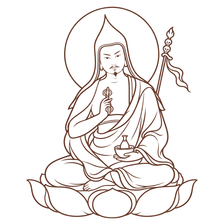
Tsok
At the request of Sogyal Rinpoche, Orgyen Tobgyal Rinpoche shared this brief explanation of tsok during one of Lerab Ling’s summer retreats, to help those who join tsok practices to engage more meaningfully. As Rinpoche says at the end, joining a tsok should not simply be an excuse to eat something! In his explanation, Orgyen Tobgyal Rinpoche follows closely the commentary to the Lamrim Yeshe Nyingpo written by the great scholar, Jamgön Kongtrul.
在列绕林一次夏季闭关期间,应索甲仁波切的祈请,乌金督佳仁波切作了这次简短的荟供说明,帮助参加者更有意义地投入修持。如仁波切最后所说,参加荟供不应只是找个理由吃东西!讲解中,他紧密依循大学者蒋贡康楚所撰的《道次第智慧藏》注释。
总说 General Explanation
Tsok is a branch of ritual. The whole path of the dharma, including all its ritual aspects, is oriented towards perfecting the accumulation (‘tsok’ in Tibetan) of merit and wisdom; once these two accumulations are complete, one can easily attain the priceless level of perfect buddhahood.
荟供是仪轨的一个支分。整个佛法修道,包括所有仪轨内容,都以圆满福德与智慧两种资粮——藏语称“tsok”——为方向。两种资粮一旦圆满,就能容易地证得无价的圆满佛果。
In the lower causal sutra vehicle, the method for gathering the two accumulations is to generate the precious mind of bodhichitta and then, with that as a basis, to cultivate the six paramitas.
在较低的因乘显教中,积集二资粮的方法,是发起珍贵菩提心,再以此为基础,修习六波罗蜜多。
There are, in fact, a vast number of methods we can use to gather the two accumulations, which ‘tsok’ refers to. But whenever we say tsok as in tsok practice, tsok offering or ganachakra feast, we are referring to a particular method for the accumulation of merit and wisdom that is practised in the vajra vehicle of secret mantra.
事实上,可用来积集“tsok”所指二资粮的方法极多。但谈到荟供修持、荟供供养或会供轮时,“tsok”指的是秘密真言金刚乘中,一种积累福德与智慧的特定方法。
There are some differences in the way tsok is explained in the Sarma and Nyingma traditions but on this occasion, I will mainly follow our own particular tradition, which is the Nyingma. Whenever we gather on the tenth day of the waxing moon and the tenth day of the waning moon (the 10th and 25th days of the lunar calendar), we practise tsok offering according to the Nyingma tradition, so that is what I will explain here.
新译与宁玛传统对荟供的解释,存在一些差别。这次,我主要依循我们自己的宁玛传统。每逢上半月第十日与下半月第十日,也就是阴历初十与二十五日,我们聚集,依宁玛传统修荟供。因此,这里就解释这一传统。
Whether you call this a teaching or just a talk, it is important that whatever I say is meaningful and beneficial.
无论称它为教法还是谈话,重要的是,我所说的要有意义、有利益。
To offer tsok, we practice the yoga of a particular yidam deity with all its requisite stages such as visualization, invitation of the deity, indivisible merging of the jñanasattva and samayasattva, outer, inner and secret offerings, offering of praise, as well as all the stages of familiarisation, accomplishment and activity through which the deity is accomplished. Then, in all sadhanas, to heighten the result, we increase our stock of merit and purify without trace all obstacles such as impairments of samaya, through the practice of ganachakra feast or tsok kyi khorlo, in Tibetan.
献荟供时,我们修持某一本尊瑜伽,具备所需的一切阶段:观想、迎请本尊、智慧尊与誓言尊不可分地融合、外内密供养、赞颂,以及成就本尊所需的念诵、成就与事业各阶段。随后,在一切成就法中,为增强修持结果,便通过会供轮增长福德积累,彻底净除三昧耶亏损等一切障碍,不留痕迹。
“tsok”一词的解释 Explanation of the term, ‘tsok’
Tsok is an offering.[1] Everything is accomplished through skilful means and wisdom, so all practices need these two elements. The essence of this ‘offering’ practice is to bring skilful means and wisdom together in an inseparable unity. This makes the ganachakra feast an especially skilful kind of special activity[2] or method.
The Sanskrit word ganachakra (‘wheel of gathering’) is translated in Tibetan as, ‘the wheel that amasses a vast gathering of great bliss’. Each path has its own language. In dzogchen terminology, great bliss is equated with primordial wisdom. So offering a tsok increases primordial wakefulness, in other words, clear light primordial purity, which has the power to cut through the web of ignorance and negative emotions. Again, there are many ways to explain ignorance according to the various paths. For most of us who follow the dzogchen path, it refers to the state in which the nature of mind goes unrecognized, even though it is primordially devoid of any delusion. So the ganachakra is a path through which we can interrupt that delusion.
梵文ganachakra,即“聚集之轮”,译成藏文是“广聚大乐之轮”。各条修道有各自的用语。在大圆满术语中,大乐等同本初智慧。因此,献荟供会增上本初觉醒,也就是光明本净;它具有斩断无明与烦恼之网的力量。同样,不同修道对无明有许多解释。对于我们大多数循大圆满道而行的人,无明指的是未认出心性的状态,虽然心性本初就没有任何迷乱。因此,会供轮是一条能截断这种迷乱的道路。
That is a short explanation of the Sanskrit word, ganachakra, “wheel of gathering”. The name is not without meaning—this is why I have explained it. If you think about this meaning, it will greatly help your understanding.
以上,是对梵文ganachakra“聚集之轮”的简释。这名称并非没有意义,所以我作了解释。思惟其中意义,会大大帮助理解。
四种不同的聚集 The Four Different Gatherings
Let’s now look at the different categories or aspects of tsok or gathering. Firstly, there is the gathering of fortunate human beings.
现在来看荟聚的不同类别或方面。首先,是具缘人众的聚集。
一、具缘人众的聚集 1. Gathering of Fortunate Human Beings
Unless you’re an especially fortunate person, you will have no opportunity to meet the path of the vajra vehicle of secret mantra. If you are such a fortunate person, however, you can enter the path by receiving empowerment and practising the yoga of the yidam deity, which consists of the development and completion phases. To follow this path, practitioners need to increase their accumulation of merit and wisdom and for this, they rely on the ganachakra feast which unites skilful means and wisdom. People who have the opportunity to perform this practice are said to be ‘fortunate’. There is no distinction made here between male and female. The term ‘gathering’, or ‘tsok’ in Tibetan, implies the coming together of many elements, in this case practitioners.
若非特别具缘之人,就没有机会遇到秘密真言金刚乘道。若是具缘者,则可领受灌顶,修持由生起与圆满次第组成的本尊瑜伽,由此入道。行者为循此道而行,需要增长福德与智慧资粮,因此依靠方便智慧双运的会供轮。有机会作此修持的人,称为“具缘者”。这里不分男女。“聚集”,藏语tsok,意味着许多要素聚在一起,此处指行者聚集。
二、悦意供物的聚集 2. Gathering of Delightful Substances
Secondly, there is the gathering of delightful substances. This means whatever material substances the gathered practitioners like to enjoy—the many different substances and articles mentioned in the tantras, such as the five meats and five nectars. The Rigdzin Düpa says:
其次,是悦意供物的聚集,指与会行者喜欢享用的一切物质,也就是续典所说五肉、五甘露等许多不同物品。《持明总集》说:
Meat and alcohol, in particular, are indispensable.
尤其肉与酒,不可缺少。
In any case, you shouldn’t offer just one thing with a stingy or miserly attitude. There should be an abundance of substances that delight the senses, most importantly the skilful means substances (foods) and wisdom substances (drinks).
总之,不应以吝啬、悭贪之心,只供一种东西。应有丰富的悦意感官之物,最重要的是方便物——食物——以及智慧物——饮品。
三、成就之源诸尊的聚集 3. Gathering of Deities who are the Source of Accomplishments
Thirdly, there is the gathering of the recipient of the offerings, the deities who are the source of accomplishments. Here again, just offering tormas and other offerings to a single deity does not constitute a ganachakara feast. Offerings are made to the great mandala composed of the main deity, their retinue, the consorts they unite with (since the feast is a highest yoga tantra practice), and the protectors.
第三,是供养对境、成就之源诸尊的聚集。同样,仅向单一本尊供食子等,并不构成会供轮。应供养由主尊、眷属、与其双运的明妃——因为会供属于无上瑜伽续修法——以及护法组成的大坛城。
四、福德智慧的大积集 4. The Great Accumulation of Merit and Wisdom
Finally, the result of the first three types of gathering is a vast increase in the accumulation of merit and wisdom.
最后,前三种聚集的结果,是福德与智慧资粮的广大增长。
如何具足四个方面 How to Gather the Four Aspects
You might wonder how these four are put into practice.
你们可能想知道,这四项如何付诸修持。
具缘行者的聚集 The Gathering of Fortunate Individuals
Tsok is practised by uniting skilful means and wisdom. This is symbolized by the gathering of dakas, whose nature is skilful means, and dakinis, whose nature is wisdom. In the highest yoga tantra the whole of phenomenal existence is viewed with pure perception—purity and equality is actualized. Therefore, we should meditate on all the male practitioners as dakas and all the female practitioners as dakinis. If there’s only one practitioner, that doesn’t qualify, it’s merely a ‘tsok offering’ (tsok kyi chöpa), not a ganachakra feast (tsok kyi khorlo).
荟供以方便智慧双运而修;其象征,是本性为方便的勇父与本性为智慧的空行母聚集。无上瑜伽续以清净观看待一切显有,令清净与平等现前。因此,应观所有男性行者为勇父、所有女性行者为空行母。若只有一位行者,就不符合条件,只能称为“荟供供养”,而非“会供轮”。
It is said in the tantras that the male practitioners should sit on the right and the females on the left, with the vajra master in the centre facing towards the assembly.
续典说,男性行者应坐右侧,女性坐左侧,金刚上师居中,面向大众。
During a ganachakra feast the participants should ideally be dressed in yogic attire: naked, wearing bone ornaments and tiger skin skirts, body smeared with ash, and so forth. If this is not done, then at the very least they should wear their best clothes, as this will create the auspicious condition for the accumulation of merit.
会供轮期间,参加者理想上应着瑜伽服饰:裸体,佩骨饰、着虎皮裙、身涂灰烬等等。若不如此,至少也应穿最好的衣服,以创造积累福德的吉祥缘起。
悦意供物的聚集 The Gathering of Delightful Substances
The five special articles are the five meats and five nectars. In the past, these substances were collected effortlessly without committing any negative action. The substances are then blessed: the five meats are the five male buddhas in nature, the five nectars are the five consorts. Nowadays, even if we don’t arrange the five meats and five nectars separately, all the essential substances for the tsok feast are included within the mendrup pills. To go into detail about the tsok substances would, I think, be difficult for you and for me, so I won’t go into that here.
五种特殊物品,指五肉与五甘露。过去,人们不造任何恶业,就能无勤收集这些物品。之后加持供物:五肉本性为五部佛,五甘露为五佛母。如今,即使不分别陈列五肉、五甘露,荟供所需的一切精要物质,也都含在修药丸中。我想,详细解释荟供物,对你们、对我都困难,所以这里不展开。
The Secret Essence Tantra mentions eleven substances. For example, bala is bread or dough, mamsa is meat, dagyé is curd and fried dough, datrol is cream cheese, phala is fruit, and kungyu is salt. So the tsok offerings are everything we can eat.
《秘密藏续》提到十一种供物。譬如,面包或面团、肉、凝乳与油炸面食、奶油奶酪、水果、盐。所以,荟供品就是一切可食之物。
There is a general expression that says the substances must be “complete, with nothing missing”. This does not mean that you have to collect every edible thing in the entire world, because that would obviously not be possible, but rather that you should not keep anything for yourself with a miserly attitude, thinking, “This is too good to offer in the tsok, I’ll have it later myself.” You should offer everything that you have, without any stinginess, piling up a complete tsok offering, with nothing missing. It’s also important to avoid the miserly attitude of thinking something is too expensive to be offered or considering that something is too dirty or impure. We need to avoid the contamination of such dualistic concepts. Don’t only include what you like in the offering, while leaving out all the things you don’t like—there should be no thoughts of like and dislike. To put it very simply, there should be no pollution of your own grasping thoughts and ideas.
通常有一种说法,供物必须“齐全,无所缺少”。这并不意味着要收集全世界每一种可食之物,显然那不可能;而是说,不应以悭吝心为自己留下什么,想着:“这太好了,舍不得供荟供,留着自己之后吃。”应将所有的一切毫不吝啬地供养,堆集完整荟供,无所欠缺。也要避免吝啬地认为某样东西太贵、不能供,或觉得某物太脏、不净。必须避免这类二元概念的染污。不要只供自己喜欢的,排除不喜欢的一切;不应有喜欢、不喜欢的念头。简单地说,不应有自己执著思想与观念的染污。
成就之源诸尊的聚集 The Gathering of Deities who are the Source of Accomplishments
The Light of Wisdom says to arrange an image as the support for accomplishment whenever we offer tsok. It means that we need to have a statue or picture of the deity that we are practicing, such as Vajrasattva or a peaceful or wrathful yidam deity. Simply a photograph of one’s own root master is also fine since he gathers in his person all three root deities. In any case, we must place an image as a support for the accomplishments. The text adds together with the guardians—the dharma protectors must also be present during tsok practice. That is why we perform the complete protectors’ practice before the tsok offering; we must meditate on the protectors for a tsok, they cannot be left out.
《智慧之光》说,每次献荟供,都应陈设尊像,作为成就所依。意思是,要有所修本尊的塑像或画像,例如金刚萨埵、某一寂静或忿怒本尊。只放自己根本上师的照片也可以,因为三根本诸尊都摄集于他一身。总之,必须安置尊像作为成就所依。文中接着说连同护法,也就是荟供时护法也必须在场。因此,我们在荟供前会完整修护法法门;荟供必须观想护法,不能遗漏。
If, when we perform the tsok offering, we are stained by impairments or breakages of samaya, this will create obstacles to receiving accomplishments from the wisdom deities and provoke the worldly protectors’ wrath, making our practice less successful. So, before we perform the tsok, we should first do confession to purify our samaya. It is like washing our body; although it started off clean, we have to wash it to make it clean again. Therefore, before we do the tsok offering, we recite a practice of confession such as Narak Kong Shak or Yeshe Kuchok.
献荟供时,若受三昧耶亏损或破坏所染,就会障碍从智慧尊处获得成就,并引发世间护法的忿怒,使修持较难成功。所以,荟供之前应先忏悔,净化三昧耶。这就像洗身,虽然起初干净,仍须洗净,使其重新洁净。因此,荟供之前,会念诵地狱忏悔或不可言说究竟忏悔文等忏悔法。
福德与智慧的积集 The Gathering of Merit and Wisdom
Then for the actual tsok practice, there are the first, second and third offerings together with the remainder. At this point, whatever our experience or perception is, whatever appears to us, we should leave it as it is, without trying to accept or reject anything. If we can embrace our experience with a non-conceptual attitude, the accumulations of merit with conceptual focus and wisdom without conceptual focus will be perfected. How is this done? By allowing our experience to unfold without accepting or rejecting anything, without obstructing or solidifying, we accumulate merit with conceptual focus. And by remaining free from conceptual reference or focus, we accumulate non-conceptual wisdom. As Jamgön Kongtrul says, …to perfect the gathering of merit by enjoying the perceived unobstructedly, and to perfect the gathering of wisdom while enjoying, by embracing that with the knowledge that holds no focus.
正修荟供时,有第一、第二、第三供养及余供。此时,无论我们的体验、感知如何,无论什么显现于前,都应任其本然,不试图接受或排拒。若以无分别的态度摄持体验,就能圆满有所缘的福德资粮与无所缘的智慧资粮。如何做到?让体验自然展开,不取不舍、不阻碍、不实化,由此积累有所缘福德;远离概念性的所缘与焦点,便积累无分别智慧。如蒋贡康楚所说:……无碍享用所现,以圆满福德聚;享用之时,以无所缘之智摄持,圆满智慧聚。
地点与时间 Place and Time
荟供殿 The Tsok House
The explanation continues with the place of gathering where the tsok practice is held. It says that the best of all is a charnel ground. Why? Firstly, because such places are only frequented by yogins and ascetics, not by ordinary people. Also, because dakas and dakinis are naturally drawn to such places by the force of their compassion.
接着解释举行荟供的集会场所。说最上等之处是尸陀林。为什么?首先,这种地方只有瑜伽士与苦行者经常出入,普通人不会;其次,勇父与空行母受慈悲之力吸引,自然来到这些地方。
In order to perform the outer, inner and secret parts of the ganachakra properly, it must be done in a secluded place; even if this is not a charnel ground, it should be somewhere remote and secluded.
为如法修持会供轮的外、内、密部分,必须在僻静处举行;即使不是尸陀林,也应选偏远寂静的地方。
The kind of tsok house described in the tantras or the life stories of the mahasiddhas has three spaces: outer, inner and innermost. The outer area has four doors, as in a mandala palace. The inner area has only one door, and the innermost room has no door.
续典或大成就者传记所描述的荟供殿,有外、内、最内三重空间。外层有四门,如坛城宫殿;内层只有一门;最内室没有门。
Terdak Lingpa’s biography describes a pure vision in which a woman beckoned him to come to a ganachakra feast. As he followed her, outside the four-doored area, he saw multitudes of male and female practitioners of kyerim and dzogrim with pure samaya going to the tsok feast. As he entered, he found an immense space, set out like a pure realm. He saw an unimaginably vast gathering of male and female practitioners, some of them feasting on ordinary offerings, some on human corpses, and others on various animals.
德达林巴传记记载过一次净相,一位女子招手请他参加会供轮。他跟随而行,在四门区域外,看见许多三昧耶清净、修生起圆满次第的男女行者前往荟供。进入之后,见到一个广大空间,陈设宛如净土。无数男女行者聚集,广大不可思议;有人享用普通供物,有人享用人尸,也有人享用各种动物。
In the inner room, the single door was protected by the Protectress of Mantras. As the woman was leading him towards her, Ekazati glared at him with her huge eye. Minling Terchen’s whole body shook with fear. He went in and found a gathering of yogins and yoginis, dressed in bone ornaments and united in sexual embrace.
内室唯一的门,由真言护持母守护。女子带他走近时,一髻佛母用巨大的独眼瞪着他,敏林大伏藏师全身吓得发抖。他进入后,看见一群瑜伽士与瑜伽女佩戴骨饰,以性结合的姿态相拥。
The innermost room had no door, so he asked how he could enter. He was told that although many great masters from India had gained entry, only a few Tibetans, including Yeshe Tsogyal and Vairotsana, had ever done so. They told him that since he was an emanation of Vairotsana, he should try and see if he could enter. So, he rested in meditation and directed his awareness. At that moment he was transported inside for a brief instant. There he saw many great vidyadharas from India presiding over the tsok which was led by Vajravarahi.
最内室没有门,于是他问如何进入。有人告诉他,虽然许多印度大上师已进入过,但藏人中,只有益西措嘉、毗卢遮那等少数人曾进去。他们说,既然他是毗卢遮那的化身,就应该试试看能否进入。于是,他安住禅修,将觉知指向其中。刹那间,他被送入内室,停留了短短一瞬。在那里,他见到许多印度大持明共同主持荟供,由金刚亥母领众。
This is the type of three-stage tsok house mentioned in the tantras, where access to the different areas is based on one’s level of realization.
这就是续典所说的三重荟供殿,能否进入不同区域,取决于证悟程度。
Even if you cannot host the tsok feast in such a palace, whatever kind of place you use for the practice, consider it is somewhere countless dakas and dakinis gather like clouds, or, in other words, the actual tsok house of Orgyen Heruka.
即使不能在这样的宫殿举行会供,无论使用何种场所修持,都应视其为无数勇父空行如云聚集之处,换言之,就是真实的邬金嘿噜嘎荟供殿。
Some years ago, when I went to America to accompany Dilgo Khyentse Rinpoche, I visited Trungpa Rinpoche’s centre. One evening we saw the students on their way to a tsok practice (they don’t practice tsok during the day, but in the evening) all dressed very neatly in suits and ties and in evening dresses. This surprised some of the monks who did not know the teachings so well, but for me it confirmed that Trungpa Rinpoche really knew the tantras well.
几年前,陪同顶果钦哲仁波切去美国时,我拜访了创巴仁波切的中心。一天晚上,看见学员前往修荟供,他们不在白天修,而在晚上。大家衣着整齐,男士西装领带,女士晚礼服。有些不太熟悉教法的僧人很惊讶;但对我而言,这证明创巴仁波切确实精通续典。
时间 Time
Tsok can be done every day, but is especially important on the tenth day of the waxing and waning moon, on the anniversary of the birth or passing into parinirvana of great masters, and other special occasions. It can also be offered in gratitude following signs of accomplishment in the practice, straight after the session. It is also performed for purification whenever signs or obscurations related to samaya breakage occur. This means the time for offering tsok varies, it is not fixed.
荟供可以每天修,但在上半月与下半月的第十日、大上师诞辰或入般涅槃纪念日,以及其他殊胜日子,尤其重要。修持出现成就征兆之后,也可以当座结束,立即献荟供以表感恩。每当出现与三昧耶破坏有关的征兆或障碍,也会修荟供以净化。因此,献荟供的时间随情况而变,并不固定。
修持次第 The Stages of the Practice
入场 Entry
According to the tantras, the chöpön should stand at the door to the tsok house and make a gesture or sign corresponding to one of the five buddha families; one then has to make a sign in response. This is mentioned in the tantras, but it is not done these days. Nowadays, we only offer modest or imperfect feast offerings everyday according to our limited capacity, which amounts only to a nominal ganachakra.
依续典,供养师应站在荟供殿门口,作出对应五部佛之一的手势或暗号,入场者须以相应暗号回应。续典中提到这一点,但如今不这样做了。现在,我们只依有限能力,每日献上简略或不圆满的会供,仅相当于名义上的会供轮。
准备 Preparation
In any case, if it is not too complicated, the male practitioners should be seated on the right and the females on the left. All the offering substances, chiefly food and drink, should be arranged as beautifully as possible.
总之,若安排不太复杂,男性行者应坐右边,女性坐左边。一切供物,主要是食物与饮品,应尽可能陈设得美观。
加持供品 Blessing the Offerings
At the beginning, the chöpön requests the assembly to direct their practice to the purification of any impurity in the tsok offerings. The chöpön urges all the participants to direct their mind to bless all the tsok offerings that contain impurities, such that they are transformed into the pure nectar of primordial wisdom.
起初,供养师请大众将修持指向荟供品中一切不净的净化,敦请所有参加者专心加持含有不净的供品,使之转为清净的本初智慧甘露。
According to the tantras, if the practice is presided over by a vajra master whose realization is such that he is always one with the chief deity of the mandala, the vajra master needs to give his authorisation—a ganachakra cannot be performed without this, according to the tantras. Therefore, at this point the chöpön must ask permission from the vajra master to turn the wheel of the tsok feast. The vajra master, meditating that he is one with the lord of the mandala, then grants permission to perform the outer, inner or secret ganachakra according to the level of feast that is going to be performed.
依续典,若主持修法的金刚上师,其证悟已使他始终与坛城主尊合一,则必须由他许可;没有许可,不能举行会供轮,这是续典所说。因此,此时供养师须向金刚上师请求转会供轮的许可。金刚上师观修自身与坛城主尊合一,再依将修会供的层次,允许举行外、内或密会供轮。
For the blessing of the offering substances, they should be sprinkled with water, amrita (tsok chang) and the inner offering (nang chö). Some sources say that the chöpön should stand up and sprinkle urine from his secret place all over the offerings. Someone caught up in dualistic thoughts of good and bad would probably vomit if this happened! But in the tantras, it clearly says, “the master of vajra-activity stands up and sprinkles the nectar of urine from his vajra.” I’m sure some people still practice like this. The point is that there should be no one in the tsok gathering who has any dualistic ideas. If there were someone who thought in that way, it would not be a genuine ganachakra feast.
加持供物时,应洒水、甘露及内供。有些资料说,供养师应起身,从密处把尿液洒遍供物。若有人陷于好坏二元分别,遇到这种情况,大概会吐出来!但续典清楚说:“金刚事业师起身,从金刚处洒下尿甘露。”我确信,仍有人这样修。要点在于,荟供众中不应有任何人持有二元分别。若有人这样想,就不是真正的会供轮。
The way we perform the blessing of the tsok is to consider ourselves as inseparable from the central deity of the mandala and visualize a letter ram emanating from our heart centre. It has the nature of fire and burns away any impurity in the offerings. Then from the syllable yam arises a wind that scatters and disperses the impurities, and from kham there streams a great flow of water that washes away any impurities. With this, all the substances are brought into a state of emptiness beyond conceptual focus.
我们加持荟供的方式,是观自己与坛城主尊不可分离,从心间放出ram字,其性为火,焚烧供物的一切不净。然后,从yam字生风,吹散不净;从kham字涌出大水,洗净一切不净。由此,一切物质都归于超越概念所缘的空性状态。
Then out of that emptiness appear the three syllables om, ah and hung which have the nature of the body, speech and mind of all the buddhas. From these syllables rays of light shoot out and gather the blessings of the enlightened body, speech and mind of all the buddhas, which then dissolve back into the syllables as wisdom nectar. The three syllables then melt into light that dissolves into the offering substances. The offerings are no longer ordinary and solid but transformed into pure wisdom nectar with perfect colour, aroma, taste and potency, a source of all that is desirable and an inexhaustible supply of sensual stimulants as vast as the ocean.
随后,从空性中出现om、ah、hung三字,其性为一切诸佛身、语、意。三字放光,摄集一切诸佛觉悟身、语、意的加持,再以智慧甘露的形式融回三字。三字随后化光,融入供物。供品不再平凡、坚实,而转为色、香、味、力圆满的清净智慧甘露,成为一切所欲之源,如大海般广阔、无穷无尽的感官悦意受用。
According to some Sarma tantras we should visualize each of the five meats and five nectars separately. But here it is sufficient simply to visualize the ocean of nectar, considering that its samaya and wisdom aspects are indivisible. The samaya aspect of nectar is the tsok offering that we have arranged. The wisdom aspect of the nectar is the nectar that we have invoked from the buddhas. And here we meditate on these two as inseparable.
依某些新译派续典,应分别观想五肉与五甘露的每一项。但这里,只观甘露大海,认为其中的誓言与智慧两方面无二,就已足够。甘露的誓言方面,是已陈列的荟供品;智慧方面,是从诸佛处迎请而来的甘露。此处,就观二者不可分离。
Some tantras say that the outer environment is visualized as a skull cup (kapala), but this is not essential. In the Nyingma approach, it is said:
有些续典说,应把外在环境观为颅器,但这并非必需。宁玛的方式说:
The outer environment is the torma containerWhich holds the torma of phenomenal existence.
外在器世间,是食子容器,
其中盛有显有的食子。
All-pervading space is the torma container within which the torma feast of the wisdom of rigpa is arranged. If this is understood there is no need to visualize the outer environment as a kapala.
遍一切的虚空,就是食子容器,其中陈设觉性智慧的食子会供。若明白这一点,就不必把外在环境观为颅器。
仪轨要点 Ritual Aspects
In practicing tsok, you need to respect, at least to some extent, the ritual traditions followed by present-day masters. Concerning the place where the offerings should be arranged, the instruction is:
修荟供时,至少在一定程度上,需要尊重当代上师遵循的仪轨传统。关于陈设供品的地方,教言说:
On a human or wild animal skin…
在人皮或野兽皮上……
The tsok offerings should be arranged on a human skin. If that’s not possible, you can use the skin of a wild animal like a tiger or a leopard. If that also isn’t possible, then an artificial substitute or even drawing can be used instead. And if you can’t find anything like that at all, then it’s fine simply to visualize the skin.
荟供品应陈设在人皮上。若不可能,可以用虎、豹等野兽皮;若也不可能,就用人工替代品,甚至绘画代替。若完全找不到这类东西,只在心中观想兽皮,也可以。
During the blessing of the tsok offering, the ‘liberation offering’ should be kept apart so that it is not blessed.
加持荟供品时,“诛度供”应另置一旁,不予加持。
The tradition followed by all the masters of the present day is to begin by arranging the first-portion, confession, fulfilment, liberation and remainder offering on five separate plates.
当代所有上师遵循的传统,是开始时把初献、忏悔、酬补、诛度与余供,分别放在五个盘中。
迎请 Invitation
Once the tsok offerings are blessed, we invite the guests to whom the offering is made, the mandala of deities that one has visualized, just as we would invite our guests to come and eat as soon as we had prepared a meal for them. Here, you do not have to visualize the merging of samayasattva and jñanasattva. Simply consider that the deities fill the sky as the invited guests. When we invite someone to dinner, for example, they will just come and eat, and leave soon afterwards.
荟供品加持后,就迎请供养的宾客,即所观想的诸尊坛城,如同饭做好后,请客人来吃。这里不必观想誓言尊与智慧尊融合,只须观诸尊作为受邀宾客,充满虚空。譬如请人吃饭,客人只是来吃,之后不久就会离开。
If you are highly realized, you never part from the realization of the inseparability of samayasattva and jñanasattva. Still, you need at least to say an invitation mantra such as vajra samadza as you maintain that realization and invite the deities in the sky before you.
若证悟很高,就始终不离誓言尊与智慧尊无二的证悟。尽管如此,保持这一证悟、迎请诸尊至面前虚空时,至少仍须念vajra samadza之类的迎请咒。
We invite all the dakas and dakinis from the 24 or 32 sacred places, as well as masters who preside over ganachakra feasts such as Guru Rinpoche and Vimalamitra – the great beings who have attained the vidyadhara levels of realization. We also invite the peaceful and wrathful yidam deities, the wisdom dakinis headed by Vajravarahi, the worldly and activity dakinis, and the male, female and neuter protectors. They are the guests for the ganachakra feast.
我们迎请二十四或三十二圣地的一切勇父空行,以及莲花生大师、无垢友等主持会供轮、证得持明果位的大圣者。也迎请寂静与忿怒本尊、以金刚亥母为首的智慧空行母、世间空行与事业空行,以及男、女、无性护法。他们便是会供轮的宾客。
One of the instructions for the ganachakra is to play music. The guests are invoked by playing all the different musical instruments. Many different types of instruments are used, but especially the thigh-bone trumpet (kangling) and the skull damaru—these two are necessary.
会供轮的一项教言,是演奏音乐。通过演奏各种乐器,迎请宾客。所用乐器很多,尤其腿骨号与颅骨达玛如鼓,这两种是必需的。
Consider that they gather in huge number in the sky in front of you, like large clouds.
观想他们如大云一般,无数地聚集于面前虚空。
During the tsok practice, we should not think of ourselves as being ordinary beings offering a feast to guests who are higher than us, meekly and with our palms together, as if we were inferior. Many people seem to do that. Instead, we should meditate on ourselves as being inseparable from the yidam deity who is the chief of the mandala that we have been practicing. Since all things are created by the mind, the mandala and field of merit are, like all materializations, the product of our minds—nothing comes from outside. Therefore, in effect, we are inseparable from the chief of the mandala.
荟供时,不应觉得自己是普通人,在向高于自己的宾客献会供,谦卑合掌,好像自己低人一等。许多人似乎这样做。应观自身与一直修持的坛城主尊不可分离。既然一切由心所造,坛城与福田也如一切显现,都是自心的产物,没有什么来自外面。因此,实际上,我们就是与坛城主尊不可分离的。
荟供初献 Offering of the First Portion of the Tsok
Offerings are made three times—the first portion, fulfilment offering, and liberation offering—to the assembly of vidyadharas, the yidam deities, the dakinis, the dharma protectors, and so on. The offering is inconceivable and inexhaustible, and the source of all sensual stimulants.
向持明众、本尊、空行母、护法等作三次供养:初献、酬补供与诛度供。供养不可思议、无穷无尽,是一切感官悦意受用之源。
Even though the buddhas are beyond any dualistic thoughts or desires, the offering results in the gathering of the two accumulations of merit and wisdom.
虽然诸佛超越一切二元念头或欲望,供养仍会带来福德与智慧二资粮的积集。
Each sadhana has its own text, which you recite. For the visualization, consider that the inconceivable ocean of nectar in the sky before you begins to boil. This creates a steam, out of which offering gods and goddesses beyond imagining emanate to offer great clouds of sensual stimulants to all the guests. As symbols of the vajra body and the sense object of visible form, they offer mirrors. For the vajra speech and sound, they offer musical instruments, such as the vina. For the vajra scent, they offer perfume. For the vajra taste, they offer fruit. For the vajra touch, they offer different kinds of clothing. For the vajra mind, they offer meditation in the form of mudras.
每部成就法各有文字,依其念诵。观想时,思惟面前虚空不可思议的甘露海开始沸腾,生起蒸气;蒸气中化现无法想象之多的男女供养天,向所有宾客献上广大如云的感官悦意供物。象征金刚身与色境的,是所献明镜;象征金刚语与声音的,是维纳琴等乐器;金刚香供香料,金刚味供水果,金刚触供种种衣物,金刚意则以手印形式供养禅定。
酬补与忏悔供 Fulfilment and Confession Offering
The first offering is like an offering of food, but this offering is more like the giving of gifts. From the ocean of nectar appear rays of rainbow light and an inconceivable number of offering gods and goddesses. They offer the five sense offerings of visible forms, sounds, smells, tastes and textures, as well as the eight auspicious symbols, the seven emblems of royalty, and so on. They are offered by manifesting an inexhaustible treasure that fulfils every wish and desire without anything lacking.
第一供如供食物,这一供则更像赠送礼物。甘露海中出现虹光,以及不可思议数量的男女供养天,献上色、声、香、味、触五欲供养,以及八吉祥、七政宝等等。化现无尽宝藏,满足一切愿望与欲求,毫无欠缺,以此供养。
The offering is made to the root and lineage masters who are pleased and give us their blessings. It is made to the yidam deities and all our impairments and breakages of samaya, as well as any faults or lack of clarity in our practice of kyerim and our imperfect dzogrim, are purified. The offering is made to the wisdom dakinis who are pleased and offer us their assistance in enlightened activities and grant us the supreme and ordinary accomplishments. The worldly and flesh-eating dakinis receive their share with the result that any displeasure we may have caused them is forgiven. Finally, by offering to the dharma protectors, their wishes are fulfilled and they pledge to help us in our activity.
供养根本与传承上师,他们欢喜,赐予加持。供养本尊,我们一切三昧耶亏损与破坏,以及生起次第修持中的过失、不清晰和圆满次第的不圆满,都得净化。供养智慧空行母,她们欢喜,协助成办觉悟事业,赐予殊胜与共同成就。世间与食肉空行母得到各自份额,因而宽恕我们曾令她们不悦之事。最后,供养护法,使其心愿满足,并立誓协助我们的事业。
As we visualize this, we melodiously chant the words of the fulfilment and confession. Just as somebody is forgiven when they offer an apology by saying sorry, confessing all our errors from the depths of our hearts before the gathering of wisdom deities and worldly beings, will cause them to be purified. As it is said, the only good thing about negative actions is that they can be purified when properly confessed.
如此观想的同时,以悦耳旋律唱诵酬补与忏悔词句。如同一个人道歉认错后获得原谅,我们在智慧尊与世间众集会面前,从内心深处忏悔一切错误,就能使其清净。正如所说,恶业唯一的好处,是如法忏悔便能净除。
诛度 Liberation
Then comes “the final offering of ‘liberation’”. These days, lamas do not often talk about the actual practice of liberation, and so I too will not talk about it.
接着是“最后的‘诛度’供”。如今,上师们不常谈实际的诛度修法,因此我也不谈。
Concerning the way that we practise this, the physical samaya substance, i.e. the tsok, is placed before the vajra master. From his heart, rays of light and kingkaras (wrathful emissaries) shoot out. They immediately seize the samaya breakers, the ignorant dualistic mind and the ego, transferring them into the effigy. The five disturbing emotions in particular need to be liberated. They are seized and brought into the effigy. Through dzam hung bam ho and the mudras of the hook, lasso, chain and bell, they are summoned, merged with the effigy, bound, and rendered senseless.
至于我们这里的修持方式,是把实物三昧耶物——即荟供品——置于金刚上师面前。上师心间放出光芒及金迦罗忿怒使者,当即摄取破三昧耶者、无明二元心与我执,将它们迁入像体。尤其五种烦恼需要诛度,将其摄入像体。通过dzam hung bam ho及钩、索、锁、铃手印,召摄它们、使其与像体融合、系缚,并令其失去知觉。
Then the vajra master takes the phurba with the mudra of the union of the five buddha families. He sees it as the Supreme Son, visualizing it as Vajrakumara. He drives it into the heart (“at the limit between the white and black heart”) of the jungpo demon, the effigy that is the physical form now consumed by negative emotions. The negative forces’ consciousness is liberated and their life-force, merit, splendour and radiance (ziji) are picked up on the tip of the phurba and absorbed into the jñanasattva at one’s heart. Then the phurba is directed at the heart of the effigy once again. The consciousness of the negativity, visualized in the form of a white a, enters the phurba and is then sent out through the tip into the sky and transferred into the heart of Vajrasattva in the buddhafield of Akanishtha, where it becomes enlightened. This explains why you see lamas stabbing the effigy, pointing the phurba at their heart, then stabbing the effigy again and pointing the phurba into space.
随后,金刚上师以五部双运手印持橛,视其为殊胜佛子,观为金刚童子。将橛刺入元素精灵、也就是已被烦恼充满的实物像体心间,位于“白心与黑心的交界”。恶势力的识得到解脱,其命力、福德、威光与光辉,由橛尖摄取,融入自身心间智慧尊。接着,再次以橛指向像体心间;负面力量之识观成白色a字,进入橛中,再从橛尖送入虚空,迁入色究竟佛土金刚萨埵心间,在那里成佛。这便解释了为什么会看见上师刺像体、将橛指向自心,然后再次刺像体,再指向虚空。
The flesh and blood that remain after the liberation are transformed into the nature of nectar and offered to the yidam deities. That is the liberation.
诛度后所余的血肉,转成甘露本性,供养本尊。这就是诛度。
If you want to really understand the practice of tsok and practice secret mantrayana properly, you need to know about ‘the individuals who take union as the path’ and ‘the individuals who take liberation as the path’ – they each have their own unique qualities. Each approach has extensive teachings on ganachakra on three levels – outer, inner and secret. It is a special feature of secret mantra vajrayana to be able to care for the individuals with strong desire through the path of union, and for the individuals with strong anger through the path of liberation.
若想真正理解荟供、如法修持秘密真言乘,就需要了解“以双运为道者”与“以诛度为道者”,各自具有不同特点。每一种方式,都有外、内、密三层会供轮的广大教法。能够通过双运道摄受贪欲强烈者,通过诛度道摄受嗔心强烈者,是秘密真言金刚乘的一项特殊之处。
享用荟供 Enjoying the Tsok
Having restored their commitment to the yidam deity with the fulfilment offering, purified faults through confession, and performed the liberation tsok offering, all the practitioners now enjoy the blessed substances of accomplishment. At this point, you should not be contaminated by any dualistic or grasping thought. If you are able to sustain great bliss, there will be no dualistic thought. The secret ganachakra is the most important aspect of tsok to increase the experience of great bliss.
以酬补供恢复与本尊的誓约,藉忏悔净除过失,并作诛度荟供之后,全体行者便享用加持过的成就物。此时,不应被任何二元或执著念头染污。若能持续大乐,就不会有二元念头。要增长大乐觉受,密会供轮是荟供最重要的方面。
If they have a high enough level of realization or if the vajra master gives his permission, people can offer vajra songs or vajra dances. For as Longchenpa said:
若具有足够高的证悟,或得到金刚上师许可,可以供养金刚歌或金刚舞。正如龙钦巴所说:
In it all movements are great blissThe path of the vajra is unsurpassed.
其中一切动作皆大乐,
金刚之道无有上。
荟供发愿 Tsok Aspiration Prayer
Following this, the practitioners make aspirations to meet again in the same mandala and eventually attain enlightenment together.
之后,行者发愿:再次相会于同一坛城,最终共同成佛。
余供 Remainder Offering
The three stages of the tsok offering are complete. The blessing of the tsok substances is not included in the three offerings. The three are: the first portion, the fulfilment and confession, and the liberation.
荟供三个阶段已经完成。供物加持不包含在三供之中。三供是初献、酬补忏悔,以及诛度。
Then the remainder offering is gathered without saving or hoarding, Jamgön Kongtrul says. This does not mean a large quantity. It means that the practitioners offer whatever they have without any stinginess. The remainder is only gathered from those who have been part of the mandala from the beginning of the practice, not from anyone who arrived late and was given some of the tsok. It is then kept at the end of the assembly. If it is dark outside, a light is placed on the remainder offering. If it is not yet dark, the light is not necessary.
随后,蒋贡康楚说,应不留不藏地收集余供。这不指数量多,而是行者毫不吝啬地献出所有。余供只从修法开始便在坛城中的人处收集,不从迟到、后来分得荟供品的人处收集。随后置于众会末端。若外面天黑,在余供上放灯;若天尚未黑,就不需要灯。
Then the chöpön requests the vajra master to bless the remainder offering. If the vajra master is highly realized he takes some nectar in his mouth and spits it out on the offering. Otherwise, he blesses it through the expanse of space mudra.
供养师接着请金刚上师加持余供。若金刚上师证悟很高,就含一些甘露,喷于供物上;否则,以虚空广界手印加持。
The recipients of the remainder offering are specific beings who have the right to receive these offerings. The main ones are the twenty-eight ishvaris as well as the numerous male and female gings.
余供的受者,是有权领受这些供养的特定众生。主要是二十八自在母,以及众多男女金刚力士。
In your meditation they all arrive in huge number, “as a great cloud-like gathering”. In the past, when the tantras first appeared, these deities elected to remain outside the mandala; they didn’t want to be in the tsok but to receive the remainder offering. This is the samaya pledge they made in front of the Great Glorious Heruka.
观修中,他们无数地到来,“如广大云聚”。过去续典初出现时,这些尊众选择留在坛城之外,不愿加入荟供,而要领受余供。这是他们在大吉祥嘿噜嘎面前所立的三昧耶誓约。
The remainder must be carried seventy paces from where the tsok takes place. It should be placed in a pile and not scattered. If it is scattered, this will create the circumstances for the assembly of practitioners of the tsok to be dispersed. It should not be eaten by dogs or human beings, but according to Terdak Lingpa and Lelung Shepé Dorje, it is good if they are eaten by birds.
余供必须送到距荟供地点七十步处,堆放在一处,不应撒散。若撒散,会造成荟供行者众会离散的因缘。不应让狗或人食用;但依德达林巴与列隆协贝多杰所说,让鸟吃则很好。
That concludes the practice of tsok.
至此,荟供修持结束。
利益 Benefits
The main benefit of tsok practice mentioned in all the tantras is the accumulation of merit with conceptual focus and wisdom beyond focus. There could be no greater benefit than this.
一切续典所说荟供的主要利益,是积集有所缘福德与离所缘智慧。没有比这更大的利益。
The termas go into great details. For example, they say that Guru Rinpoche himself will come to bless the tsok practitioners, and that the place where the tsok is performed will become exactly the same as the Copper Coloured Mountain heaven of Guru Rinpoche. Moreover, merit and wisdom will be accumulated, disease, famine and warfare will be pacified, all the practitioners’ wishes will be fulfilled and they won’t have obstacles. And so on.
伏藏对此有极详尽的说明。例如,说莲花生大师会亲临加持荟供行者,而荟供场所会变得与他的铜色山净土完全相同。此外,积集福慧,平息疾病、饥荒与战争,行者一切所愿得遂,免于障碍,等等。
结语 Conclusion
This has been a brief explanation of tsok. I could say more, but I feel this is enough, particularly since there are some newer students here. Above all, I would like to stress that tsok practice is highly meaningful and not simply an excuse to eat something.
以上是对荟供的简短说明。还可以讲更多,但我觉得这些已足够,尤其在座还有一些较新的学员。最重要的是,我想强调:荟供修持意义深远,并非只是找个理由吃东西。
Translated by Adam Pearcey
Edited by Gyurme Avertin and Philip Philippou.
英译:亚当·皮尔西
编辑:久美·阿韦尔坦、菲利普·菲利普
原注 Notes
出处与版本
原刊:ALL-OTR · Tsok。讲授:13th July 2002;Lerab Ling, France。原刊发布日期:2026-06-24。